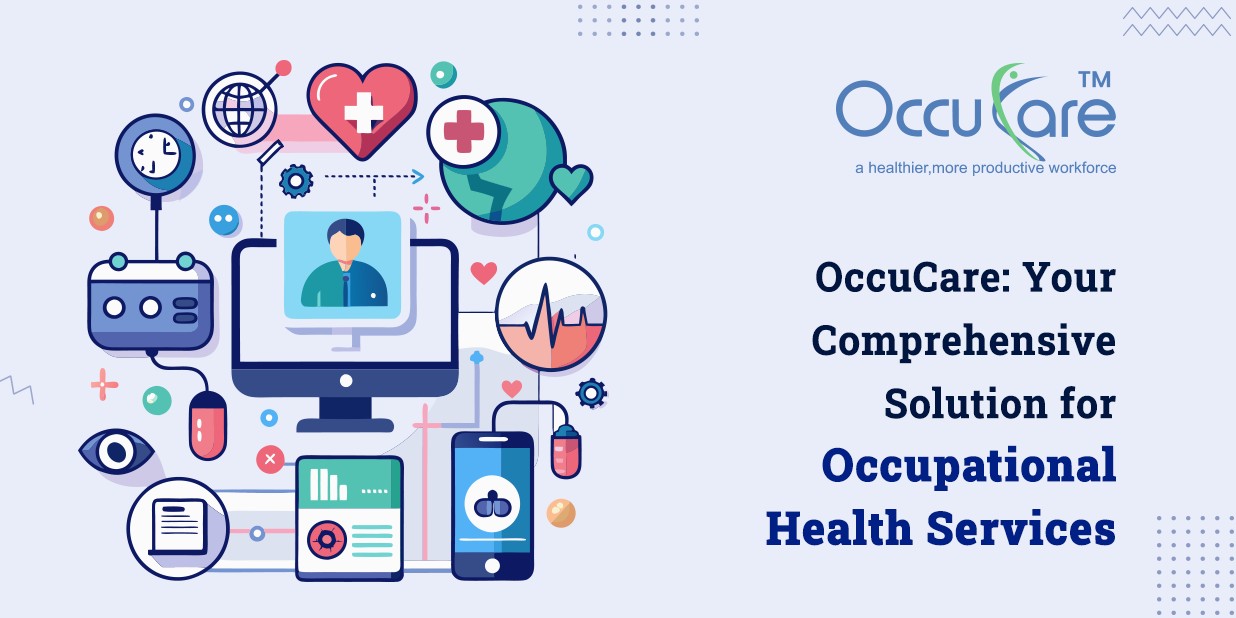
Assuring workers’ health and safety is more important than ever in today’s hectic and strictly regulated work environments. Managing workplace health hazards effectively promotes employee well-being and productivity and helps comply with requirements. OccuCare stands out as a top provider of occupational health services, providing a thorough method for improving and managing workplace health. Through the integration of cutting-edge technology with Occupational Health Management Services, it offers a full platform catering to contemporary enterprises’ various requirements.
1. Need for Advanced Occupational Health Services:
Basic health examinations and safety procedures are no longer enough, given the changing occupational health scenario. Businesses must deal with various health issues, manage complicated regulations, and ensure their health programs are legal and efficient. OccuCare provides a strong foundation for providing these vital services, guaranteeing that every facet of occupational health is addressed in detail.
2. Power of Occupational Health Management Services:
Providing efficient Occupational health management services is essential to keeping employees healthy. These services cover a wide range of tasks, such as risk assessments, health assessments, and the application of preventative measures. OccuCare is exceptional at integrating these services seamlessly, enabling businesses to effectively monitor health risks and guarantee adherence to occupational health laws. Companies may focus on establishing a safer work environment, minimising administrative responsibilities, and streamlining their health management procedures by utilising OccuCare’s Software.
3. Features of the Occupational Health Services System:
OccuCare’s cutting-edge Occupational Health Services System, which combines several aspects of health management onto a single, coherent platform, is one of its main advantages. Included in this system are:
- Health Surveillance and Monitoring: It is essential to do routine health surveillance to spot possible health concerns before they become serious.
- Compliance Management: Complying with occupational health rules is a difficult undertaking that necessitates exact reporting and record-keeping.
- Incident Management: Minimising the effects of workplace events and averting recurrence needs effective management. With OccuCare’s incident reporting, tracking, and analysis tools, businesses can quickly address and manage health and safety issues.
- Wellness Programs: One of the most important elements of a thorough occupational health plan is employee wellness initiatives.
4. Benefits of Using OccuCare for Occupational Health Services:
Utilising OccuCare for Occupational Health Services offers numerous benefits for organisations:
- Enhanced Efficiency: It increases operational efficiency and frees up healthcare providers to concentrate on providing high-quality treatment by centralising health management responsibilities.
- Improved Employee Health: Proactive interventions, wellness programs, and routine monitoring all help to enhance general health and lower absenteeism.
- Cost Savings: Considerable cost reductions are possible when occupational health is effectively managed. OccuCare minimises fines associated with noncompliance, reduces workplace injuries, and helps employers better manage their health-related costs.
- Data-Driven Insights: These insights support organisations in identifying patterns, making well-informed decisions on their health programs, and consistently enhancing their approaches to occupational health.
5. Implementation and Integration:
Integrating OccuCare’s Occupational Health Services System with current workplace health procedures and systems is a necessary step in the implementation process. This procedure consists of:
- System Integration: Platforms for safety management and human resources are only two examples of the additional organisational systems that OccuCare easily interfaces with. This guarantees that health information is synchronised between several departments, offering a thorough picture of staff health and enabling coordinated actions.
- Customisation: OccuCare ensures that the system complies with company objectives and specifications, whether it be through customised wellness programs or modifications to health monitoring criteria.
- Training and assistance: Giving health professionals and staff the necessary training and assistance is essential to the successful implementation of OccuCare. To guarantee that users are competent in using the system and capable of handling their occupational health duties, OccuCare provides training materials and continuous assistance.
6. Future of Occupational Health Services:
The future of occupational health services is being shaped by shifting workplace dynamics and technological breakthroughs. The sector is always developing. Potential improvements in the future could be:
- Artificial Intelligence and Machine Learning: OccuCare’s capabilities can be further enhanced by integrating AI and machine learning, which can automate repetitive processes, provide tailored health recommendations, and provide predictive analytics.
- Telemedicine: By adding telemedicine capabilities to the Occupational Health Services System, remote health management and consultations will be possible, enhancing employee convenience and extending access to care.
- Integration of Wearable Technology: OccuCare is investigating how to incorporate wearable technology into its system to enable data collection and real-time health monitoring. Proactive health management will be supported by this integration, which will offer more thorough and precise health insights.
Conclusion:
OccuCare’s cutting-edge features, smooth integration, and emphasis on productivity and worker welfare make it an ideal tool for helping businesses manage their occupational health initiatives. Businesses may guarantee healthier staff, increase compliance, and propel overall success in their health and safety activities by utilising OccuCare’s Occupational Health Management Services. OccuCare continues to be at the forefront of the occupational health industry, offering cutting-edge and practical solutions for today’s workplaces.