In today’s rapidly changing business world, organisations can’t overlook incidents in the workplace, whether it’s a safety concern, a piece of equipment that’s malfunctioning, a compliance problem, or an employee grievance. A small mistake can result in significant financial losses, penalties, and damage to the company’s reputation.
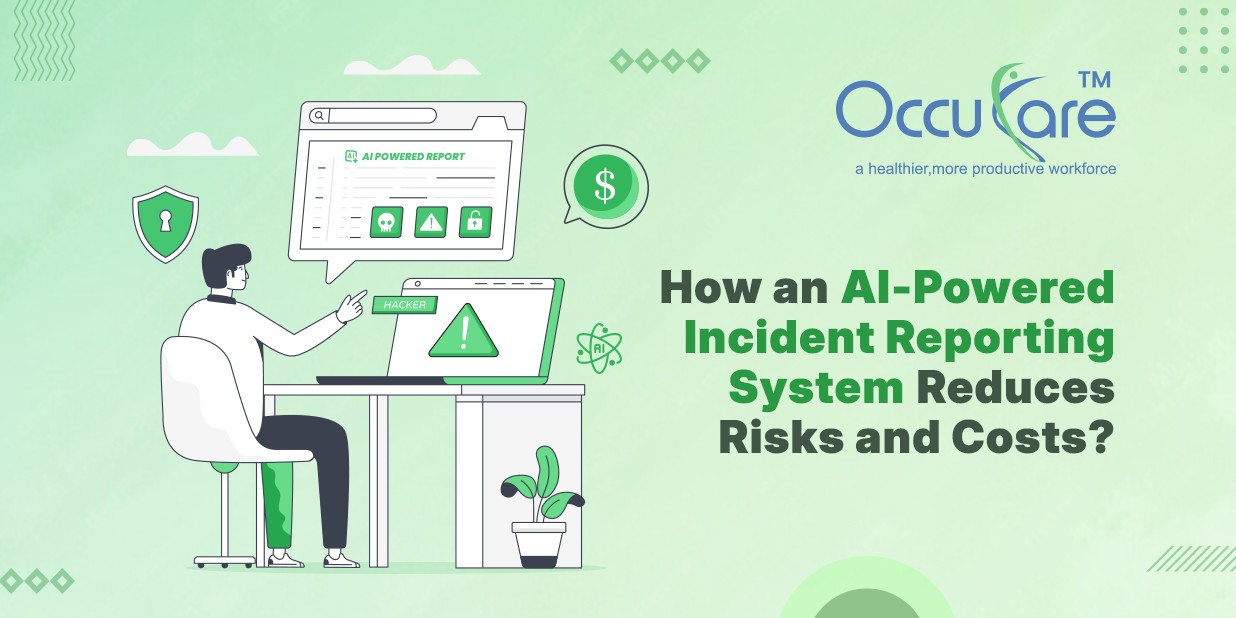
However, traditional reporting systems are often time-consuming, manual, and reactive. But with the introduction of artificial intelligence, organisations are now moving towards an AI-powered incident reporting system that not only records incidents but also forecasts potential risks and prevents problems from arising in the future. Let’s see how this new technology can help minimise risks and costs while enhancing the overall efficiency of the workplace.
What Is an Incident Reporting System?
It is a systematic platform used by organisations to document, monitor, and track incidents that happen in the workplace. These incidents can be:
- Workplace injuries
- Near misses
- Equipment failure
- Security incidents
- Compliance issues
- Environmental hazards
Employees can report incidents through web or mobile applications, and managers can monitor investigations, while compliance teams can create reports instantly.
But with AI, it goes a step further.
What Makes an AI-Powered Incident Reporting System Different?
The AI-powered system does not just respond to incidents after they occur, but also enables organisations to:
- Identify risk patterns
- Uncover root causes
- Predict future incidents
- Suggest preventive measures
This makes the incident management process proactive rather than reactive.
1. Faster Reporting and Minimised Human Error:
The biggest problem with traditional reporting is the time it takes. Employees might forget information, be reluctant to report, or leave their forms partially filled out.
The AI Incident Reporting Software makes the process easier by:
- Auto-filling frequently used fields
- Enabling voice-to-text reporting
- Identifying missing information
- Categorising incidents automatically
For instance, if an employee reports “oil spill in the machine area,” the AI will automatically categorise it as a “slip hazard” and route it to the safety team.
2. Real-Time Incident Inspection Analysis:
The most exciting aspect of AI integration is Incident Inspection Analysis.
The AI can analyse:
- Historical incident reports
- Inspection results
- Safety audit results
- Maintenance records
This approach prevents serious incidents and related expenses.
3. Predictive Risk Management:
An AI-driven incident reporting system can identify high-risk zones by processing:
- Historical incident patterns
- Employee behaviour patterns
- Environmental factors
- Machine usage data
This enables proactive maintenance and safety training before the incident happens.
Preventing one critical incident can save lakhs or crores of rupees in legal, medical, and operational expenses.
4. Reduced Legal and Compliance Costs:
Certain sectors like manufacturing, healthcare, logistics, and construction must adhere to stringent compliance norms.
Lack of proper documentation can lead to:
- Exorbitant fines
- Legal disputes
- Insurance claim denials
- Forceful business closure
The Advanced Incident Reporting Software helps with:
- Automatic documentation
- Timestamped documentation
- Audit-ready documentation
- Compliance norm tracking
AI can also point out compliance deficiencies by comparing incident reports with compliance norms.
This minimises the possibility of non-compliance penalties and safeguards the organisation from legal liabilities.
5. Reduced Insurance Premiums:
An AI-based incident reporting solution benefits companies by:
- Ensuring accurate safety records
- Providing proof of preventive actions
- Indicating lower risk over time
This results in lower insurance bills and better insurance firm negotiation positions.
6. Improved Root Cause Analysis:
Incident management involves the largest challenge of finding the root cause.
Companies usually focus on symptoms rather than the root cause.
- Compare similar past incidents
- Find commonalities
- Detect behaviours or operation patterns
- Provide recommendations
7. Data-Driven Decision Making:
Without effective data analysis, management decisions are merely a result of guesswork.
- Trend analysis of incident rates
- Risk levels by department
- Cost analysis of impact
- Safety performance metrics
8. Operational Efficiency and Cost Savings:
Incidents in the workplace result in:
- Production downtime
- Machinery repair costs
- Medical bills
- Legal settlements
- Loss of productivity
Conclusion:
Workplace incidents don’t just create reports — they create recurring costs, compliance risks, and operational disruptions that quietly impact your bottom line. An AI-powered incident reporting system changes this by turning everyday safety data into predictive intelligence, helping you identify patterns, prevent repeat incidents, strengthen compliance, and significantly reduce legal, insurance, and downtime expenses. Instead of reacting to accidents, your organisation gains the power to prevent them. At OccuCare, we help businesses transform safety from a reactive obligation into a strategic advantage — contact us today for a free demo and see how our AI-driven Occupational Health & Safety solution can reduce risks while improving efficiency.