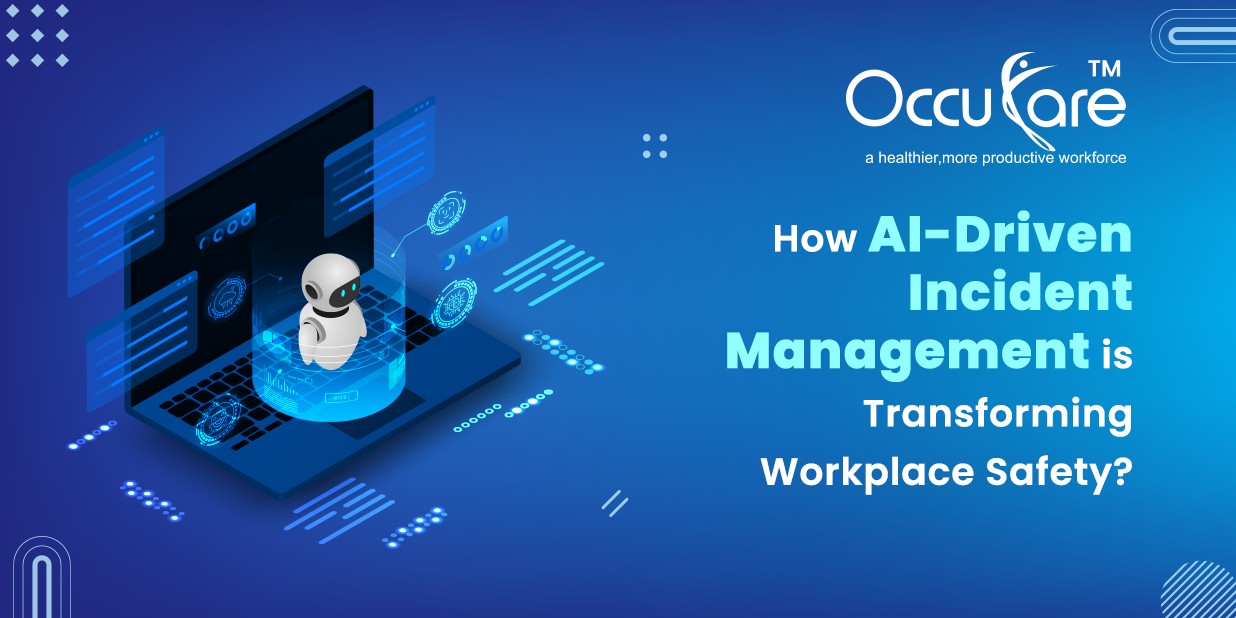
Every workplace incident leaves behind more than operational disruption—it exposes gaps in safety intelligence. As industries embrace digital transformation, AI-driven Incident Management is redefining how organizations predict, prevent, and respond to workplace risks. Traditional safety systems often depend on manual reporting, delayed investigations, and reactive processes, making it difficult for organizations to identify hazards before they escalate. In industries such as manufacturing, construction, healthcare, and corporate operations, these limitations can result in compliance challenges, productivity losses, financial impact, and increased safety risks for employees.
Artificial Intelligence (AI) is transforming workplace safety by enabling organizations to shift from reactive incident response to proactive risk prevention. Through machine learning, predictive analytics, real-time monitoring, and intelligent automation, AI-powered Incident Management systems help businesses detect hazards faster, streamline incident reporting, improve compliance management, and accelerate corrective actions. By leveraging AI-driven safety solutions, organizations can create safer work environments, strengthen operational efficiency, and build a more resilient Occupational Health and Safety strategy for the future.
Development of Incident Management:
For years, groups used spreadsheets, printed forms, and manually created reporting systems to manage workplace incidents. However, while effective for their intended purpose, these methods often delay hazard detection, preventing companies from taking proactive measures.
Contemporary Incident administration software has revolutionized this procedure by digitizing the reporting, tracking, and resolution of workflows. These platforms are much more effective when paired with the AI features. AI can process large amounts of safety data, spot patterns, and predict upcoming incidents before they occur.
Businesses are shifting from reactive to proactive safety administration to reduce workplace accidents, downtime, and improve operational efficiency overall.
What is Incident Management Powered by AI?
AI Motivated Incident Control is the use of technology for artificial intelligence, such as predictive analytics, machine learning, natural language processing, and automation in workplace safety systems.
AI-enabled systems can do more than just document incidents after the fact:
- Detecting Possible Hazards in Real-Time
- Recognize patterns of unsafe behavior
- Automated incident classification
- Recommend remedial measures
- Create predictive risk insights
- Make better decisions with intelligent analytics
AI allows organizations to advance beyond conventional safety management, creating a savvier, information-driven approach to ensuring safety at work.
1. Prediction with Risk Assessment:
Forecasting is one of the greatest benefits associated with AI-driven incident management. AI systems can evaluate past occurrences of incident records, worker conduct, conditions in the environment, and operational patterns to pinpoint potential safety risks.
For example, if a particular department is seeing repeated near misses throughout night shifts, the artificial intelligence (AI) system may detect the problem before a major accident happens. This allows safety managers to take early preventive measures.
Organizations use predictive insights to
- Prevent injuries at work
- Minimize operational disruptions
- Improved compliance management
- Increase staff confidence
2. Faster Incident Reporting and Handling:
The conventional system for incident reporting includes filling out forms, sending emails, and undergoing time-consuming approval processes.
With modern incident management systems, reporting is simplified using:
- Mobile applications
- Voice-based reporting
- Automated workflow systems
- Notifications in real-time
AI adds to the efficiency of the entire process through automatic incident prioritization depending on their gravity, location, and frequency.
3. More Intelligent Analysis of Incidents:
One crucial aspect of workplace safety is being able to figure out why incidents occur. It is at this point that Incident Inspection Analysis proves itself invaluable.
An AI-enabled system can perform analysis on such aspects as:
- Incident causes
- Failure patterns of equipment
- Unsafe behavior of employees
- Environmental dangers
Rather than spending hours manually reviewing all available reports, an AI system will be able to pinpoint trends and derive useful information almost immediately.
Thus, if similar incidents keep occurring regarding a certain piece of equipment or process, recommendations for maintenance or training may follow.
Importance of Using Incident Inspection Analysis Software:
Modern organizations are now turning to Incident Management Software to enhance their safety practices in the workplace. With such advanced software, both digital inspection tools and artificial intelligence come together to make the entire investigative process easier and more effective.
Some of the main functions provided by this kind of software may include:
- Digital inspections
- Analysis of images and videos
- Hazard detection
- AI-generated reports
- Follow-up actions
- Compliance
In addition, the use of such technologies allows one to avoid mistakes related to inspections and analysis.
Real-Time Monitoring & Threat Detection:
AI tools like computer vision and IoT sensors have enabled organizations to keep an eye on their workplaces in real time.
For example:
- Cameras can sense if workers are wearing proper safety equipment.
- Sensors can detect leaks of hazardous gases and any sudden temperature changes.
- AI-driven systems can notify supervisors about unsafe worker behavior.
All of these real-time monitoring abilities can help organizations to take immediate action to prevent any threats and minimize the chances of any accident.
Proactive approaches to safety are some of the key advantages of AI-Driven Incident Management.
Improving Compliance and Reporting:
Compliance with workplace safety requirements is a must-have for all organizations. Yet, reporting and maintaining audit logs might take a lot of time.
Today’s Incident Management software allows you to improve compliance management as follows:
- Generate reports automatically
- Create audit logs
- Track the steps taken to address the issues
- Track compliance deadlines
Additionally, intelligent platforms may detect any compliance risks and advise on how to deal with them even before an audit happens.
Employee Engagement and Safety Culture:
While technology alone cannot make the workplace a safe place, employee engagement is equally essential.
With AI-supported safety systems, employees can be motivated to engage in safety processes by:
- Incident-reporting capabilities
- Anonymous reporting of hazards
- Personalized safety advice
- Interactive safety courses
As employees are encouraged to participate in safety efforts and are involved in hazard reporting, a positive safety culture is developed within the organization.
In addition to this, training sessions for workers can also be personalized through AI-based technology.
Data-Driven Decision Making:
Among the many strengths that Incident Inspection Analysis Software has is its capability to transform data into useful information.
Through AI dashboard technology, the management receives important information such as:
- Trends in incidents
- Risk assessments per department
- Safety performance information
- Risk prediction scores
This information helps organizations make intelligent decisions about their:
- Resource utilization
- Investment in safety
- Training programs for employees
- Operational efficiencies
Industries benefiting from AI-driven incident management include:
Manufacturing: Artificial intelligence plays a significant role in monitoring machines and equipment, as well as in the prevention of production-related accidents.
Construction:
AI-driven Incident Management is rapidly becoming a core pillar of modern Occupational Health and Safety strategies. By enabling organizations to move beyond reactive incident handling, it helps businesses proactively identify risks, prevent workplace accidents, and strengthen compliance across operations. With capabilities such as predictive analytics, real-time monitoring, and automated reporting, organizations can significantly improve safety performance while reducing downtime and operational risks.
As industries continue to evolve, adopting AI-powered safety solutions is no longer optional—it is essential for long-term business sustainability and workforce protection. Organizations that embrace intelligent Incident Management systems are better positioned to build a strong safety culture, improve decision-making through data insights, and ensure continuous improvement in workplace safety standards. To modernize your safety processes and experience the benefits of AI-driven Incident Management, contact us today for a free demo.