Workplace safety is a key priority for organizations across manufacturing, construction, healthcare, logistics, and other industries. Traditional safety approaches often focus on addressing incidents after they occur, making it essential for businesses to adopt more proactive methods for identifying hazards and reducing risks. With the advancement of AI technology, organizations can now use data-driven solutions to strengthen workplace safety and make better preventive decisions.
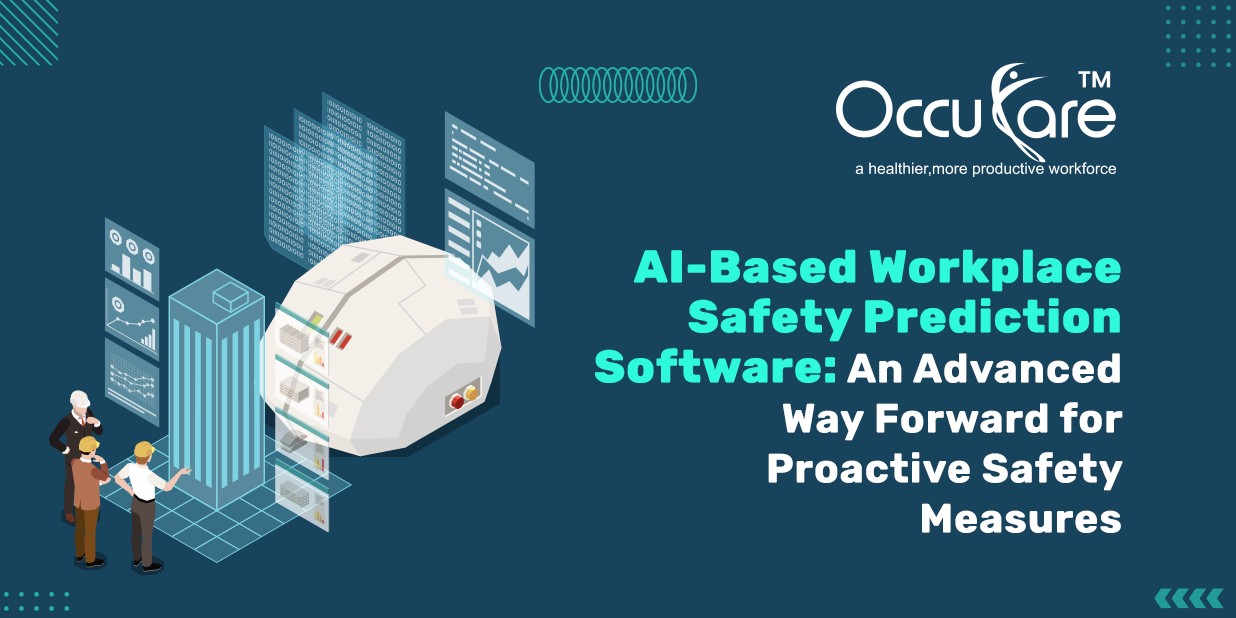
AI-based workplace safety prediction software helps businesses analyze safety data, identify potential risks, and take preventive action before incidents occur. By supporting proactive risk management and smarter safety decisions, this technology can help organizations improve their safety performance and build a stronger safety culture. In this blog, let’s explore how AI is transforming workplace safety and the key benefits of adopting predictive safety solutions.
What Is AI-Based Workplace Safety Prediction Software?
It’s a technology product aimed at recognizing potential safety risks in the workplace by means of artificial intelligence, machine learning, and data analysis.
Rather than focusing only on past incidents or inspections, AI-based systems will be able to process different kinds of data, such as:
- Workplace incidents and accidents reports
- Employee health and safety records
- Inspections and audits outcomes
- Hazard and risk assessments
- Equipment and maintenance information
- Environment data
- Near-miss reports
- Employee training and compliance information
The system will allow discovering risk patterns and factors that cannot be discovered using other safety management techniques.
How Does AI Predict Safety Risks at Work?
Safety predictions using AI require massive amounts of data. The larger and more reliable the amount of data an organization possesses, the greater its chances of spotting any patterns.
Machine learning algorithms may be used to analyze the organization’s historical data and any live data to determine the connection between various factors related to workplace safety.
Predictive safety analytics may be able to spot the fact that workplace accidents are more probable when a set of various factors is present, such as:
- High load of employees
- Poor training of employees
- Delay in equipment maintenance
- Recurrent safety violations
- Changes in the environment
- Near-misses
- High-risk activity
If several risk factors are spotted in combination, the software may produce an alert or calculate a risk score. This way, safety professionals will know which preventive actions should be taken.
Key Advantages of Predictive Safety Analytics
1. Early Risk Detection
The ability to detect risk early on is one of the key benefits of predictive safety analytics. Organizations can predict and prevent an accident instead of just responding to it.
2. Enhanced Decision-Making for Safety
Usually, there is plenty of data at the disposal of safety professionals; however, it takes too much time to analyze it manually. In such a case, AI can help by processing vast amounts of data and delivering insights.
3. More Effective Resource Distribution
There is no need to say that not all workplace hazards have the same level of risk. Artificial intelligence will help organizations to allocate their resources in a more targeted manner.
4. Decreased Number of Workplace Incidents
As predictive safety analytics makes it possible to detect risk patterns before any incidents happen, organizations get an opportunity to implement preventive controls, which can result in the reduction of accidents and injuries.
5. Enhanced Safety Compliance
AI can help organizations detect areas where there are issues with the compliance of safety procedures.
The Modern Safety Management System and AI
Safety Management System is a method of managing workplace safety. This system usually involves several tasks, including hazard identification, risk assessment, incident management, inspection, employee training, corrective action, and improvement.
However, using AI will improve the effectiveness of these activities by introducing the prediction component into the system.
Thus, for instance, the AI-introduced safety system will be able to detect any recurrence of hazards based on the inspection results. In addition, it will monitor corrective actions and reveal those areas that still have certain problems.
Therefore, a continuous cycle is introduced:
Data Gathering → Risk Assessment → Prediction of Hazards → Prevention of Hazards → Results Monitoring → Safety Improvement
In that way, the system will become smarter as the company continues gathering data.
AI in Safety Management: Bigger than Incidents Reporting
Despite the importance of incident reporting in safety practices, modern safety systems can be more than just logging incidents.
Safety data can become more insightful thanks to the implementation of AI technologies. Rather than storing safety-related information in different tables or spreadsheets, AI allows the detection of patterns in different sources of data.
For example, an organization can identify the presence of types of hazards within a certain department. With the help of AI, such patterns will be noticed, and safety managers will be able to decide what measures need to be taken.
In this way, safety management becomes more data-driven.
The Future of AI-Driven Safety Systems
As companies collect more safety data from inspections, reports by workers, machine readings, and their processes, AI will have an even greater chance of recognizing upcoming dangers.
Future Safety Systems could start providing real-time risk monitoring, automated alerting, risk scoring, and personalized recommendations for the safety team.
It will allow companies to go from responding to incidents to predicting and preventing them.
Conclusion
AI is changing the way organizations approach workplace safety by helping them move from reactive incident management to proactive risk prevention. By analyzing safety data, identifying risk patterns, and providing actionable insights, AI-driven solutions can support better decision-making, improve compliance, optimize safety resources, and contribute to a stronger safety culture. For businesses looking to modernize their Occupational Health and Safety processes, adopting predictive technology can be a valuable step toward creating safer and more efficient workplaces.
At OccuCare, we help organizations strengthen their safety management with technology-driven solutions designed to support smarter and more proactive safety practices. Whether you are looking to improve risk identification, streamline safety processes, or enhance workplace safety performance, our solutions can help you take the next step. Contact us today for a free demo and discover how OccuCare can support your organization’s workplace safety goals.