Environmental, Social, and Governance (ESG) compliance has become a key focus for organizations seeking sustainable growth, stronger stakeholder confidence, and improved corporate responsibility. Businesses today are expected to demonstrate environmental accountability, ethical governance, and transparent operations to meet the evolving expectations of investors, employees, customers, and regulatory authorities. However, effective ESG management requires more than annual disclosures—it involves collecting accurate data, monitoring performance, managing risks, meeting regulatory requirements, and generating reliable reports that reflect an organization’s sustainability efforts.
Managing ESG processes manually can be challenging, especially for companies with multiple locations, complex operations, and large workforces. ESG compliance software helps organizations streamline sustainability initiatives by automating data collection, simplifying reporting, tracking compliance obligations, and providing actionable insights through centralized dashboards. By adopting digital ESG solutions, businesses can enhance transparency, minimize compliance risks, improve decision-making, and create long-term value through responsible and sustainable operations.
Understanding ESG Compliance:-
The ability of a firm to adhere to environmental, social, and governance criteria set by governments, business authorities, investors, and internal corporate rules is known as ESG compliance.
The following are the three ESG pillars:
Environmental:
This focuses on how organizations manage their impact on the environment, including:
- Carbon emissions
- Energy consumption
- Water usage
- Waste management
- Air pollution
- Climate change initiatives
- Renewable energy adoption
Social:
The social component assesses how businesses handle their interactions with workers, clients, vendors, and communities.
It includes:
- Safety and health of employees
- Diversity in the workplace
- Human rights
- Participation of the community
- Well-being of employees
- Instruction and growth
- Workplace regulations
Governance:
Responsible company management and moral leadership are guaranteed by governance.
It includes:
- Corporate ethics
- Risk management
- Data privacy
- Anti-corruption measures
- Board diversity
- Regulatory compliance
- Internal controls
Businesses that successfully handle these areas are better positioned to lower operational and regulatory risks and foster stakeholder trust.
Why Has ESG Compliance Become a Business Priority?
Governments all across the world have implemented more stringent sustainability laws in recent years. Customers favor companies that exhibit environmental and social responsibility, and investors are increasingly taking ESG performance into account when making investment decisions.
Poor ESG performance can result in:
- Regulatory penalties
- Loss of investor confidence
- Reputation damage
- Higher operational risks
- Reduced customer trust
- Lower employee engagement
In addition to reducing these risks, strong ESG compliance opens doors for long-term company growth, innovation, and operational effectiveness.
Challenges of Managing ESG Compliance Manually:-
To manage ESG data, a lot of firms still use spreadsheets, emails, and disjointed systems. This strategy could be effective at first, but as operations grow, it becomes more challenging.
Common challenges include:
Data Scattered Across Multiple Departments:
Manufacturing facilities may provide environmental data; HR oversees workforce metrics, and legal or compliance departments handle governance data. Inconsistencies are frequently the result of manually combining this data.
Human Errors:
Manual data entry increases the likelihood of:
- Missing records
- Duplicate entries
- Incorrect calculations
- Reporting inaccuracies
Changing Regulations:
ESG laws are still changing on a worldwide scale. To comply with new reporting requirements, organizations must continuously update their compliance procedures.
Lack of Real-time Visibility:
Organizations find it difficult to spot compliance deficiencies before they become significant problems without centralized monitoring. Outdated reports are frequently sent to management, delaying corrective action.
Audit Difficulties:
It can take weeks of work to gather historical records from several departments during audits. Concerns about compliance may arise from missing documents.
What is ESG Compliance Software?
A digital platform called ESG Compliance Software was created to assist businesses in gathering, tracking, managing, and reporting ESG-related data from a single system. Businesses can automate ESG procedures and obtain full visibility into sustainability performance without depending on spreadsheets.
Typical components of contemporary ESG software are:
- Management of ESG data
- Monitoring compliance
- Reporting on sustainability
- Risk control
- Dashboards for KPIs
- Management of audits
- Management of documents
- Automated processes
- Updates on regulations
- Analytics for performance
For all ESG-related tasks, the program establishes a single source of truth.
How ESG Compliance Software Improves Compliance?
1. Centralizes ESG Data:
Centralizing data from several departments is one of its greatest benefits.
Organizations can manage:
- Energy Consumption
- Water Usage
- Carbon Emissions
- Workplace Incidents
- Employee Diversity
- Supplier Compliance
- Governance Compliances
2. Automates Data Calculation:
Manual data gathering consumes significant time and resources. ESG Software automates data collection from:
- IoT devices
- ERP systems
- HR software
- Environmental monitoring systems
- Utility databases
- Financial systems
3. Simplifies Regulatory Compliance:
One of the most difficult aspects of compliance is keeping up with evolving legislation. Strong Regulatory Compliance Organizations benefit from software solutions:
- Track applicable regulations
- Monitor compliance deadlines
- Maintain documentation
- Generate audit trails
- Receive alerts for non-compliance
- Prepare regulatory reports
4. Enables Real-Time Monitoring:
Instead of waiting for monthly reports, organizations can monitor ESG performance continuously. Real-time dashboards display:
- Carbon footprint
- Energy usage
- Incident rates
- Compliance status
- Sustainability KPIs
- Risk indicators
5. Improves Risk Management:
Every organization faces ESG-related risks.
These may include:
- Environmental violations
- Workplace accidents
- Supply chain issues
- Governance failures
- Data privacy concerns
How ESG Compliance System Enhance Transparency?
One of the best markers of ethical corporate governance is transparency. Stakeholder trust is increased by companies that are transparent about their ESG performance.
Better Data Accuracy:
Accurate reporting builds confidence.
Automated validation minimizes:
- Missing values
- Duplicate records
- Calculation mistakes
- Reporting inconsistencies
Stakeholders receive reliable ESG information.
Consistent Reporting:
Reports are frequently prepared differently by different departments. The program ensures uniformity by standardizing reporting formats throughout the company.
Easy Access to Information:
Authorized data can be accessed on a single central platform by executives, auditors, sustainability teams, and compliance managers. Collaboration and decision-making are enhanced as a result.
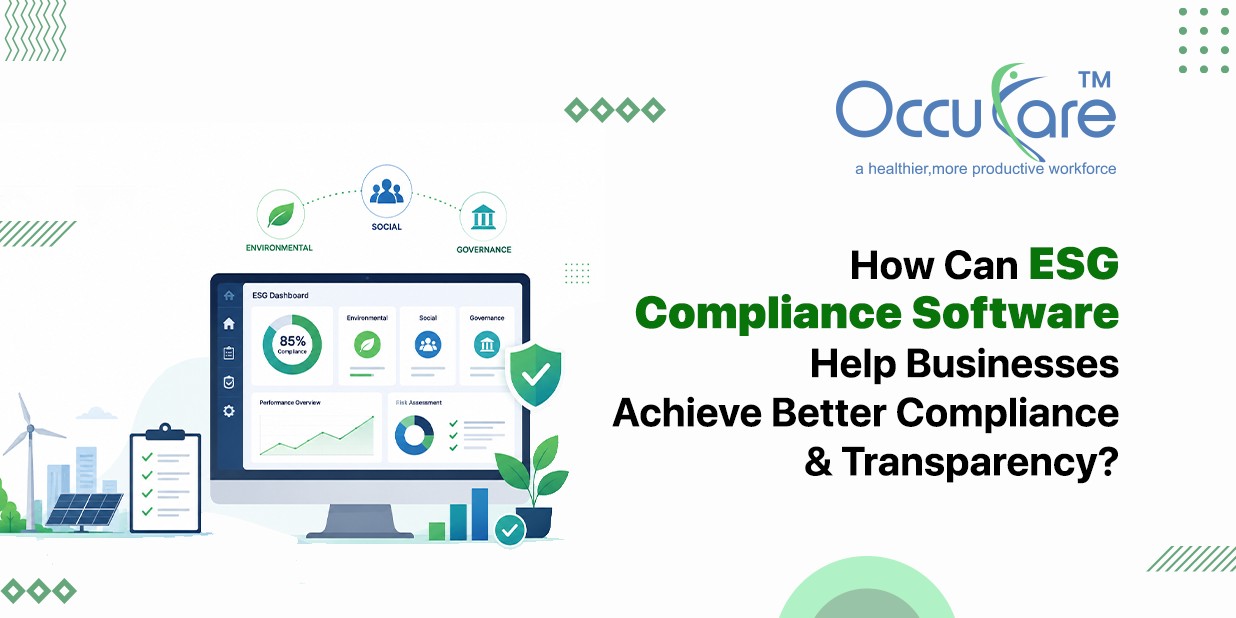
Performance Dashboards:
Interactive dashboards provide visual insights into ESG performance. Organizations can monitor:
- Sustainability targets
- Carbon emissions
- Waste reduction
- Employee safety
- Diversity metrics
- Compliance scores
Visual reporting improves understanding at every organizational level.
Role of Sustainability Compliance Software:
Sustainability Compliance Software is being used by organizations to handle environmental responsibilities in addition to more general ESG initiatives. The program helps companies keep an eye on:
- Carbon Emissions
- Water Conservation
- Waste Generation
- Recycling Programs
- Renewable Energy Usage
- Environmental Permits
- Sustainability Objectives
Industries Benefiting from ESG Compliance Software:
Almost every industry can benefit from ESG Software. These include:
- Manufacturing
- Construction
- Oil and Gas
- Mining
- Pharmaceuticals
- Healthcare
- Logistics
- Energy
- Chemical Industries
- Food Processing
- Information Technology
- Banking and Financial Services
Best Practices for Successful ESG Compliance:
Implementing software alone is not enough. Organizations should also:
- Define clear ESG objectives.
- Establish measurable KPIs.
- Ensure data accuracy.
- Train employees on ESG responsibilities.
- Conduct regular internal audits.
- Review compliance performance frequently.
- Encourage leadership involvement.
- Continuously improve sustainability initiatives.
Combining technology with strong governance creates lasting compliance success.
Conclusion:
As ESG expectations continue to evolve, organizations need smarter solutions to manage sustainability goals, improve transparency, and maintain compliance across their operations. A digital ESG management solution helps businesses move beyond manual processes by enabling accurate data management, real-time insights, automated reporting, and better risk visibility. By integrating technology with effective governance practices, companies can strengthen their sustainability initiatives, meet stakeholder expectations, and build a more resilient and responsible business model.
Selecting the right compliance solution allows organizations to simplify complex regulatory requirements and stay prepared for changing industry standards. With advanced Regulatory Compliance Software, businesses can improve operational efficiency, maintain audit readiness, and make informed decisions that support long-term growth. Contact OccuCare today for a free demo and discover how our solutions can help your organization enhance compliance management, improve transparency, and achieve sustainable business success.