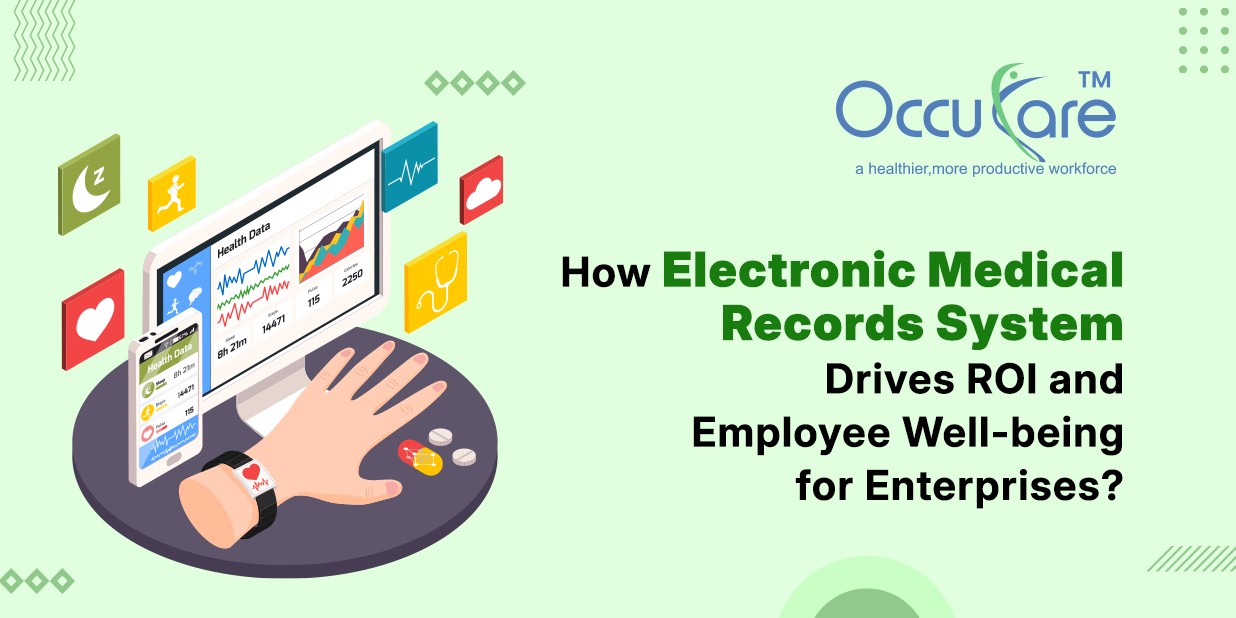
Data is now essential for making decisions in the current healthcare environment and even in non-clinical workplace settings. Electronic Medical Records systems have become a potent driver for change as businesses pursue efficiency, accuracy, and employee-centric practices. EMR systems now play a far greater strategic role than when they were first introduced as tools for scanning patient data. They improve healthcare outcomes, streamline operations, lower costs, and contribute to happier, healthier workforces.
They directly lead to improved employee well-being and quantifiable return on investment (ROI). This examines how the EMR system improves the human experience for both the employees they serve and the providers who use them, while also providing financial value.
Describe an EMR and explain why organizations need it.
A patient’s medical records, diagnoses, treatments, medications, allergies, test results, and imaging data are all combined into an Electronic Medical Record (EMR), which provides a digital record of their health information. Today, Electronic Health Records Software plays an increasingly important role in managing and accessing this information efficiently. Although EMRs are typically associated with medical facilities, they are becoming increasingly important
Why is this significant?
Because of the current enterprise ecosystem:
- Productivity and retention are directly impacted by employee health.
- Cost-effective solutions are required due to rising healthcare expenditure.
- Compliance, rapidity, and accuracy are now required.
- Making decisions based on data is becoming a basic corporate requirement.
Through digitization, analytics, and better workflow design, an Electronic Medical Records System helps organizations accomplish these objectives.
How Do EMR Systems Increase Business ROI?
An effective EMR system is a potent source of revenue. Although the initial outlay for software license, hardware, training, and change management may appear substantial, the long-term savings and increased revenue greatly exceed the expenses.
The main methods EMRs provide ROI are listed below:
- Cost-cutting and Operational Efficiency: Paper-based systems are slow to manage, ineffective, prone to errors, and expensive to keep. Through automation and information consolidation, EMRs remove these inefficiencies.
- Lower Paper and Storage Expenses: Physical files are no longer necessary for businesses to buy, store, or manage. This lowers administrative costs and frees up precious real estate.
- Automating Administrative Processes: Automation is applied to tasks including billing, scheduling, processing claims, and paperwork. Workers devote more time to high-value work and less time to tedious administrative duties.
- Quicker Access to Data: The time spent looking for records or waiting for file retrieval is decreased when clinicians and administrative personnel have rapid access to patient data.
- Error Mitigation: Paperwork errors are decreased by electronic data with built-in validation, which decreases risk of lawsuits and enhances billing and reporting accuracy.
When combined, these operational reductions result in significant cost savings, which are frequently the biggest factor determining EMR ROI.
Enhanced Revenue Cycle Administration:
Accurate and effective billing is critical to the financial survival of healthcare-focused businesses.
EMRs improve the revenue cycle through:
- Making sure that clinical documentation is the basis for accurate coding
- Lowering the number of claims rejected
- Accelerating reimbursements
Strengthening Compliance and Reducing Legal Risks:
Compliance is a critical concern for enterprises running occupational health centers or corporate medical units. An Electronic Medical Records System helps organizations stay compliant with regulatory frameworks such as OSHA, HIPAA, and industry-specific reporting standards.
With standardized templates, automated alerts, and audit-ready documentation, an EMR System ensures:
- Accurate and complete employee health documentation
- Timely reporting of workplace injuries and illnesses
- Proper secure storage of digital health records
- Reduced compliance-related penalties
For enterprises that manage large volumes of health data, EMRs provide a centralized, tamper-proof system that lowers legal risks and enhances transparency across employee health operations.
Boosting Employee Well-Being Through Preventive Care:
One of the most significant advantages of modern EMR Software is its ability to support preventive health initiatives. Corporate wellness is no longer reactive—it is strategic. With structured data and real-time insights, organizations can shift from treating problems to preventing them.
EMR-driven preventive care advantages:
- Identifying health trends such as fatigue, recurring injuries, or ergonomics issues
- Enabling early interventions and routine screening programs
- Monitoring chronic conditions that may impact productivity
- Supporting mental health and stress management programs
By improving access to employee health insights, EMR systems empower wellness teams and occupational health professionals to design proactive, targeted well-being programs that reduce absenteeism and boost employee morale.
Enhancing Care Quality with a Cloud-Based EMR System
A Cloud-Based EMR System is especially beneficial for enterprises with multiple branches, remote employees, or on-site occupational health clinics. Cloud deployment ensures real-time accessibility and consistent care across all locations.
Key advantages include:
- Centralized access to employee medical history
- Seamless collaboration between clinicians, nurses, and safety officers
- Instant updates across all devices and locations
- Minimized downtime with secure, managed cloud infrastructure
Cloud-based platforms also offer scalability and low maintenance, making them ideal for growing enterprises seeking cost-efficient digital transformation.
Building a Data-Driven Employee Health Strategy
Modern enterprises need actionable insights—not just data. EMR platforms provide powerful analytics and reporting tools that support strategic decision-making.
With integrated analytics, companies can:
- Track injury patterns, workplace hazards, and health trends
- Monitor progress of wellness and occupational health programs
- Forecast resource needs for clinics and health teams
- Measure ROI of corporate health initiatives
The ability to convert Digital Health Records into meaningful insights gives organizations a competitive advantage by building healthier, more productive workforces.
Improving Employee Experience and Engagement:
Employee experience is becoming a major productivity driver in enterprises. EMR solutions streamline the entire care process for employees, offering convenience and transparency.
EMR Systems improve employee experience by:
- Reducing waiting times during clinic visits
- Providing accurate, up-to-date health information
- Ensuring faster consultations and follow-ups
- Offering secure digital access to personal health summaries (in advanced systems)
When employees feel cared for, supported, and safe, their productivity and loyalty increase—directly contributing to enterprise ROI.
Conclusion:
As enterprises prioritize employee health, safety, and overall well-being, EMR systems have evolved into critical engines for transformation. From operational efficiency and compliance to preventive care and data-driven decision-making, the benefits are tangible and far-reaching.
For organizations aiming to enhance their occupational health practice, adopting a modern Electronic Medical Records System—preferably a Cloud-Based EMR System—is not just a technology upgrade; it is an investment in a healthier workforce and a more profitable business future.
Ready to Transform Your Workplace Health and Safety? OccuCare’s advanced Electronic Medical Records System is specifically designed for enterprise occupational health requirements. With cloud-based accessibility, integrated workflows, and intelligent analytics, OccuCare helps you improve employee well-being while maximizing ROI.
Book a Free Demo Today! Discover how OccuCare can streamline your employee health operations and create a safer, healthier, and more productive workforce.