Sustainability has evolved from a corporate initiative into a critical business responsibility. As investors, regulators, and customers place greater emphasis on Environmental, Social, and Governance (ESG) performance, organizations are under increasing pressure to accurately measure, manage, and reduce their carbon footprint. Effective carbon accounting has become a key component of modern sustainability strategies, helping businesses track greenhouse gas (GHG) emissions, improving environmental performance, and meeting evolving compliance requirements.
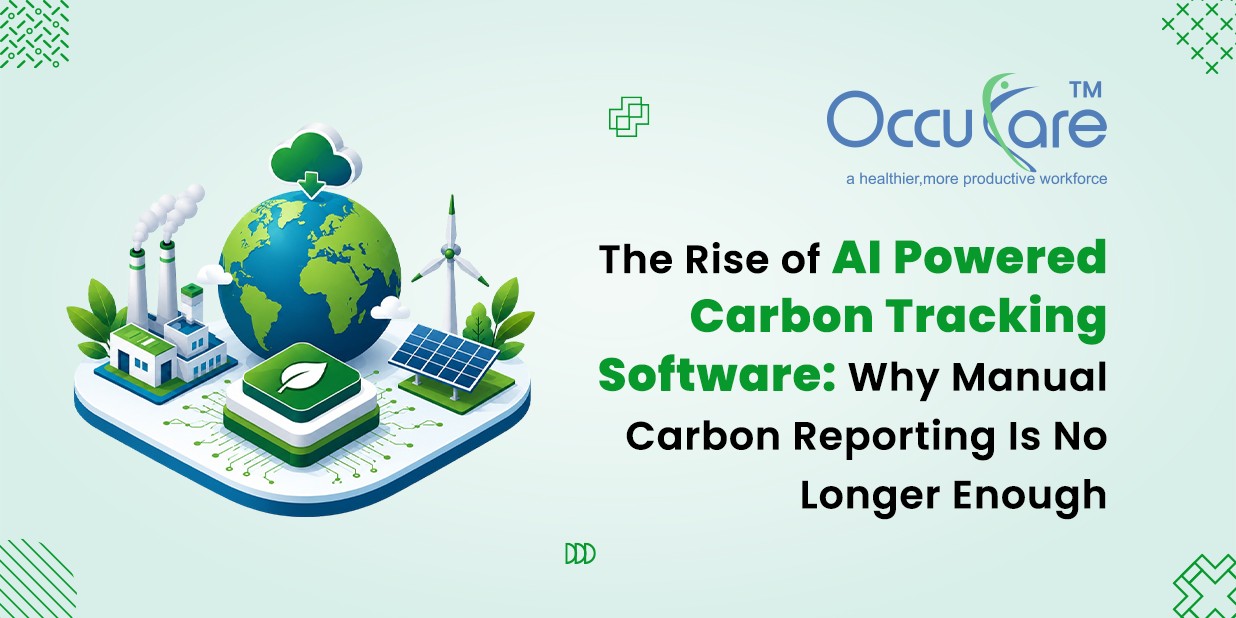
However, many organizations still rely on spreadsheets, emails, and manual processes for carbon reporting approaches that are no longer effective in today’s complex business environment. With expanding operations, multiple emission sources, global supply chains, and constantly changing regulatory standards, traditional reporting methods often lead to inefficiencies, data inaccuracies, and compliance challenges. This is where AI Powered Carbon Tracking Software is transforming the way businesses approach emissions management, enabling faster, more accurate, and data-driven sustainability decisions.
Carbon tracking software driven by AI is changing the game
Carbon management is becoming more intelligent, quicker, accurate, and more predictive thanks to artificial intelligence. Companies may now automate the entire process and get real-time insights into their carbon footprint instead of spending weeks gathering data from several departments.
Sustainability in the future will involve more than just reporting emissions; it will involve Carbon Emissions Tracking, forecasting, and actively lowering them through wise decision-making.
The Challenges of Manual Carbon Reporting
Spreadsheets are still a common tool for many sustainability teams, but as carbon reporting becomes more complex, they have serious drawbacks. Human Errors Can’t Be Prevented.
Errors are inevitable when entering data by hand. The accuracy of emissions reporting may be affected by incorrect formulas, duplicate entries, inadvertent deletions, inconsistent computations, and missing numbers.
Data Gathering Becomes Extremely Time-consuming
Information from many departments is needed for carbon reporting, including:
Procurement, Operations, Finance, Human Resources, Logistics, Manufacturing, Facility Management, and Supply Chain.
How Artificial Intelligence Enhances Automated Data Collection for Carbon Tracking?
Eliminating manual data entry is one of AI’s biggest advantages. AI automatically imports data from linked systems rather than asking each department for monthly spreadsheets. Logistics records, procurement bills, travel expenses, petrol and electricity consumption, and production data are all automatically recorded.
For Instance:
Suddenly, fuel consumption doubles.
Unexpected declines in electricity use
There are duplicate invoices.
Data from missing suppliers is found
Travel costs are higher than historical averages.
Move Beyond Reporting: Use AI to Build a Smarter Carbon Management Strategy
As ESG expectations and carbon disclosure requirements continue to grow, businesses need more than traditional reporting methods. AI-powered carbon tracking software helps organizations monitor emissions accurately, identify reduction opportunities, and make faster, data-driven sustainability decisions.
By automating data collection, improving reporting accuracy, and providing real-time insights, AI-driven carbon management solutions help companies simplify complex emissions tracking. Integrated with advanced ESG Reporting Software, these solutions enable better compliance, transparent reporting, and effective strategies for long-term carbon reduction.
The Future of Carbon Management: From Tracking Emissions to Predicting Impact
The future of sustainability will go beyond measuring past emissions—it will focus on predicting future carbon risks and opportunities. AI-powered carbon tracking software will help businesses forecast emission trends, identify potential reduction strategies, and make proactive decisions before challenges arise.
With predictive analytics and intelligent automation, organizations can move from reactive carbon reporting to a forward-looking approach that supports smarter sustainability planning, improved ESG performance, and long-term environmental goals.
Conclusion:
As sustainability expectations continue to evolve, businesses need smarter solutions to manage emissions, improve ESG performance, and stay ahead of compliance requirements. AI-powered carbon tracking software enables organizations to replace manual reporting challenges with accurate, automated, and actionable insights that support better environmental decisions.
At OccuCare, we help businesses simplify carbon management with advanced technology-driven solutions designed for accuracy, transparency, and long-term sustainability success. Take the next step toward smarter emissions management and discover how our solutions can support your sustainability goals. Contact us today for a free demo and explore the future of AI-powered carbon tracking.