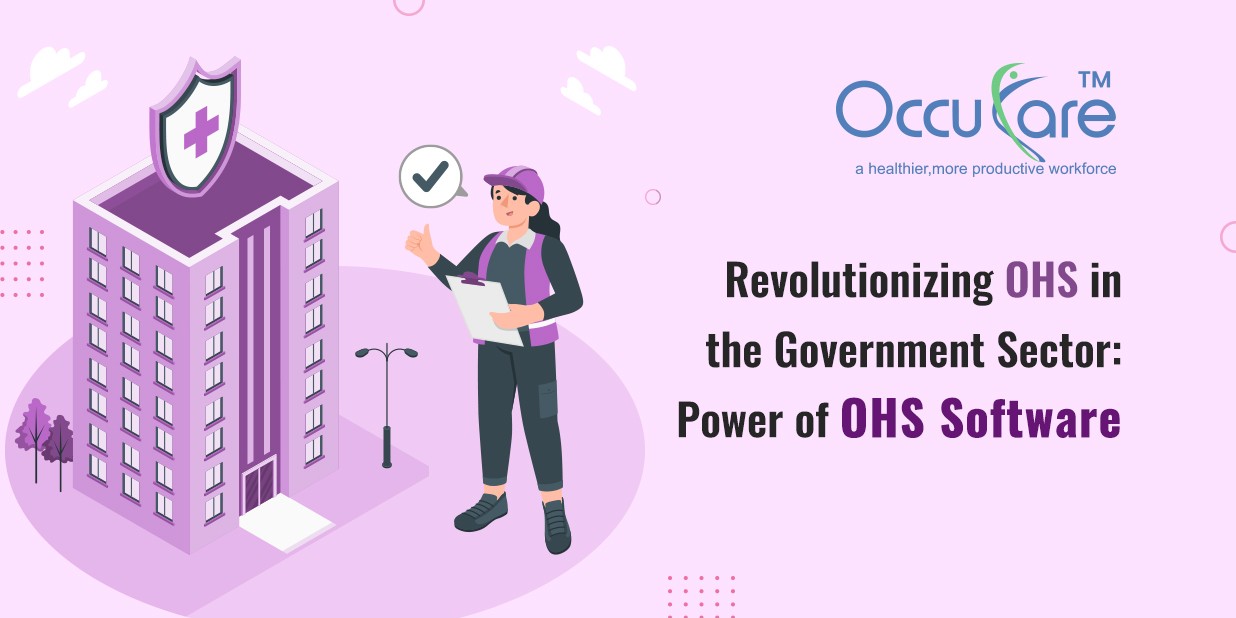
Every organization has to prioritize occupational safety and health (OHS), and the public sector is no different. Technology must be used to revolutionize OHS in the public sector, and OHS software is essential to making this happen.
Occupational safety and health is the leading organization for maintaining regulatory compliance, promoting a safe work environment, and guaranteeing the health and safety of people. In the public sector, where a wide range of activities occur, from fieldwork to administrative offices, efficient safety management is critical. A new era of OHS practices has been brought about by technological advancement. It is clear as we work through the many facets of this digital revolution that OHS software not only solves the safety issues of the present but also leads the government sector towards a future in which workplace safety is proactive, intelligently managed, and seamlessly woven into day-to-day operations.
1. Centralized Data Management:
This covers documentation for compliance, safety inspections, employee health records, and incident reports. A centralized system makes sure that all pertinent data is readily available, which promotes improved decision-making and regulatory compliance.
2. Real-time Safety measurements and Incident Reporting:
OHS system allows for real-time safety measurements and incident reporting. Instant notifications of any safety hazards can be sent to government agencies, enabling timely responses and interventions. This proactive strategy lessens the impact of possible hazards and helps prevent accidents.
3. Optimization of Compliance Processes:
Ensuring workplace safety is mostly dependent on government standards and regulations. It tracks changes in regulations and updates protocols to simplify compliance operations. By doing this, government organizations can avoid fines and maintain compliance with the most recent safety requirements.
4. Risk Evaluation and Mitigation:
OccuCare software facilitates thorough risk assessments by detecting possible dangers and evaluating their seriousness. Using this data, government agencies can priorities resources and put preventive measures in place to address the most serious hazards.
5. Education and Training:
Employee training programmers can be managed and tracked with OHS software. Government organizations can guarantee that the members of their staff are knowledgeable about safety practices and procedures. This is especially crucial in industries where unique knowledge and abilities are needed to manage certain hazards.
6. Mobile Accessibility:
With the help of numerous OHS App programmers, government employees can record events, carry out safety inspections, and obtain safety data from any location. Field workers, who might not constantly possess instant entry to a desktop computer, will especially benefit from this.
7. Connection with Other Systems:
Project management and HR software, among other corporate wellness system, can be connected with OHS software. This integration makes communication easier and guarantees that safety is integrated into all facets of government operations.
8. Statistics and Performance Measurement:
For evaluating safety performance over time, OHS software offers strong analytics tools. Based on data-driven insights, government organizations may monitor key performance metrics, spot patterns, and continuously enhance safety procedures.
9. Emergency Response Planning:
The creation and administration of emergency response plans can be aided by OHS software. Government agencies can practice different emergency situations so that staff members are ready to act appropriately in an emergency.
10. Cost Savings:
It helps government organizations save money by reducing downtime, averting accidents, and optimizing safety procedures. The long-term advantages of having a safer and more productive workplace frequently outweigh the costs associated with investing in OHS technology.
Government organizations can centralize data management through the use of OHS software, guaranteeing that vital information is easily available for well-informed decision-making. Quick reactions to safety events are made possible by real-time monitoring capabilities, which also help to promote a proactive hazard management culture.
Additionally, by automating compliance procedures, government organizations may reduce the likelihood of non-compliance and the fines that come with it by keeping up with the always changing safety rules. By using analytics and risk assessment tools, safety procedures can be continuously improved and resources may be allocated to places that most require them. This allows for a more nuanced understanding of possible dangers.