Across modern industries where operational speed, compliance demands, and workforce wellbeing are tightly interconnected, organizations are rethinking how they manage employee health and safety. As occupational risks become more dynamic and data-driven decision-making takes center stage, traditional health monitoring approaches often fall short in identifying risks early and preventing incidents. This shift is driving strong adoption of AI-powered medical surveillance, enabling companies to move toward proactive, predictive, and more effective occupational health management.
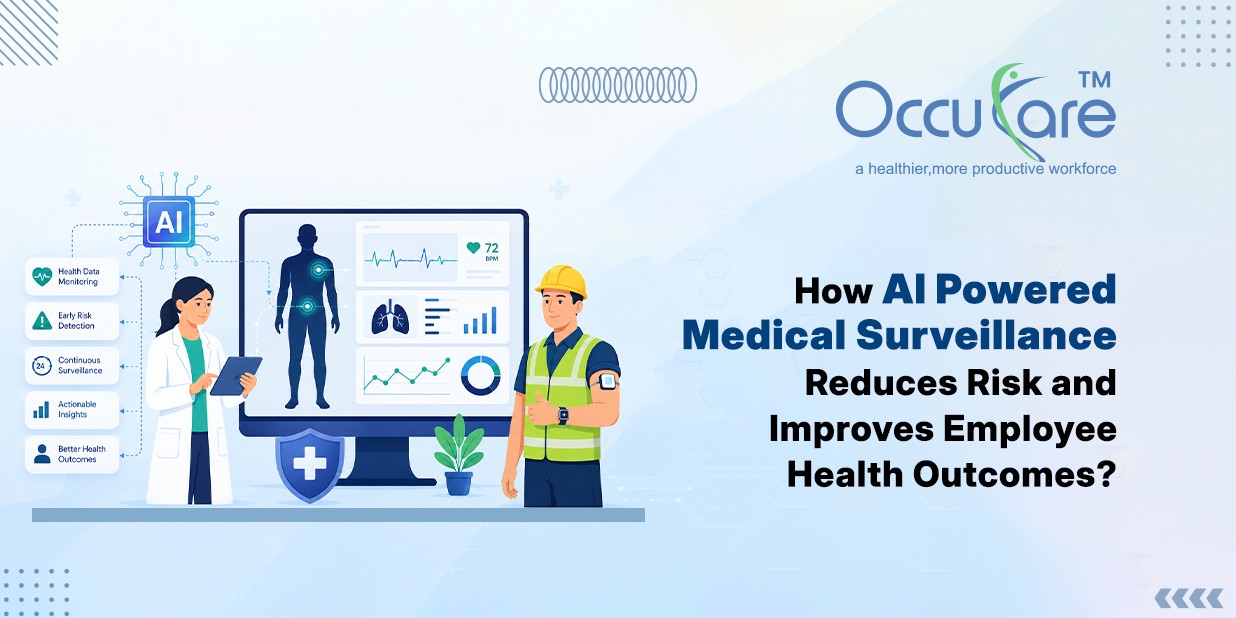
AI-powered medical surveillance leverages advanced algorithms and real-time data analysis to track employee health patterns, detect early risk indicators, and support timely interventions. By combining intelligent analytics with modern medical surveillance software and occupational health software solutions, organizations like OccuCare empower businesses to enhance workplace safety, improve regulatory compliance, and achieve better long-term employee health outcomes through smarter, prevention-focused strategies.
AI-Powered Medical Surveillance Definition:
AI-Powered Medical Surveillance refers to the use of artificial intelligence technologies to monitor, analyze, and manage employee health data. Data can be received from various sources, such as medical exams, exposures at work, health check-ups, wearables, and other sources.
Unlike traditional health monitoring approaches, AI systems can process large amounts of data in real-time, identify patterns, anticipate possible health risks,s and give actionable recommendations for employers and occupational health practitioners.
Using the power of AI and implementing it in an Employee Health Monitoring System and occupational health surveillance system, employers will be able to timely detect potential problems and take preventive measures to avoid health hazards.
Why Traditional Medical Surveillance Is Inefficient?
Many companies still use traditional health monitoring approaches, which include manual processing of data and occasional employee checkups. Although these methods provide useful information, they also have some significant disadvantages:
- Late detection of health risks
- Incomplete management of records
- Errors in data interpretation
- Lack of prediction abilities
- Inability to track health trends for a long period of time
- Higher administrative workload
Ways Artificial Intelligence Helps to Make Workplace Medical Surveillance More Efficient:-
1. Early Discovery of Health Problems:
One of the most significant advantages of using AI technology is the early detection of possible health problems.
By analysing employee medical information, exposure to hazards, and other health screening results, AI algorithms can find unusual trends indicating such health problems as:
- Respiratory disorders
- Loss of hearing
- Musculoskeletal disorders
- Cardiovascular risk factors
- Occupational diseases
Such early detection gives an opportunity for employers to act immediately to avoid any health complications or workplace accidents.
2. Predictive Risks Analysis:
The traditional way of health monitoring includes the discovery of problems. But AI can go one step forward and predict health risks.
The Advanced AI Healthcare Monitoring system can analyze both historical and current data to predict the possible health risks in view of:
- Job position
- Exposure to workplace hazards
- Working environment
- Medical history of employees
- Lifestyle characteristics
3. Real-Time Monitoring of Employee’s Health Status:
Wearable technology and other connected health technologies are widely employed in modern workplaces.
With the integration into the Employee Health Monitoring System, AI can constantly monitor the following health parameters:
- Heart Rate
- Blood Pressure
- Fatigue
- Stress Level
- Physical Activity
4. Better Compliance with Occupational Health Standards:
Organizations operating in industries such as manufacturing, construction, mining, healthcare, energy, etc., need to comply with occupational health standards.
The use of AI-powered Medical Surveillance Software enables automating the following compliance-related tasks:
- scheduling of medical checkups
- health assessments tracking
- employees’ health information management
- reporting
- exposure limits monitoring
Improving the Employee’s Well-being through AI:-
Personalized Health Tips:
Each worker has different health concerns and requirements in terms of health management. Personalized tips can be offered using AI analysis of personal data. For instance, a person who works in a noisy environment will get hearing protection recommendations, while a person working in strenuous conditions will get injury prevention recommendations.
Preventing Occupational Diseases:
Some occupations entail work in an environment where a worker is at risk of developing a certain illness due to exposure to hazards. Occupational health software, powered by AI, will constantly analyze the risk levels and help companies:
- Identify high-risk individuals
- Monitor the progression of illnesses
- Implement interventions
- Improve treatment results
Workplace Injuries Are Reduced:
AI can analyze workplace data to find patterns related to injuries and accidents. For instance, AI could pick up that the shift workers are more fatigued or that certain departments have a high rate of injuries. Such an organization can then make necessary adjustments, such as:
- Scheduling changes
- Enhancing safety training
- Ergonomic improvement
- More health screening
These actions will help improve the working conditions and decrease the number of workplace injuries.
Increased Employee Engagement:
It is much easier for employees to get involved in health programs when they get appropriate and timely assistance.
AI-based health apps can offer:
- Wellness notifications
- Notifications on health risks
- Personalized advice
- Educational materials on health topics
Features of Modern Medical Surveillance Software:-
Companies interested in better management of the health of their employees should consider Medical Surveillance Software, which will include:
- Automatic Health Tracking: It automatically keeps a record of the health status of the employees.
- Risk Analysis Using Artificial Intelligence: The software analyzes the health risks and predicts problems before they become critical.
- Compliance Management: It ensures compliance with regulations.
- Exposure Monitoring: Monitors the hazards in workplaces and the level of exposure of employees.
- Reporting and Analytics: Dashboards and reports that deliver actionable insights.
- Security for Data Management: Data is protected by strong security measures.
With the AI capabilities, all these features form a unique solution for occupational health management.
Sectors Using Artificial Intelligence for Healthcare Monitoring:-
Artificial intelligence surveillance software can be useful in many different industries, such as:
- Manufacturing
- Construction
- Mining
- Oil and Gas
- Healthcare
- Transportation
- Logistics
- Chemical Processing
Such sectors are characterized by a higher risk of exposure to hazards.
Future of AI-Powered Medical Surveillance:
The future of corporate health management will rely on advanced analytics. With the constant development of artificial intelligence, companies should be ready for new features such as:
- Improved predictive analytics
- Remote health surveillance
- Advanced wearable devices’ integration
- Automated health risk assessments
- Customized wellness programs
- Real-time occupational hazard detection
All these features will allow creating safe workplaces and an increase in worker productivity and satisfaction.
Conclusion:
AI-powered medical surveillance is no longer just a technological upgrade—it has become a strategic necessity for organizations aiming to build safer, healthier, and more compliant workplaces. By shifting from reactive monitoring to predictive and preventive occupational health management, businesses can significantly reduce workplace risks, improve employee well-being, and enhance operational efficiency. Solutions like OccuCare’s Occupational Health Software, powered by AI occupational health software, empower organizations to transform raw health data into actionable insights, enabling smarter decisions that directly impact safety performance and long-term workforce productivity.
As industries continue to evolve, companies that embrace AI-driven occupational health systems will be better positioned to meet regulatory demands while fostering a culture of care and prevention. Investing in advanced Medical Surveillance Software is not just about compliance—it is about creating a sustainable and resilient workforce. Connect with OccuCare today to explore how our AI-powered solutions can strengthen your workplace safety strategy. Contact us for a free demo and experience the future of occupational health management.