Every year, organizations pour billions into recruitment, training, and productivity tools — yet one of the most expensive problems they face rarely appears on a slide deck: employee burnout. Burnout, also known as, is over someone’s fight. That is the true risk of a team. The International Occupational Health Society now recognizes this as an occupational illness, caused by constant pressure in job duties that has not yet been sufficiently dealt with. What will it cost me? Reduced output. More absence. Higher turnover rates. Actual Workplace Safety concerns in demanding sectors.
The problem with burnout is that it doesn’t come with a heads-up. By the time it registers with an administrator, it’s doing its work quietly in the background. This is precisely when health monitoring Workplace Safety software is transforming the discourse, from a retaliatory emergency response to proactive and information-driven people’s care.
What Health Surveillance Software Actually Does?
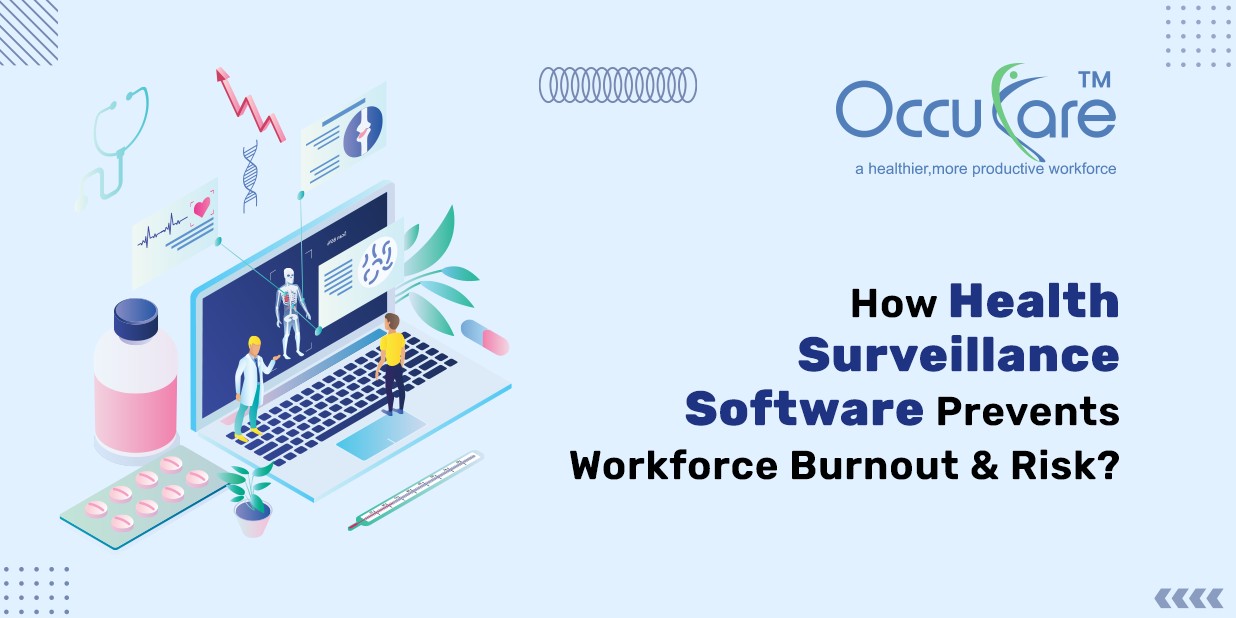
People generally think of “medicine programs” as a digital copy of a paper one — a location to store medical files or keep track of sick days. The image in question is out of date. Contemporary health monitoring tools are intelligent devices that fuse AI for Workplace Safety and wellness data, fingerprint measurements, lifestyle evaluations, and behavioral indicators into a single, constantly updated view of employee wellbeing.
The program is fundamentally about tracking established health metrics across a sample of employees. It’s not about invading privacy; it’s patterns of observation that clinical senses alone would probably miss. It’s like a quiet early-warning mechanism that functions in silence to tell you about trends before they escalate.
The Burnout-Risk Connection: What the Data Reveals
Employee burnout and physical wellness risk are much more closely associated than most employers realize. Prolonged stress can lead to increased blood pressure, impaired sleep, reduced immune response, and increased risk factors for metabolic disease, such as higher blood glucose and lipids, due to increased adrenaline levels.
In practice, someone at work who looks “fine” on the morning of Friday might already be sitting in a zone where several biometric indicators are headed in the same, wrong direction.
Health monitoring software records exactly this – not one bad study, but an association across standard parameters like:
- High Blood Pressure (Systolic/Diastolic): Steady results are usually a reflection of the total stress burden and not just poor life habits.
- Unusual changes in the results of the BMI measurement: Both upward and downward changes indicate that the person eats too much or misses meals because of the stress-induced lack of concern about oneself.
- High HbA1c/LDL: A sustained increase in both indicators indicates the consequences of metabolic stress, which is strongly associated with psychological stress, according to professional literature.
- Results of the quality of life/stress management survey: Questionnaires that measure an individual’s well-being are good early signs of professional burnout.
By monitoring such data and tracking it over a period of time, the system will be able to classify these employees based on the traffic light approach of Red, Amber, and Green for proper care allocation.
From Risk Stratification to Real Action:
It must be noted that data alone has no meaning unless there is an action to go with it. The true power of health surveillance software can be witnessed from what transpires after identifying the risk. A Red-category employee will not be notified and left unattended. Rather, a process of action would be set in motion by virtue of which the Red-category employee will be automatically placed in a consultation schedule; for example, consultations on a fortnightly basis with a wellness coach. If the risk falls under the Amber category, then a consultation schedule may be set up on a bi-monthly basis.
Such a multi-tiered approach accomplishes two significant tasks. The first is to make sure that those at highest risk receive immediate and focused attention, as opposed to a generic company newsletter on mindfulness. The second is to avoid the all-too-common phenomenon of overload of coaches and counselors, where everyone receives identical treatment irrespective of priority, resulting in a diffusion of effort, which is insufficient for any single person. The consultation record is itself a dynamic document, with notes, appointment reminders, biometric data, and completed tasks documented.
Preventing Risk, Not Just Recording It
Apart from the provision of care paths, the health surveillance system allows HR and occupational health departments to redesign the AI workplace safety tools based on the findings rather than react to the effects thereof. Where it has been found that a particular department always generates results under the amber and red categories, the focus shifts from “which individuals require support?” to “why is this environment stressful?” This is a huge step forward.
In addition, location-based health statistics highlight geographic differences. A particular location with increased cases of injuries and outpatient department visits due to stress shows something about the division of workloads, the organizational culture, and the working environment. This is something that can only be revealed through intuition and yearly appraisals at a much slower pace.
Role of Non-Adherence Monitoring:
Another one of the underutilized benefits of current health monitoring programs is that they include information about patients who do not comply with the recommended procedures. The irony is that, in cases of burnout, individuals stop communicating with organizations that could potentially help them.
A good system will be able to distinguish those employees who are moving forward in their health programs from those who have ceased communicating altogether with the system. This is important because missing out on the program is already a clinical indication. A coach who notices that there are “6-week-old surveys pending” and “no updates to biometrics after three notifications” will be prepared to contact the individual.
A Culture Shift, Enabled by Technology:
Ultimately, there is no silver bullet when it comes to health surveillance systems; this is an enabling force for the intentional care of the workforce. The companies that benefit from these tools generally have three main attributes: management that considers employee health a real strategy, teams within occupational health departments that are empowered to take action based on data collected, and a company culture where the use of health data is perceived as supporting the workers rather than punishing them. Where these prerequisites are present, the effect becomes manyfold thanks to the use of these systems.
Conclutions:
Workforce burnout has evolved into a critical business risk that directly affects productivity, employee retention, safety performance, and long-term organizational growth. Companies that continue to rely on reactive occupational health practices often face hidden costs such as increased absenteeism, higher healthcare expenses, and reduced workforce efficiency. In contrast, health surveillance software enables a proactive approach by continuously monitoring employee health trends, identifying early risk indicators, and supporting timely interventions before issues escalate.
By adopting intelligent occupational health solutions, organizations can build a more resilient, engaged, and productive workforce while strengthening compliance and safety standards. OccuCare empowers businesses to move from reactive care to predictive workforce wellbeing through advanced health surveillance capabilities. Contact us today for a free demo and discover how OccuCare can help you reduce burnout risk, improve employee wellbeing, and enhance overall organizational performance.