Every piece of waste generated by an organization carries more than an environmental impact—it also brings compliance obligations, financial costs, and operational risks. Whether it’s industrial waste, hazardous materials, biomedical waste, or electronic waste, businesses are expected to manage every stage responsibly while meeting evolving environmental regulations. Failure to do so can result in legal penalties, increased disposal costs, workplace hazards, and reputational damage, making effective waste management a critical business priority rather than just an operational task.
A modern Waste Management System enables organizations to transform waste management into a strategic advantage by automating waste tracking, ensuring regulatory compliance, reducing operational expenses, and supporting Occupational Health and Safety (OHS) initiatives. With real-time monitoring, digital documentation, and data-driven insights, businesses can improve sustainability performance, minimize environmental risks, and build a safer, more compliant, and future-ready workplace.
Waste Management Problems That Have Become Increasingly Common:
There is always some kind of waste produced by any organization in the course of its activities. Without good planning and monitoring, waste may cause various problems for organizations, such as:
- Non-compliance with regulations
- Pollution
- Higher costs for disposing of waste
- Risks of injury to employees
- Misuse of resources
- Deterioration of organizational image
With traditional paper-based approaches, it is hard to track waste production, maintain accurate data, or produce compliance reports for auditing. Regulations get stricter, and there is no way manual systems will cope.
This is when digital Waste Management Solutions come into play.
What is a Modern Waste Management System?
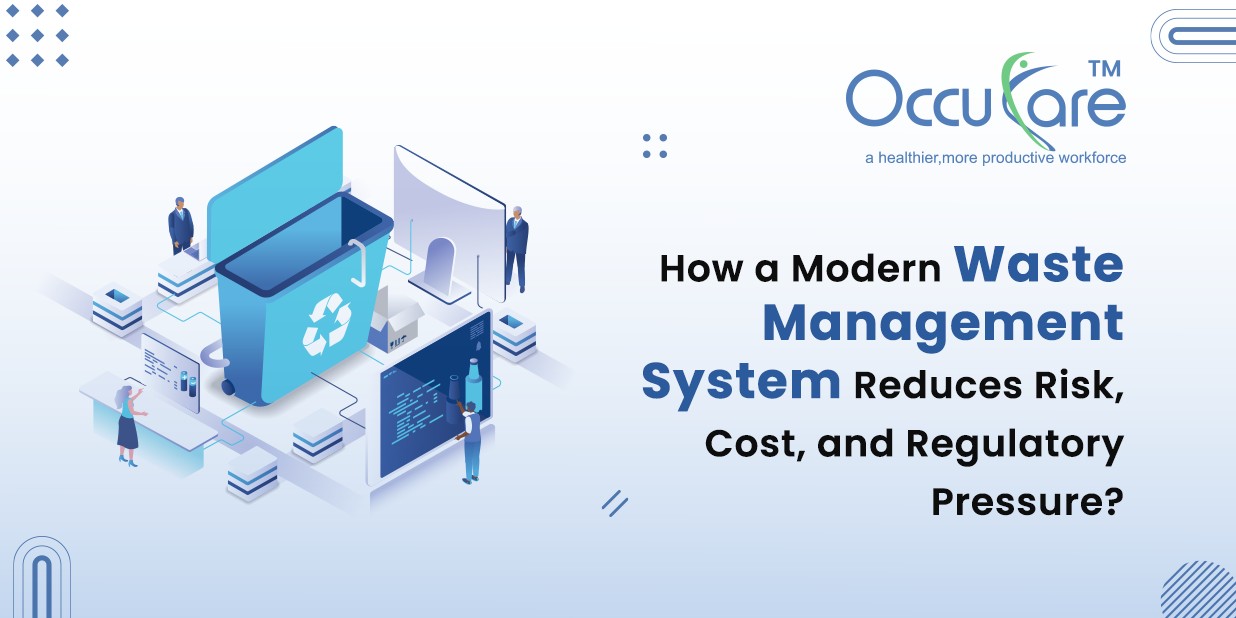
A Waste Management System is an advanced digital platform that manages the entire waste life cycle, right from waste generation and segregation to storage, transport, treatment, recycling, and disposal of waste.
It eliminates manual processes using spreadsheets and paper documents by enabling real-time monitoring of waste activities and ensuring automation of documentation for all waste movements.
Some of the capabilities of modern waste management software include:
- Digital waste inventory
- Classification of waste
- Barcode/QR Code tracking
- Compliance documents
- Vendor management
- Scheduling of waste collection
- Reporting
- Dashboard analytics
- Mobile inspections
- Automated alerts and notifications
Operational Risks Mitigation:
The key benefit that organizations stand to gain by adopting Waste Management Software is risk mitigation.
Incorrect disposal of hazardous waste leads to workplace hazards, pollution, and non-compliance penalties. Inefficiencies in manual methods may lead to errors in record-keeping.
Digital solutions mitigate these risks through:
- Provision of standardized procedures for handling hazardous waste
- Accurate tracking of hazardous substances
- Monitoring storage thresholds
- Creation of automated reminders before deadlines
- Logging all waste movements
- Maintaining full audit logs
Proactive risk mitigation helps prevent any potential problems that can arise from these operations.
This provides an important competitive edge for industries involving chemicals, biomedical waste, or industrial waste management by-products.
Decreasing the Costs of Waste Management:
Disposal of waste may be a considerable financial burden for any large company. But few companies know what kind of waste they produce and what is causing them extra expenses.
Modern Waste Management Software can help you analyze the patterns of waste production.
Companies can:
- Recognize departments that create extra waste
- Cut the costs of the extra disposal of waste
- Recycle more waste
- Schedule the pickup of the waste better
- Avoid double transportation
- Ensure better performance of the vendors
- Eliminate paperwork
- The system will save you from doing the same tasks manually.
Improvement of Industrial Waste Management:
Factories produce a range of waste, which includes scrap, chemicals, packaging waste, wastewater, oils, solvents, and dangerous waste.
Efficient Industrial Waste Management is achieved through proper planning and monitoring at each stage of the waste lifecycle.
Digital platforms allow manufacturers to:
- Control waste at all stages of production
- Distinguish between recyclable and dangerous waste
- Monitor available space for waste storage
- Optimize waste disposal procedures
- Reduce harm to the environment
- Evaluate waste minimization efforts
Dashboards give managers a lot of useful information about waste dynamics, which allows them to make improvements on a constant basis.
Smart manufacturing implies using digital waste management as well.
Decision Making Based on Data:
Modern firms use data to enhance their operations, and waste management is not an exception.
Digital solutions for waste management offer interactive dashboards and analytical reports, which will allow for turning raw data about waste into useful information.
It is possible to analyze the following factors:
- Trends in waste production
- Cost of waste by categories
- Performance of vendors
- Effectiveness of recycling
- Waste production by departments
- Compliance
- Timelines of disposal
This will help managers find areas for improvement and apply data-based approaches to reduce waste.
Enhancing Employee Accountability:
Everyone should be responsible for waste management, not only the environmental health and safety team.
The employees get notifications regarding:
- Schedules for waste collection
- Inspection work
- Deadlines for compliance
- Approval requests
- Actions to be taken
This will improve the flow of information and ensure that all tasks are completed as required.
Conclusion:
A modern Waste Management System is no longer just an environmental initiative—it is a strategic business investment that helps organizations reduce operational risks, control waste management costs, strengthen regulatory compliance, and improve overall workplace safety. By replacing manual processes with intelligent automation and real-time data, businesses can make informed decisions, increase operational efficiency, and achieve their environmental and compliance objectives with confidence. Integrating waste management into a comprehensive Sustainability Management Software strategy further enables organizations to build resilient, responsible, and future-ready operations.
Whether you operate in manufacturing, healthcare, pharmaceuticals, construction, or any other industry, adopting a digital waste management solution can deliver measurable business value while supporting long-term sustainability goals. If you’re ready to streamline your waste management processes, improve compliance, and enhance operational performance, Contact OccuCare today for a free demo and discover how our advanced Waste Management System can help your organization achieve smarter, safer, and more sustainable operations.