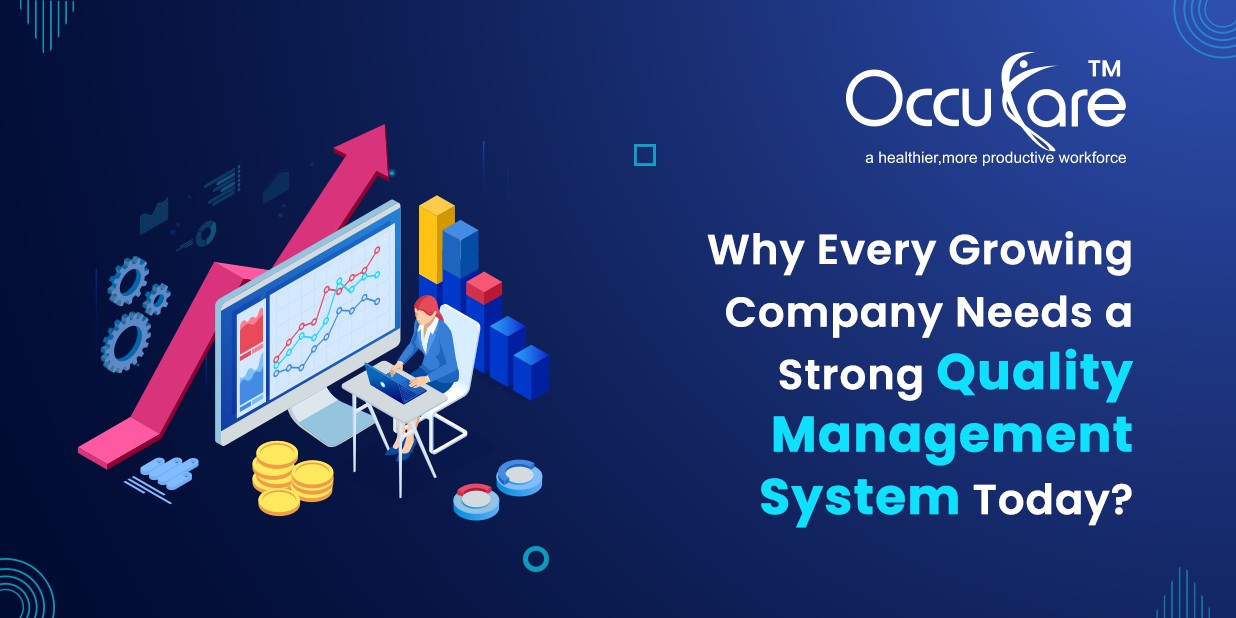
Business growth is exciting, but it also introduces new operational challenges. As organizations expand their workforce, customer base, production capacity, and supplier network, maintaining consistent quality becomes increasingly difficult. Without standardized processes, even minor inefficiencies can lead to product defects, compliance issues, delayed deliveries, customer complaints, and unnecessary operational costs. This is why a Quality Management System (QMS) has become an essential business framework for organizations that want to scale efficiently while maintaining high standards of quality and performance.
Well-implemented Quality Management Solutions enable businesses to streamline operations, reduce errors, improve regulatory compliance, and deliver consistent products and services that meet customer expectations. Whether operating in manufacturing, healthcare, construction, pharmaceuticals, IT, logistics, or food processing, companies that prioritize quality management are better positioned to enhance customer satisfaction, strengthen their market reputation, and achieve sustainable long-term growth. In this blog, we’ll explore why every growing company needs a strong QMS and how it contributes to operational excellence and business success.
What is a Quality Management System?
It is an organized set of business processes, policies, procedures, documentation, and roles designed to ensure that goods and services consistently meet customer demands and legal requirements. A QMS assists businesses in creating repeatable procedures that enhance product quality while reducing mistakes and inefficiency.
Organizations record best practices so that every task adheres to defined procedures rather than depending on the expertise or experience of individual employees.
Typically, a robust QMS concentrates on:
- Client contentment
- Consistency in the process
- Constant improvement
- Risk control
- Making decisions based on data
International standards like ISO 9001, which offer recommendations for creating an efficient Quality Management System, are implemented by several enterprises.
Why is Quality More Important Than Ever?
There are countless options available to modern consumers. It merely takes a few minutes for them to move to a competitor if they receive subpar goods or inconsistent service. A single quality problem can suddenly impact hundreds or thousands of potential customers since social media and online reviews magnify consumer experiences.
Growing businesses encounter additional difficulties:
- Quickly expanding operations
- Recruiting new workers
- Overseeing several branches
- Keeping the brand consistent
Growth frequently results in operational instability in the absence of defined quality systems.
Key Advantages of a Robust Quality Management System:
1. Increases Client Contentment:
Long-term corporate success is still based on customer happiness.
Consumers anticipate:
- Dependable goods
- Quick assistance
- On-time delivery
2. Unifies Business Procedures:
Growing businesses frequently depend on various workers carrying out comparable jobs in diverse ways.
This discrepancy results in:
- Mistakes
- Postponements
- Inaccurate communication
3. Lowers Operational Expenses:
Low-quality costs a lot of money.
Typical hidden expenses consist of:
- Rework and recalls of products
- Materials for scrap
- Consumer grievances
4. Strengthens Adherence to Regulations
Numerous industries are subject to stringent rules.
Examples include:
- Pharmaceuticals and medical equipment
- Food production, automotive, and aerospace
Why Digital Quality Management is the Future of Growing Businesses?
As businesses expand, managing quality through spreadsheets, paper-based records, and manual approvals becomes increasingly inefficient. Delays in document retrieval, inconsistent record-keeping, and limited visibility into quality processes can slow decision-making and increase compliance risks. Implementing QMS Software enables organizations to automate workflows, monitor quality metrics in real time, track corrective and preventive actions (CAPA), and maintain consistency across departments, helping teams improve productivity while reducing operational errors.
An effective quality strategy also depends on maintaining accurate and controlled documentation. A Document Management System allows organizations to securely store, organize, and manage policies, standard operating procedures (SOPs), audit records, training documents, and compliance-related files from a centralized platform. This not only simplifies audits and regulatory inspections but also ensures employees always have access to the latest approved documents, supporting better governance, operational efficiency, and continuous improvement.
Conclusion:
A strong Quality Management System is more than a compliance requirement—it is a strategic investment that helps businesses achieve operational excellence, improve customer satisfaction, and support sustainable growth. As organizations expand, maintaining consistent quality, minimizing risks, and streamlining business processes become essential for staying competitive. Companies that adopt a structured quality management approach are better equipped to improve efficiency, strengthen compliance, reduce operational costs, and build long-term customer trust.
If your organization is looking to simplify quality management, automate business processes, and strengthen compliance, OccuCare can help. Our comprehensive Quality Management solutions are designed to help businesses standardize operations, improve productivity, and drive continuous improvement across the organization. Contact us today for a free demo and discover how OccuCare can help your business build a smarter, more efficient, and future-ready quality management system.