Workplace risks, regulatory scrutiny, and rising expectations for employee safety and environmental responsibility are reshaping how modern organisations operate. Companies can no longer rely on reactive or fragmented approaches to manage compliance and safety—they need a structured, proactive system that ensures accountability at every level.
Environment, Health, and Safety (EHS) management is at the core of this transformation. Yet, manual tracking, spreadsheets, and disconnected processes often lead to missed compliance deadlines, data inaccuracies, and increased exposure to workplace incidents.
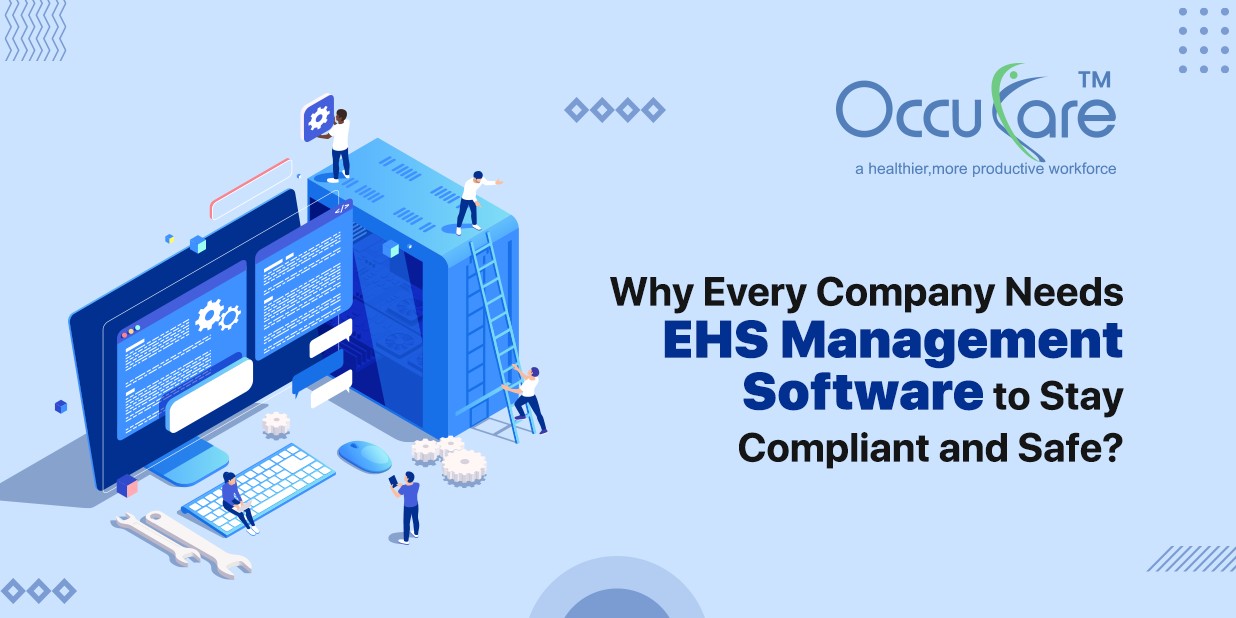
To address these challenges, businesses are adopting advanced EHS Management Software to centralise safety operations, automate compliance tracking, and gain real-time visibility into risks. Solutions like those from OccuCare empower organisations to build a safer workplace while maintaining full regulatory compliance and operational efficiency.
What is EHS?
EHS stands for Environment, Health, and Safety. It is a collection of processes that an organisation undertakes to:
- Safeguard the health and safety of employees
- Improve environmental sustainability
- Meet regulatory compliance
The EHS concept is applicable to all industries, including manufacturing, construction, healthcare, transportation, and IT. Organisations that do not meet EHS standards are subject to legal consequences, reputation, and accidents at work.
What is EHS Management Software?
It is a tool that enables organisations to manage their EHS processes electronically. This tool integrates all EHS data into a single system.
An EHS Management System has various features that include:
- Incident Reporting and Management
- Risk Management and Hazard Identification
- Compliance Management
- Audit Management
- Training Management
- Document Management
By using EHS Software, organisations can eliminate manual processes through automation.
Why Companies Need EHS Management Software?
1. Ensures Regulatory Compliance:
One of the major challenges faced by companies is ensuring regulatory compliance. Government agencies set very stringent rules and regulations regarding safety and environmental issues. Non-compliance can lead to severe penalties, and in some cases, the company may even face closure.
It helps companies in the following ways:
- Tracking regulatory compliance
- Alerts for compliance deadlines
- Proper documentation to ensure compliance
2. Improves Workplace Safety:
Workplace safety should always be a priority for any company. Accidents at the workplace not only harm the company’s employees but also reflect poorly on the company.
EHS Software helps companies in the following ways:
- Real-time reporting of all incidents
- Identify high-risk areas
- Preventive measures to reduce workplace accidents
3. Centralised Data Management:
Managing EHS data in a spreadsheet or on paper is a chaotic process. The chances of important information being lost, which may result in non-compliance with regulations, are high.
- Centralised database to store all EHS-related information
- Access to information anytime, anywhere, and on any device
- High accuracy and consistency in data
4. Enhances Risk Management:
Risks are an integral part of any organisation, but managing them effectively is the key to preventing untoward incidents.
Enables organisations to:
- Perform in-depth risk assessment activities
- Identify hazards and take corrective measures to mitigate them
- Monitor risk trends over a period
This is a positive aspect of Software, which enables organisations to minimise risks before they become serious problems.
5. Streamlines Audits and Inspections:
Audits and inspections are critical to maintaining compliance with regulations and enhancing EHS standards. However, audits conducted manually are often time-consuming and may result in errors.
Using Software, organisations can:
- Schedule audits online
- Create checklists to conduct audits effectively
- Generate audit reports instantly
6. Boosts Employee Engagement:
A good safety culture can only be achieved when there is employee engagement. When employees participate in safety, the workplace becomes a safer environment.
- Facilitating easy reporting of hazards by employees
- Training and certification
- Easy access to safety guidelines
When employees take ownership of safety, the entire compliance level improves.
7. Real-Time Reporting and Analytics:
Decision-making is a crucial aspect in enhancing the performance of an organisation. The use of manual reporting has been proven to be ineffective in decision-making.
- Generate reports in real-time.
- Monitor KPIs (Key Performance Indicators)
- Analyse trends and patterns
This will help organisations make informed decisions, thus enhancing safety standards.
8. Reduces Costs:
Accidents, compliance, and inefficiency can lead to costly losses in organisations.
It can help organisations:
- Reduce accident-related costs
- Avoid fines due to non-compliance
- Enhance efficiency
9. Supports Environmental Responsibility:
Environmental sustainability has become a major issue for businesses across the world. Organisations are expected to maintain a green footprint and embrace green business practices.
EHS Management Software assists with:
- Monitoring Emissions
- Ensuring Environmental Compliance
- Tracking Sustainability Initiatives
Besides protecting the environment, this also boosts the organisation’s reputation.
10. Scalability and Flexibility:
Businesses face EHS management challenges as they expand. EHS management systems, especially manual ones, find it hard to cope with increasing demands.
- Scale up with business growth.
- Integrate with other business systems
- Support multiple locations
Key Features to Look for in EHS Software:
When selecting an EHS Management System, you should consider the following:
- Ease of Use
- Mobile Access
- Customizable Dashboards
- Automated Workflows
- Integration Capabilities
- Security
Conclusion:
Adopting a modern EHS Management System is no longer just a compliance requirement—it is a strategic investment that drives operational excellence, reduces risk, and strengthens workplace safety culture. By digitising and centralising all Environment, Health, and Safety processes, organisations can ensure real-time visibility, improved compliance tracking, and faster, more informed decision-making. This enables businesses to proactively identify hazards, prevent incidents, and maintain full regulatory adherence while improving overall efficiency and productivity.
With growing regulatory demands and increasing focus on sustainability, organisations need a reliable and scalable solution to stay ahead. Implementing an advanced platform like OccuCare empowers businesses to simplify EHS management, reduce operational costs, and foster a safer, more compliant work environment. Contact us today for a free demo and see how OccuCare can help transform your EHS operations and drive long-term business success.