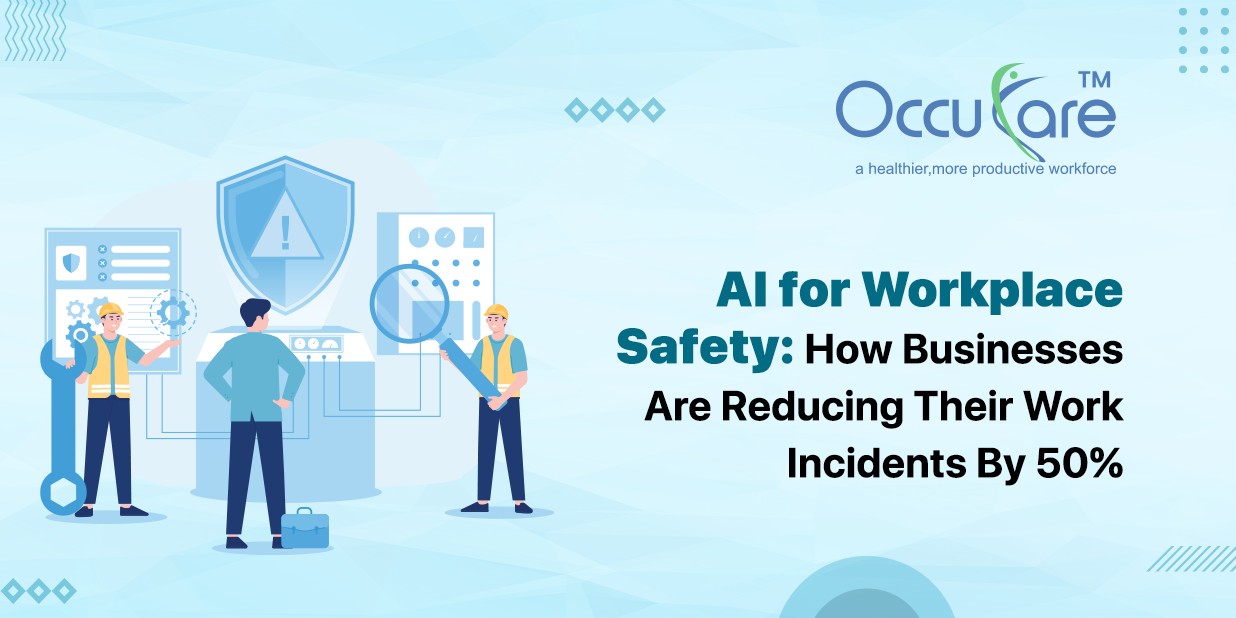
Maintaining workplace safety has always been a major concern for most businesses. Industries such as manufacturing, construction, logistics, and even healthcare need to be proactive about workplace safety measures. Conventional techniques, including inspection, incident reporting, and auditing, have been largely ineffective because they do not proactively identify potential risks. But the situation will change in 2026 with AI for Workplace Safety becoming prevalent.
Businesses are using AI workplace safety software and advanced solutions to identify risk factors in real time and avoid workplace injuries and accidents. This approach helps many companies reduce incidents by at least 50%, with others showing even greater improvements.
This article investigates AI for Workplace Safety and how it works, tools, advantages, and why more businesses are increasingly adopting it as a valuable resource for AI for safety professionals.
What Is AI For Workplace Safety?
AI for Workplace Safety is the application of AI tools like machine learning, computer vision, Internet of Things (IoT), and predictive analytics to enhance safety standards in workplaces.
Differences between old-fashioned systems and AI include the following facts about AI systems:
- They constantly monitor environments
- They analyze high volumes of safety data
- They detect patterns and dangers
- They alert managers in real-time
That is what helps organizations achieve proactive safety management and decrease accident rates.
Why are old methods of Safety in Workplaces Are Outdated?
Before the use of AI, safety in work environments was based on the following strategies:
- Physical checks in workplaces
- Reporting an accident and identifying the cause
- Audit checks
- Human presence
Unfortunately, those strategies help spot the problem only when something bad has already happened.
For example, a dangerous situation noticed on Tuesday may be ignored before the next scheduled inspection. Not all near-miss situations are reported by workers.
Human error can lead to undetected safety issues.
How do AI Work Environment Safety Solutions Function?
Contemporary AI solutions for workplace safety integrate technology to improve work environment security.
1. Computer Vision for On-the-Fly Monitoring:
AI-powered cameras assess videos for:
- Lack of personal protective equipment (helmet, gloves, vest)
- Unsafe behavior
- Entry into restricted areas
Such technologies notify managers to avoid possible incidents.
2. Predictive Analysis:
AI assesses historic data for:
- Predicting potential dangers
- Determining accident patterns
- Recommending preventive measures
This allows enterprises to act proactively.
3. IoT Sensor and Wearable Technology:
IoT sensors and wearables measure the following parameters:
- Employee exhaustion levels
- Environmental dangers (gas leakage, temperature)
- Machine operation
Then AI interprets the results.
4. Safety Compliance Automation:
AI monitors safety regulations compliance through:
- Following safety protocols
- Producing automatic reports
- Limiting human interaction
Practical Impact: Why AI Helps Reduce Accidents by 50%
AI goes beyond theory; it delivers practical results in real-world settings.
Practical Proof of the Effectiveness of AI Safety Solutions:
- Logistics firm cut down on injury frequency by 77% within 12 months
- Up to 85% workplace injury reductions achieved by some AI-based vision systems
- 62-80% safety incident reduction in manufacturing plants
These examples make it clear that reducing accident rates by 50% is well within reach.
Key Advantages of Using a Workplace Safety System with AI Integration:
- Predictive Hazard Mitigation: AI technology helps prevent potential risks before they result in injuries.
- Non-stop Monitoring (Round-the-Clock Safety): Whereas humans need rest, an AI system monitors the workplace round-the-clock.
- Real-Time Decisions: AI-powered Workplace Safety Software allows prompt actions and decision-making.
- Compliance Assistance: With AI, safety measures are more likely to comply with relevant regulations, saving money on fines.
- Cost Saving: Workplace injuries incur huge expenses for a business. Thus, even the prevention of just a few accidents will save you thousands in:
- Healthcare bills
- Fines and litigation
- Insurance payments
In fact, some businesses reported a 15-25% reduction in their insurance costs.
Industries That Benefit from AI Work Safety Tools:
AI is improving safety in various industries:
1. Manufacturing:
- Identifies machine hazards
- Avoids machinery breakdowns
2. Construction:
- Checks for worker behaviours
- Guarantees PPE usage
3. Logistics & Warehousing:
- Eliminates accidents
- Monitors vehicle and worker movement
4. Healthcare:
- Minimizes worker contact with hazardous surroundings
- Enhances the safety of patients and workers
Role of Workplace Safety Software in AI Safety Implementation:
Contemporary Safety Software functions as a central tool that incorporates all AI-based safety technologies.
They have features like:
- Real-time dashboards
- Incident management
- Automated reports
- Risk analysis
Using software can help safety managers:
- Take informed decisions
- Improve safety culture
- Monitor safety metrics
Based on industry reports, around 94% companies are giving importance to implementing AI-driven safety automation solutions.
Challenges Faced by Companies Implementing AI in Safety:
Although there are many advantages, some challenges are also involved when businesses integrate AI into their work processes:
- Privacy Issue: Monitoring constantly might create privacy issues among employees.
- Initial Setup Cost: There is a high initial cost of integrating an AI-based safety system. However, return on investment is quick.
- Over-dependency on Technology: Unrestrained dependence on technology in the absence of humans could result in hazards.
- Data Quality: High-accuracy data is necessary for the functioning of AI systems.
Nevertheless, it should be noted that AI serves as an assistant to human professionals.
Conclusion:
AI for Workplace Safety is redefining how organizations manage occupational health and safety by shifting from reactive responses to proactive risk prevention. With the help of AI workplace safety tools, businesses can continuously monitor workplace conditions, detect unsafe behaviours in real time, and predict potential hazards before they result in incidents. This intelligent approach significantly improves safety performance and helps organizations achieve up to a 50% reduction in workplace accidents while also strengthening compliance and operational efficiency through workplace safety with AI.
For companies like OccuCare, this transformation is a major opportunity to build safer, smarter, and more resilient workplaces. While AI enhances accuracy and predictive capability, its real strength comes when combined with human expertise and a strong safety culture. Together, they create a system that not only reduces risks but also supports long-term employee well-being and sustainable business growth.
Contact us for a free demo to see how OccuCare’s AI-powered occupational health and safety solutions can help your organization reduce incidents and improve workplace safety outcomes.