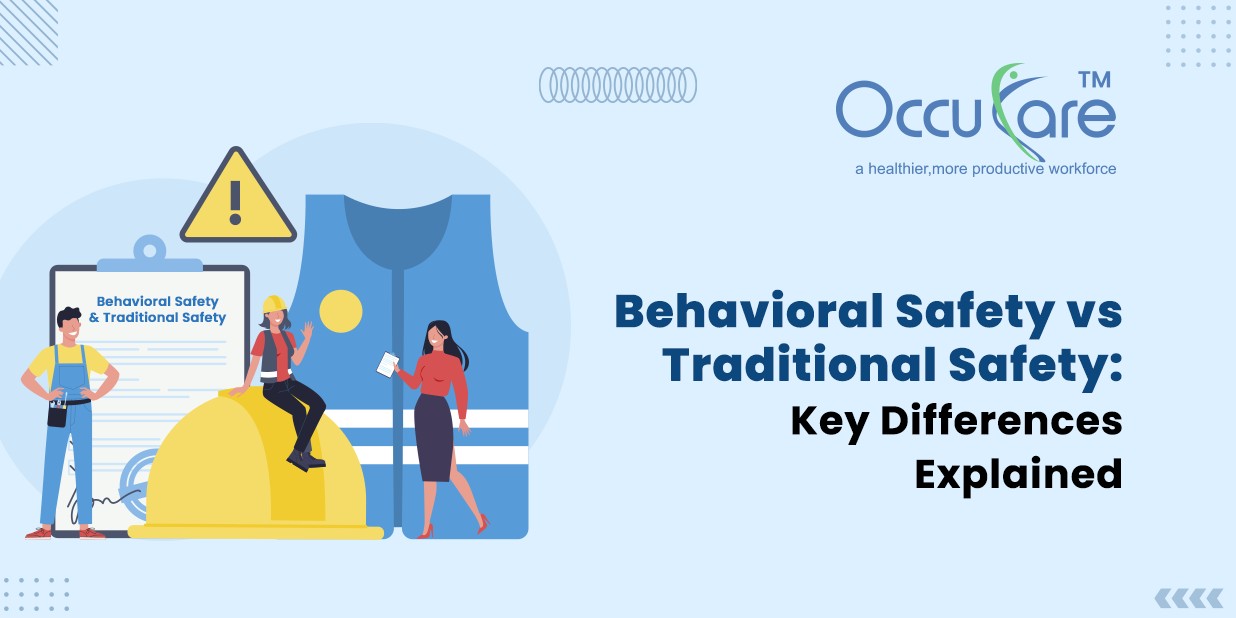
In today’s competitive business environment, ensuring workplace safety isn’t just about compliance—it’s about protecting your workforce, maintaining operational efficiency, and building a strong safety culture. Two dominant safety paradigms—Traditional Safety and Behavior Based Safety (BBS)—play crucial roles in achieving this. But which is more effective? And how can combining both approaches help your business reduce incidents, lower costs, and improve employee engagement?
Traditional Safety: What Is It?
The term “Traditional Safety” describes the traditional or traditional methods of safety management that are used in many businesses.
This includes:
- Identification of hazards is the process of identifying potential mechanical, chemical, environmental, or other risks at work.
- Engineering controls include things like ventilation, safety equipment, machine guards, and physical barriers.
- Administrative controls include safety policies, work permits, and procedures.
- Gloves, helmets, and other personal protective equipment (PPE).
When it comes to events, non-conformances, audits, legal requirements, etc., traditional safety is typically more reactive. The emphasis is frequently on ensuring adherence to safety regulations as well as on technical and physical controls. Lagging indicators, such as incident rates, injury rates, lost-time accidents, etc., are commonly used as metrics.
Workplace behavioral safety or Behavior Based Safety is what?
The term “Workplace behavioral safety” describes safety initiatives or programs that concentrate, especially on human behavior. The main notion is that dangerous or unsafe actions, rather than just dangers, are often the cause of accidents, injuries, or unsafe circumstances. Risk can be considerably decreased by an organization through observation, analysis, and reinforcement of safe actions (and discouragement of hazardous ones).
Among the characteristics that set BBS apart are:
- Methodical behavior analysis of workers to determine safe and harmful work habits.
- Use behavior-based observation tools or checklists, which are frequently approved by the people performing the work (to get support), to enumerate specific behaviors to observe.
- Regular verbal, visual, and written feedback. Safe behavior is acknowledged, while hazardous behavior is coached.
- Employee engagement includes choosing which behaviors to watch, acting as observers, and helping with interventions.
- Personal safety is more proactive, aiming to change people’s daily actions to stop incidents before they happen.
How Do They Complement Each Other?
Both behavioral safety and traditional safety are insufficient in many firms’ actual operations. To maximize their advantages and minimize their disadvantages, the most effective safety programs typically combine the two. Use conventional safety to make sure that the environment is safe, that PPE is available, that equipment is safe, and that physical risks are removed or regulated.
Reinforce safe habits, address the human side, incorporate safety into everyday routines, enhance safety culture, and lower occurrences from behavior-related causes by implementing behavioral safety. For instance, safety audits can be used to identify potential risks, and behavior observation programs can be used to examine how employees really utilize equipment.
Behavioral Safety vs Traditional Safety: A Side-by-Side Comparison
“Two approaches. One goal: a safer workplace.”
To help you understand the practical differences and how they impact your organization, here’s a quick comparison of Traditional Safety and Behavior Based Safety (BBS):
Aspect |
Traditional Safety |
Behavior Based Safety (BBS) |
| Focus |
|
|
| Approach |
|
|
| Controls Used |
|
|
| Primary Metrics |
|
|
| Employee Involvement |
|
|
| Goal |
|
|
| Tools/Methods |
|
|
| Outcome |
|
|
Business Benefits of Combining Traditional and Behavioral Safety:-
Integrating both safety models doesn’t just improve compliance—it delivers tangible business results:
- Reduced Incident Rates: Combining environmental controls with behavior modification significantly reduces workplace injuries and near-misses.
- Lower Costs: Fewer incidents mean reduced workers’ compensation claims, legal costs, and productivity losses.
- Stronger Safety Culture: When employees feel engaged and responsible for safety, morale and trust improve, leading to better retention and performance.
- Improved Compliance: Behavioral observation and feedback complement regulatory requirements, making it easier to meet ISO 45001, OSHA, and other safety standards.
Conclusion:
In today’s fast-paced and compliance-driven industries, safety is no longer just a regulatory checkbox—it’s a strategic business advantage. While traditional safety ensures a secure physical environment through policies, equipment, and compliance, Behavior Safety Training addresses the human element that often drives risk and incident rates.
Organizations that successfully integrate both approaches see measurable benefits:
- Fewer workplace injuries and claims
- Lower operational disruptions and downtime
- Improved employee morale and engagement
- Enhanced brand reputation and compliance readiness
By adopting a Safety Observation Program, businesses can move beyond reactive compliance and toward a culture where safety is a shared value, not just a rule. This not only protects your people but also improves productivity, reduces costs, and gives your company a competitive edge.
At OccuCare, we help companies implement smart Occupational Health and Safety solutions that blend traditional practices with Behavioral Safety Software so you can protect your workforce and power your performance.