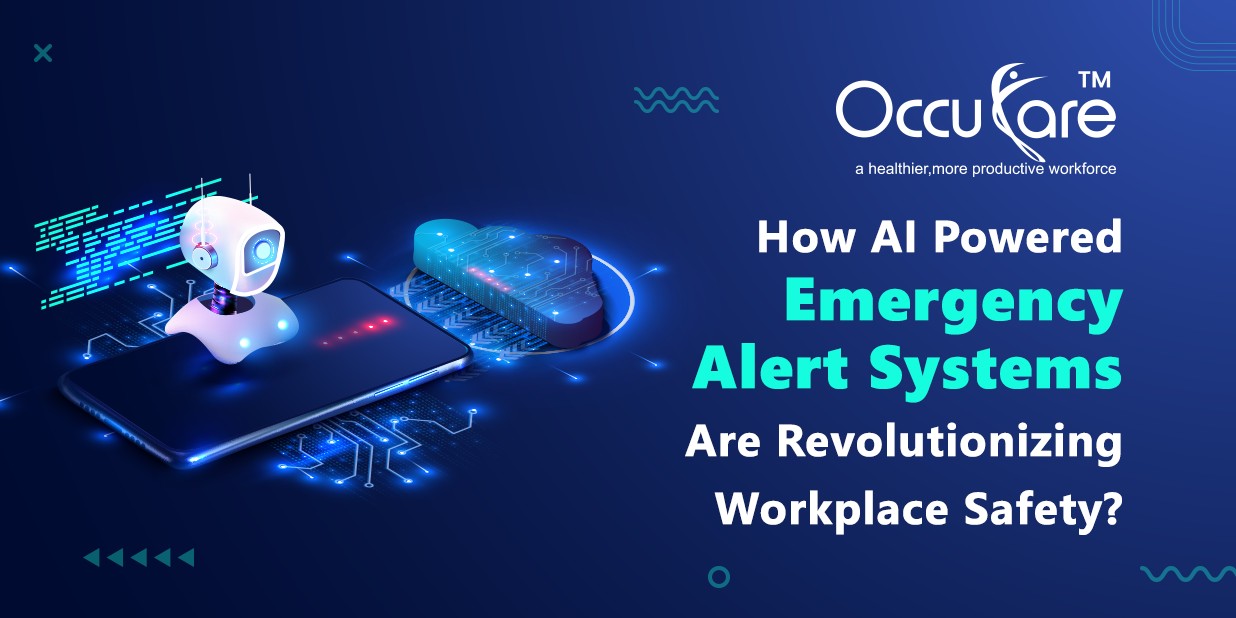
In today’s fast-paced industrial and corporate contexts, an Emergency Alert System plays a key role in safeguarding the safety and well-being of employees. During emergencies, traditional communication techniques might become short because of infrastructure failures, delays, or human mistakes. The AI Powered Emergency Alert System fills this gap by fusing cutting-edge artificial intelligence algorithms with real-time communication technologies to deliver prompt, accurate, and focused alerts. Emergency alert software is being implemented by organizations more to identify risks, notify employees instantly, and enhance adherence to safety standards.
Shift from Traditional to AI-Driven Safety Alerts:
For many years, businesses used email notifications, sirens, or manual announcements as part of their emergency alert system. However, due to their lack of speed and accuracy, these systems frequently failed in crucial situations. This is altered by the AI Powered Emergency Alert System, which automatically generates alerts by evaluating equipment state, environmental data, and even behavioral tendencies. By ensuring that these messages are received by the appropriate people via a variety of platforms, including desktop notifications, mobile apps, SMS, and even public address systems, emergency alert software reduces response times and improves safety in general.
Real Time Threat Detection with AI:
The potential of an AI-powered emergency alerts software to identify hazards before they become more serious is among its most impressive features. The Alert System can quickly detect gas leaks, fires, equipment failures, or security breaches by combining sensors, Internet of Things devices, and real-time analytics. Then, emergency alert software notifies the appropriate staff, facilitating quick mitigation or evacuation actions. Workplace safety is changed from a reactive to a proactive model by this predictive method.
Precision in Communication During Emergencies:
Rapid and precise communication can be the difference between safety and disaster in high-risk sectors like manufacturing, mining, or healthcare. Modern emergency alert systems with artificial intelligence (AI) built in are able to distinguish between various emergency situations and provide situation-specific, pertinent recommendations. In addition to expediting message delivery, emergency alert software makes ensuring the content is understandable by all recipients.
Seamless Integration with Workplace Safety Infrastructure:
These days, emergency alert systems work in tandem with environmental monitoring tools, access control systems, security cameras, and compliance management platforms. This enables an automated series of actions, including locking off certain areas, shutting down dangerous machinery, or putting on fire suppression systems, to be coordinated by the Emergency Alerts Software.
Enhancing Compliance with Safety Regulations:
In order to comply with occupational health and safety regulations, governments and regulatory agencies mandate that businesses maintain a strong emergency alert system. This shields the company from legal risks in addition to making inspections simpler. This data is stored and arranged by Emergency Alert Software, which makes it easily accessible for internal reviews and compliance audits.
Multi-Channel Alert Delivery for Maximum Reach:
The capability of a contemporary emergency alert system to simultaneously broadcast signals across several platforms is a crucial benefit. Even in noisy or chaotic settings, the chance of missing messages is greatly decreased by this communication channel redundancy.
Role of Data Analytics in Improving Safety:
An AI-powered emergency alert system continuously gathers and examines safety data in addition to sending out instant alarms. Safety officers can use AI Emergency Alert to transform this data into practical plans that lower risks and avert future crises.
Case Studies: Transforming Workplace Safety
For instance, after updating its Emergency Alert System, a manufacturing facility was able to respond to equipment breakdowns 70% faster. Medical personnel may now react to emergencies in seconds instead of minutes thanks to a healthcare facility’s integration of Emergency Alert Software with its patient monitoring equipment.
Employee Training and Engagement:
Employees need to understand how to react to notifications produced by an emergency alert system, even while technology is essential. By providing post-event feedback, training programs, and reminders, emergency alert software may strengthen a safety culture.
Future of Workplace Safety:
In the future, the AI Emergency Alerts System will advance even further by integrating wearable technologies, machine learning, and predictive analytics. The next generation of emergency alert systems will not only react to crises but also stop them before they start. Virtual reality (VR) and augmented reality (AR) technologies will probably be integrated with emergency alert software to offer engaging safety training.
Conclusion:
AI-powered emergency alert systems are setting a new standard for workplace safety by providing faster, more accurate, and more efficient responses to potential threats. At OccuCare, we are at the forefront of this innovation, leveraging cutting-edge AI technology to enhance real-time data analysis, predictive capabilities, and automated responses. Our solutions not only improve immediate employee safety but also empower organizations to proactively address risks and prevent accidents before they escalate. As the workplace environment continues to evolve, integrating AI into safety protocols will be essential in creating a safer, more prepared workplace. The future of safety is about prevention, and with OccuCare leading the way, we are helping companies safeguard their most asset—their people.