Workplace health hazards are increasingly affecting organizations across industries. Long working hours, continuous screen exposure, high-performance demands, and sedentary routines are taking a serious toll on employee well-being. Over time, these factors lead to stress, burnout, lifestyle-related illnesses, decreased productivity, and higher healthcare costs for businesses.
To address these challenges, forward-thinking organizations are moving beyond traditional wellness programs and embracing proactive, personalized solutions. One of the most effective strategies gaining traction is Digital Health Coaching. By leveraging this innovative approach, companies can proactively prevent workplace health risks, enhance employee well-being, and cultivate a more productive and sustainable workforce.
Growing Problem of Workplace Health Risks:
Health risks in the workplace do not emerge overnight. They begin with the development of unhealthy lifestyles and practices. Some of the common health risks facing workers today include:
- Chronic Stress and Burnout
- Anxiety and Mental Fatigue
- Poor posture, musculoskeletal pain
- Obesity, Diabetes & Heart Problems
- Sleep Disorders and LOW ENERGY LEVELS
Typically, the conventional approach taken in Wellness programs focuses more on awareness creation but lacks the ability or viability that can sustainably result in behavioral change. While employees can attend a Wellness seminar or camp, the experience soon wears off.
What is Digital Health Coaching?
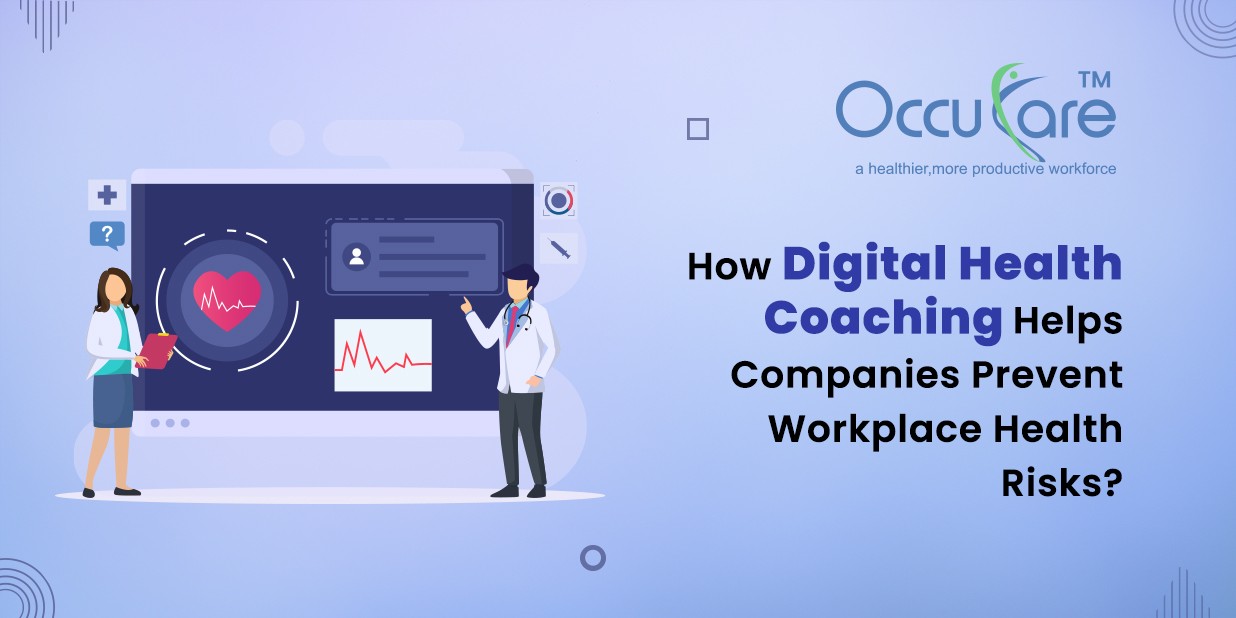
Digital Health Coaching is a new generation of employee wellness where technology enables professional health guidance and ongoing support. No reliance on face-to-face sessions alone; coaching would come via mobile apps, web platforms, video calls, and chat.
With health coaching software, companies can offer scalable wellness programs tailored to the individual needs of each employee. These platforms integrate health assessments, goal tracking, progress reports, and expert coaching into a seamless, unified experience.
How Digital Health Coaching Software Prevents Workplace Health Risks?
1. Data and Assessments for Early Detection:
One of the greatest strengths of Digital Health Coaching is that of early risk identification. Through the online health coaching platform, employees frequently go through health assessments, lifestyle surveys, and wellness check-ins.
Such information supports the identification of early warning signs, including:
- Rising stress levels
- Physical inactivity
- Poor quality of sleep
- Unhealthy eating behavior
By catching these issues early, companies can take preventative action rather than waiting for medical issues or burnout.
2. Personalized Health Coaching Instead of Generic Programs:
Every employee has unique health needs, job-related demands, and personal challenges. There is no chance a single plan could work for everyone. Health Coaching is personalized. Based on the data gathered individually, digital health platforms offer personalized wellness programs that meet specific objectives like reducing stress, losing weight, correcting posture, and becoming fit.
3. Continuous Support through Digital Platforms:
Unlike most wellness programs that wellness programs provide infrequently, Digital Health Coaching Software for employees is continuous in nature through their virtual health coaching program, where employees remain connected with their certified health coach.
Using wellness coaching software, employees can:
- Schedule virtual coaching sessions
- Chat with health experts
- Track daily habits and progress
- Receive reminders and motivational messages
4. Stress Management and Mental Well-being Support:
Mental health problems are the most common problems facing the modern-day work environment. Problems like mental strain, anxiety, and emotional exhaustion often go unnoticed until the level of output or the employee is reduced. Virtual health coaching is an important aspect that contributes to mental well-being, where the employee is advised on:
- Stress management techniques
- Mindfulness and relaxation practices
- Management of time and work-life balance
- Emotional resilience
5. Promoting Sustainable Lifestyle Changes:
Digital coaching involves ‘micro-behavioral changes,’ which center on learning to improve in small ways rather than in grand ways.”
Instead of overhauling their work habits, employees are encouraged to make worthwhile changes in their routine through:
- Moving more during the workday
- Improving Postures and Workstation Ergonomics
- Eating healthy meals
- Maintaining sleep schedules
These small changes accumulate over time to greatly minimize the risk of lifestyle diseases that are prevalent in corporate institutions.
6. Improving Engagement in Remote and Hybrid Workforces:
However, with remote or hybrid working arrangements now the standard, the ability to ensure the wellness of one’s workforce has become increasingly difficult, especially when considering accessible options in relation to “physical wellness activities.
An online health coaching tool can create equal access to health information from anywhere. Thus, employees can take part in the program regardless of their location, making the program more participatory across the entire workforce.
Benefits to Businesses from Digital Health Coaching:
Speaking from a company’s point of view, an online health coaching platform is not simply a program focused on wellness; in reality, this practice is a company’s investment. Organizations offering health coaching software report a wide range of positive changes, such as:
- Reduced absenteeism and sick leave
- Lower healthcare costs and insurance fees
- Improved employee productivity and focus
- Higher engagement and morale
- More effective talent retention and employer branding
Employees in good health are more motivated, innovative, and enthusiastic in their jobs, thus influencing the business performance in various ways.
Data-Driven Decision Making for HR Teams:
Modern wellness coaching software provides anonymized insights into the health trends of one’s workforce to HR and leadership teams. Companies can identify common risk areas, measure program effectiveness, and continuously improve upon one’s wellness strategies.
These insights will really enable organizations to shift from reactive healthcare spending to proactive wellness planning. That sounds nice. I love little country towns. It seems to me that people are generally friendlier in small towns. They’re warmer.
Conclusion:
Incorporating Digital Health Coaching is no longer just a wellness initiative—it is a strategic investment in the productivity, engagement, and overall success of your workforce. By identifying risks early, providing personalized coaching, supporting mental well-being, and promoting sustainable lifestyle changes, companies can significantly reduce absenteeism, healthcare costs, and burnout, while boosting employee morale and performance.
For businesses navigating the challenges of remote and hybrid workforces, digital health coaching ensures equitable access to wellness support for all employees, wherever they are. The result is a healthier, more motivated workforce that drives innovation and business growth. Take the first step toward a proactive, results-driven approach to workplace health. Contact OccuCare today for a free demo and discover how our Digital Health Coaching solutions can transform your organization’s well-being strategy.