Workplace wellbeing is a key priority for businesses aiming to improve employee productivity, engagement, and long-term organisational success. While traditional occupational health and safety practices primarily focus on physical hazards, managing psychosocial risks is equally important for creating a safe, healthy, and supportive work environment. Factors such as excessive workloads, long working hours, poor communication, workplace conflicts, unclear responsibilities, and inadequate managerial support can contribute to employee stress and negatively impact overall wellbeing.
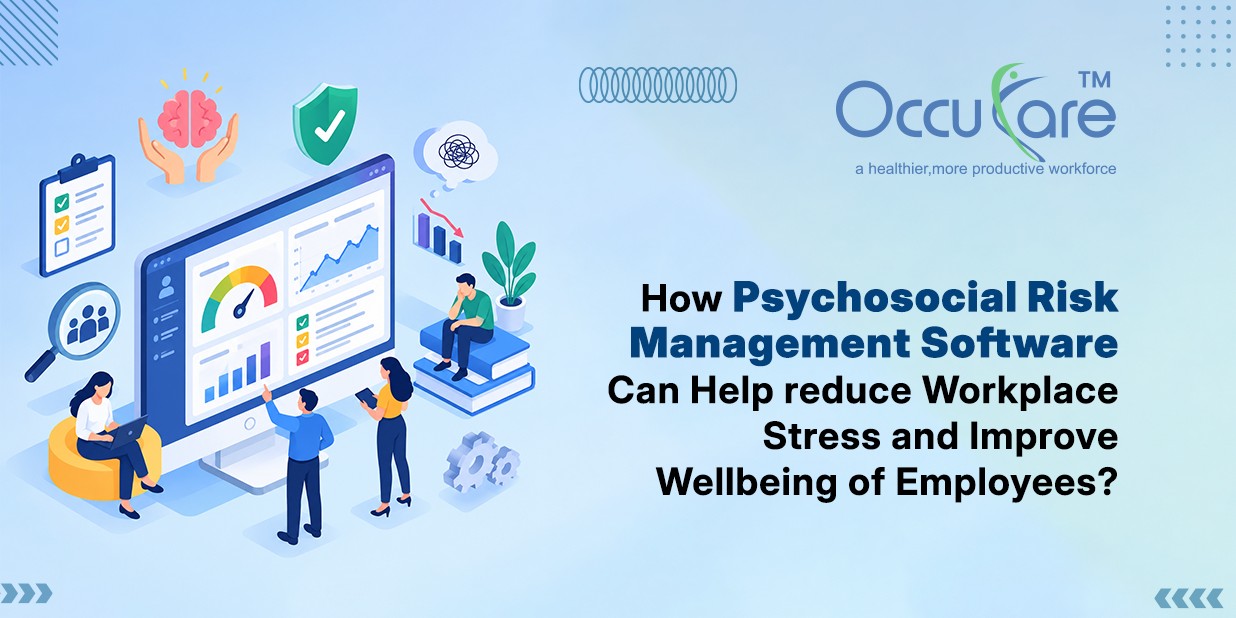
Psychosocial Risk Management Software enables organisations to proactively identify, assess, monitor, and manage workplace stressors before they escalate into more significant issues. By leveraging data-driven insights and structured risk assessment processes, businesses can strengthen their workplace mental health and wellbeing initiatives, support compliance with applicable health and safety requirements, and foster a healthier workforce. With OccuCare’s occupational health and safety expertise, organisations can take a more systematic approach to psychosocial risk management, enhance employee wellbeing, and build a safer, more productive workplace.
It’s a software solution that allows an organization to identify, evaluate, monitor, and control those workplace factors which may have a negative impact on the psychological well-being of staff members.
These factors include all psychosocial hazards which may be linked to the nature and design of the work, work organization, management, and working conditions. For example, there might be high levels of workload, lack of task control, job insecurity, poor support, bullying and harassment, and negative interpersonal relationships at work.
This software allows the organization to document these issues, evaluate their possible impact on the workers, take certain measures, and monitor their development over time. The specific functions of such software solutions may include gathering information about the workers, performing psychosocial risk assessment, tracking the concerns raised at work, preparing reports, and developing specific well-being activities.
Psychosocial hazards are any work-related condition or practice that could negatively impact the mental, physical, and general well-being of employees.
Some examples:
- High workload:
Workers might feel stressed when the demands placed on them exceed the available time, resources, and support required for them to meet these demands.
- Long working hours:
Long hours and lack of sufficient rest can contribute to feelings of fatigue and problems with balancing work and personal life.
- Poor communication:
Confusion and frustration can be caused by miscommunication, poor instructions, and lack of proper communication channels.
- Unclear role definitions:
Role ambiguity results from uncertainty over what the duties of an employee entail and how to fulfil these roles.
- Insufficient managerial support:
Lack of guidance, recognition, and help can cause some workplace challenges to become overwhelming.
- Job control:
Stress is caused by a feeling of having no control over one’s work.
This identification of the psychosocial hazards is the first step in managing these hazards and risks.
1. Early Detection of Psychosocial Risks
The primary benefit is the opportunity it provides for the early detection of issues at work. This may be achieved through conducting structured evaluations, surveys among employees, gathering feedback, and making workplace observations. The results can give insights into which departments, positions, and job tasks may be at risk.
2. Formalizing Psychosocial Risk Assessment Processes
Recognizing psychosocial risks at work is just the first step. The next step involves assessing the risks and determining which require action. Organizations can leverage a Psychosocial Risk Management System to structure assessment processes by making use of templates, risk rating methods, and documentation.
3. Collecting Structured Feedback from Employees
Employee perspectives are very useful in understanding the psychosocial risks in an organization but may not be forthcoming due to other constraints. By leveraging digital surveys, organizations can gather structured data from employees who will be sharing their experience of working in the organization. If the system allows, organizations can even collect anonymous/ confidential feedback from employees.
4. Effective Action Planning and Follow-Up
It is not enough for organizations to just identify psychosocial risks, but they must implement corresponding actions.
5. Better Monitoring and Reporting
Since workplace conditions and requirements of employees might change over time, the process of managing psychosocial risks must be continuous rather than a once-off procedure. Using digital tools for reporting can help organizations monitor the results of assessment, recurring issues, action status, and effectiveness of applied changes.
The introduction of a psychosocial hazard and risk management approach is likely to result in several benefits for an organization.
1. Lower Workplace Stress Levels
Identification of the stress factors and their elimination with the appropriate changes introduced into the workplace will lead to healthier working conditions.
2. Improved Employee Well-being
Employees will feel more protected and valued with an improved work environment and be more effective at dealing with the challenges of their job.
3. Greater Productivity
If the employee workload is appropriate, responsibilities are clear, and support is provided, workers will be able to concentrate and perform better.
4. Improved Workplace Relations
Dealing with communication problems, conflicts, and any type of inappropriate behavior in the workplace will ensure improved relationships between colleagues.
5. Better Understanding of Risks Involved
Conducting centralized assessment and reporting will allow managers to have greater insight into areas where psychosocial risks may arise and need to be addressed.
6. Constant Improvement
Constant assessments and tracking of measures taken will allow the company to improve its well-being initiatives.
Psychosocial risks must be considered equally along with physical and operational risks in the context of overall workplace safety.
An organization can incorporate psychosocial risk assessment practices into its overall Safety Management System through incident reporting, workplace inspection, feedback from employees, risk register, action plans, and review by management.
The continuous improvement cycle may include the following steps:
Identifying hazards → Assessment of risks → Implementation of controls → Monitoring outcomes → Evaluating effectiveness → Improving workplace practice
This will help in considering psychosocial risk management as a continuing task rather than an isolated HR function.
It is also important to ensure that the privacy of employees is protected while gathering and evaluating sensitive information. Proper access controls, responsible handling of information, and avoidance of using feedback for making judgments about employees are necessary.
Conclusion
Effective psychosocial risk management is essential for organisations looking to reduce workplace stress, improve employee wellbeing, and strengthen overall occupational health and safety performance. By identifying psychosocial hazards, conducting regular risk assessments, and implementing targeted preventive measures, businesses can create a healthier, safer, and more productive work environment. Integrating a Psychosocial Risk Management System into workplace safety programs also helps organisations streamline risk monitoring, maintain documentation, track corrective actions, and support continuous improvement in employee wellbeing.
OccuCare helps businesses take a proactive and structured approach to occupational health and safety, including psychosocial risk management. If your organisation is looking to improve workplace wellbeing, manage psychosocial hazards more effectively, and build a stronger safety culture, partner with OccuCare to simplify psychosocial risk assessments, improve workplace risk visibility, and build a proactive approach to employee wellbeing. Contact us today to book your free demo and explore how our occupational health and safety solutions can help your organisation create a safer, healthier, and more resilient workforce.