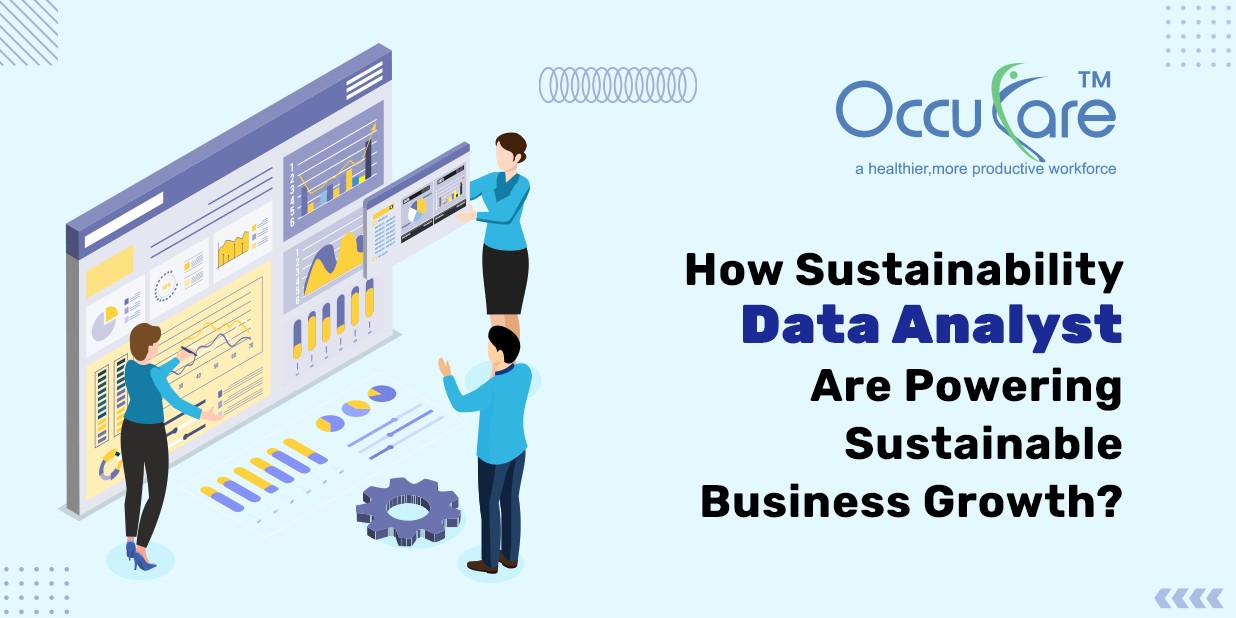
In today’s dynamic business environment, sustainability has grown to be more than just a catchphrase—it is now a necessity. Organizations are under pressure from employees, investors, authorities, and consumers to demonstrate their real concern for ecological, social, and economic (ESG) issues. To meet these requirements, businesses are turning to environmental analysts—professionals who can transform vast amounts of unorganized social and environmental data into insightful knowledge through effective sustainable data management practices. These experts are becoming increasingly essential in assisting businesses in gaining a competitive edge, achieving profitable expansion, and adhering to regulations.
A specialist in collecting, evaluating, and interpreting data pertaining to sustainability is known as a sustainability data analyst.
This includes measurements like:
- Combustion of carbon (under Scope 1, 2, and eventually Scope 3)
- Effectiveness and utilization of energy
- Conserving and using water
- Rates of waste production and recycling
- Environmental practices in the supply chain
- Information on diversity, equality, and inclusion (DEI)
- Participation in communities and social effect metrics
They do more than just crunch numbers. Researchers place this information in the perspective of company objectives, worldwide accounting requirements, and governmental regimes. By doing this, they assist companies in developing significant environmental strategies in addition to helping them adhere to the law.
Significance of Data in Sustainable:
Durability without data would feel like looking to maneuver a vessel without a chart of the sea. Businesses may have high goals, such as eliminating waste or reaching carbon neutrality, but without precise data and analysis, these aspirations are merely hypothetical.
A. Information offers:
- Providing clarity: Defines the organization’s foundation achievement of sustainability data management.
- Reputation: Assures openness with investors, lawmakers, and consumers.
- Practicality: Assists in creating focused, quantifiable, and effective interventions.
- Comparison: Enables comparison with peers and international norms.
B. Discovering Productivity in Operations:
Scientists use information about durability to find hidden inefficiency. For instance:
locating facilities or factories that use abnormally high amounts of energy. Identifying inefficient usage trends or water leaks. Reducing fuel usage through logistics route optimization is important.
Organizations can save expenses and lessen their ecological footprint with this information-driven strategy, benefiting the earth and their bottom line.
C. Establishing the Faith of Shareholders:
Stockholders are now paying just as much attention to sustainability data analysts as they are to economic results. Investors can rely on data analysts to deliver reliable, readily available, and verified ESG indicators. For example, a business that can demonstrate annual reductions in greenhouse gas emissions supported by credible information is more appealing to long-term stakeholders, investors, and ESG funds. The successful expansion of businesses is directly supported by increased access to financing.
D. Improving Revenue and Goodwill:
Customers are more frequently selecting merchandise that shares their values. Survival evaluations assist businesses in quantifying and communicating their beneficial effects. Retailers draw attention to the decrease in packaging waste. Technology firms demonstrate the use of green power in their storage facilities. Food manufacturers discuss their sustainable farming advancements. In highly saturated markets, such stories supported by data improve distinctness and customer loyalty.
E. Facilitating Manufacturing and Administrative Growth:
Possibilities for fresh goods or company structures are frequently revealed by sustainability management software. For instance: Recyclable alternatives may result from data indicating high packaging waste. Development of clean energy products may be encouraged by emissions data. arrangements with environmentally conscious vendors may be prompted by supplier chain evaluations. Researchers stimulate innovation that draws in eco-aware clients and creates new revenue streams by fusing sustainability insights with R&D.
F. Strengthening the Adaptability of the Marketplace:
International uncertainty, changing laws, and warming temperatures are all putting stress on worldwide supply networks. Researchers evaluate risks and monitor environmental indicators for vendors. Locating vendors who have labor issues or significant emissions is important. Assess potential partners who have better sustainability records. Predicting disruptions with data-based models is important. Guarantees that companies create distribution networks that are robust, moral, and prepared for tomorrow.
G. Promoting Teamwork and Cultural Diversity:
Inside involvement also involves analysts who analyze data. Staff satisfaction and motivation are increased when they witness quantifiable progress toward objectives related to sustainability, such as an organization reducing the consumption of plastic by 40% or significantly lowering energy bills.
Environmentalism Data Scientists at Work: International Store Cutting Waste
Environmental researchers were employed by a global retailer to analyze waste data from thousands of locations. The packaging and waste disposal deficiencies were found by analysts. The organization reduced yearly waste disposal expenses by hundreds of millions of dollars by implementing new recycling regulations and using less packaging, all while enhancing the eco-friendly reputation of its brand.
Case 1: Carbon-Cutting Manufacturing Company:
To evaluate energy consumption across plants, a manufacturer employed analysts. Older equipment was found to be using excessive amounts of power. The organization achieved cost reductions and emission objectives by switching to environmentally conscious machinery, which also resulted in a significant reduction in greenhouse gases and utility costs.
Case 2: ESG Achievement Communication by banking institutions:
For creating disclosures about ESG under various rules and regulations, a multinational lender relied on analysts. Higher ESG ratings and easier access to sustainable financing resulted from accurate and uniform reporting, which additionally improved confidence among shareholders.
Practical obstacles Data Analyst Challenges:
Environmental analysts confront several obstacles despite their influence:
- Knowledge Lacks: Inaccurate or lacking information about worldwide operations.
- Uniformity issues: Multiple reporting systems (TCFD, SASB, etc.) and GRI add to the workload.
- Stakeholder alignment: Involves finding a balance between the need for profitable operations and environmental demands.
- Growing Policies: Adapting to constantly shifting international norms.
A close partnership between analysts, management teams, and IT service providers is necessary to overcome these obstacles.
Environmentalism Data Assessment’s Next Step:
The growing role for environmentally conscious statistics will only increase in the future. Companies are shifting to integrated reporting, where ESG and accounting information are important. Among the new trends are:
Forecasting environmentally friendly analysis powered by AI is important. Incorporating ESG information into fundamental business intelligence platforms. Environmental and consumption of resources tracking in real time. Rising demand for ESG analysis instruction and specific qualifications. In the end, environmentally friendly professionals will transition from reporting data to serving as business advisors, influencing long-term growth plans in addition to observing regulations.
Conclusion:
As businesses strive to grow sustainably in today’s data-driven economy, the role of sustainability data analysts is becoming indispensable. Their ability to interpret environmental, social, and health-related data not only supports ESG goals but also ensures long-term business viability through smarter decision-making.
However, for these insights to translate into real impact, organizations must integrate them into a comprehensive framework—like a robust EHS Management System. By aligning sustainability insights with workplace health and safety practices, companies can foster a culture of responsibility, compliance, and continuous improvement.
That’s where OccuCare comes in. We provide intelligent Occupational Health and Safety solutions that seamlessly support your sustainability efforts. Our Safety Software is designed to help businesses collect, manage, and act on critical health, safety, and environmental data—ensuring you stay compliant, competitive, and sustainable.