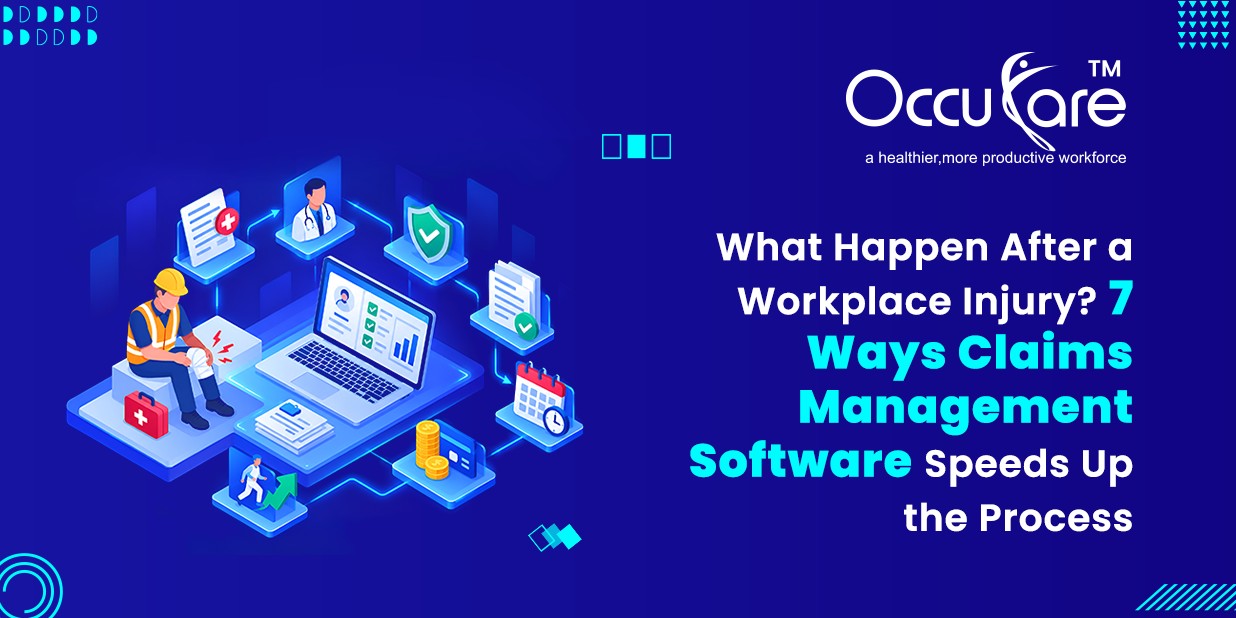
An employee’s health, productivity, and the day-to-day operations of the company can all be negatively impacted by a workplace injury. The claims management process might involve several individuals and administrative stages, from reporting the incident to recording medical care, liaising with insurers, and monitoring payments.
Errors and delays are common when these tasks are completed by hand using spreadsheets, emails, and paper documents. Organizations can report, monitor, and settle occupational injury claims more easily by combining these tasks into a single, centralized platform with the use of Claims Management System
What Happens after a Workplace Injury?
When an employee reports an injury to their supervisor, the HR department, the safety department, or the occupational health team, the procedure usually begins. After then, the organization keeps track of information including the incident date and place, the kind of injury sustained, the individuals involved, and the quick steps that were taken.
The employee may receive medical attention or first assistance, depending on the extent of the injury. To assess whether corrective or preventive measures are necessary, the organization may additionally look into the occurrence to find its underlying cause.
Simultaneously, a claim might need to be filed with an insurance company or other appropriate authorities. It may be necessary to gather supporting documentation, including bills, medical reports, incident reports, photos, witness testimonies, and other proof.
An effective digital system can have a big impact on this situation.
1. Claim Reporting:
Reporting a workplace accident promptly and accurately is the first step in managing it. Administrative delays and difficulties gathering reliable data can result from delayed reporting. Authorized users can obtain claim data from a centralized system rather than looking through emails or physical files. This enables businesses to begin the claims management procedure as soon as an occurrence is reported.
2. Centralized Documentation:
Claims for workplace injuries may require a significant amount of documentation. The same claim may be linked to medical certificates, treatment records, invoices, investigation reports, personnel data, and insurance-related papers. Duplicate records or missing information may arise from handling these documents independently. Information pertaining to claims can be stored and arranged centrally with the help of insurance claims management software
3. Reduce Manual Follow-up:
Reporting, verification, investigation, medical evaluation, insurance review, approval, settlement, and closure are some of the phases that a typical claim may go through. Employees may have to follow up with many stakeholders on a regular basis if these stages are managed manually. By allocating tasks, updating claim statuses, and alerting accountable people when action is needed, claims management solutions can automate workflow processes
4. Real-Time Claim Tracking:
Determining the precise status of a claim is one of the frequent difficulties in managing workplace injuries. Is the medical record still pending? Has the claim been examined by the insurer? Is more information needed? Has the settlement been finalized? A clear picture of the current situation can be obtained using a digital Claim management system.
5. Faster Communication Between Stakeholders:
Employees, supervisors, HR departments, occupational health teams, safety experts, insurers, and other stakeholders may be involved in workplace injury claims. By assisting users in organizing claim information, identifying missing details, classifying situations, and prioritizing tasks based on available data, contemporary AI claims management software can go one step further
6. Automated Reminders and Escalations:
Simply forgetting to finish a task or submit a necessary document can cause a claim to be delayed. This problem can be solved with automated reminders. For Ex.
- A claim requires review
- A document is missing
- A Medical report is pending
- An approval is overdue
- An insurer requires additional information
- A follow-up action has not been completed
- A claim is approaching a defined deadline
7. Better Analytics and Decision Making:
While effectively handling individual claims is crucial, corporations must also consider the wider picture. Which kind of injuries are most common? Which places have experienced the most incidents? How much time does it take to resolve a claim? Do specific kinds of occurrences lead to increased expenses? This data can be combined into dashboards and reports using digital claims systems.
8. From Injury Reporting to Claim Closure:
Submitting an insurance form is only one aspect of the process following a workplace injury. Coordination of personnel, data, paperwork, medical records, investigations, approvals, and follow-up tasks is necessary for organizations. These tasks can be combined into a single workflow using an organized digital platform. Users can learn what is transpired, what must be done next, who is at fault, and what action is still outstanding from the initial incident report until it is finally closed.
Conclusion:
Managing a workplace injury efficiently is not just about processing a claim—it is about protecting employees, reducing administrative burden, and keeping the organization moving forward. With a centralized claims management solution, businesses can streamline injury reporting, documentation, communication, follow-ups, and claim tracking in one place. By reducing manual processes and improving visibility across every stage of a claim, organizations can make faster, more informed decisions while creating a more efficient occupational health and safety process.
OccuCare helps organizations simplify workplace injury and claims management with a structured digital approach that brings critical information, workflows, and stakeholders together. Whether you are looking to improve claim turnaround times, reduce paperwork, or gain better visibility into workplace incidents, OccuCare can help you build a more efficient and proactive safety management process. Contact us today for a free demo and discover how OccuCare can help transform your occupational health and safety management.