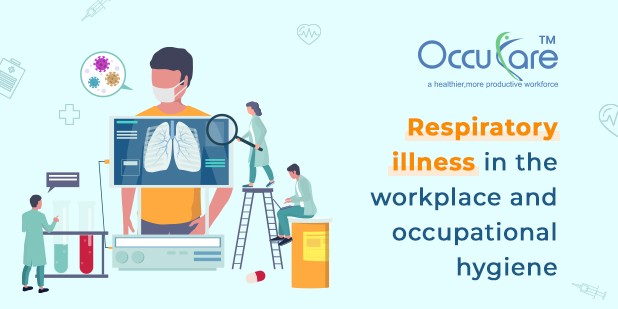
Respiratory illnesses are a significant occupational health risk, and exposure to airborne hazards such as dust, gases, and fumes. And, it can lead to a range of health effects, including asthma, chronic obstructive pulmonary disease (COPD), and lung cancer. In fact, respiratory illness are estimated to account for over 25% of all occupational illnesses and diseases worldwide.
Respiratory illness in the workplace and occupational hygiene:-
To manage respiratory risks in the workplace, organizations must take a comprehensive approach that includes identifying and assessing respiratory hazards. And also implementing engineering and administrative controls, providing appropriate personal protective equipment (PPE), and promoting employee engagement and education.
One key component of managing respiratory risks is occupational hygiene. Occupational hygiene is the science and art of anticipating, recognizing, evaluating, and controlling workplace hazards to protect worker health and prevent occupational diseases and injuries. Occupational hygiene involves identifying and assessing workplace hazards, developing and implementing control strategies, and monitoring and evaluating their effectiveness. Check out Occupational Health and Safety Software in industries for your employee safety.
In the context of respiratory hazards, occupational hygiene experts can help organizations identify and assess respiratory hazards, such as asbestos, silica, and diesel exhaust, and develop appropriate control strategies. This may include conducting workplace exposure assessments, monitoring employee health data, and implementing engineering controls, such as ventilation systems and dust suppression methods, to reduce exposure to respiratory hazards.
Personal protective equipment (PPE) is also an important component of managing respiratory risks in the workplace. PPE, such as respirators and protective clothing, can help protect workers from respiratory hazards when other controls are not feasible or effective. However, it is important to select appropriate PPE for the specific respiratory hazard and provide adequate training on its use, maintenance, and replacement.
Administrative controls, such as workplace policies and procedures, training programs. And employee engagement, are another key component of managing respiratory risks. These controls can help promote respiratory health and prevent respiratory illnesses by educating employees on respiratory hazards and prevention measures, encouraging employees to report symptoms, and establishing regular communication channels between employees and management. Check out the employee wellness program for your employee safety.
In addition to managing respiratory risks in the workplace, organizations must also comply with relevant regulations and standards. For example, in the United States, the Occupational Safety and Health Administration (OSHA) has established permissible exposure limits (PELs) for many respiratory hazards, and employers are required to comply with these limits or implement alternative control strategies.
Continuous improvement is also important in managing respiratory risks. Organizations should regularly monitor and reassess respiratory hazards and prevention strategies to ensure they are effective and up-to-date. This may involve conducting regular exposure assessments, reviewing health data, and evaluating the effectiveness of control measures.
Conclusion:
In summary, managing respiratory risks in the workplace requires a comprehensive approach that includes identifying. And assessing respiratory hazards, implementing engineering and administrative controls, providing appropriate PPE, and promoting employee engagement and education. Occupational hygiene is an important component of managing respiratory risks and involves identifying and assessing hazards, developing. And it can implementing control strategies, and monitoring and evaluating their effectiveness. By taking a proactive approach to respiratory risk management. And organizations can help protect worker health and promote a safe and healthy work environment.