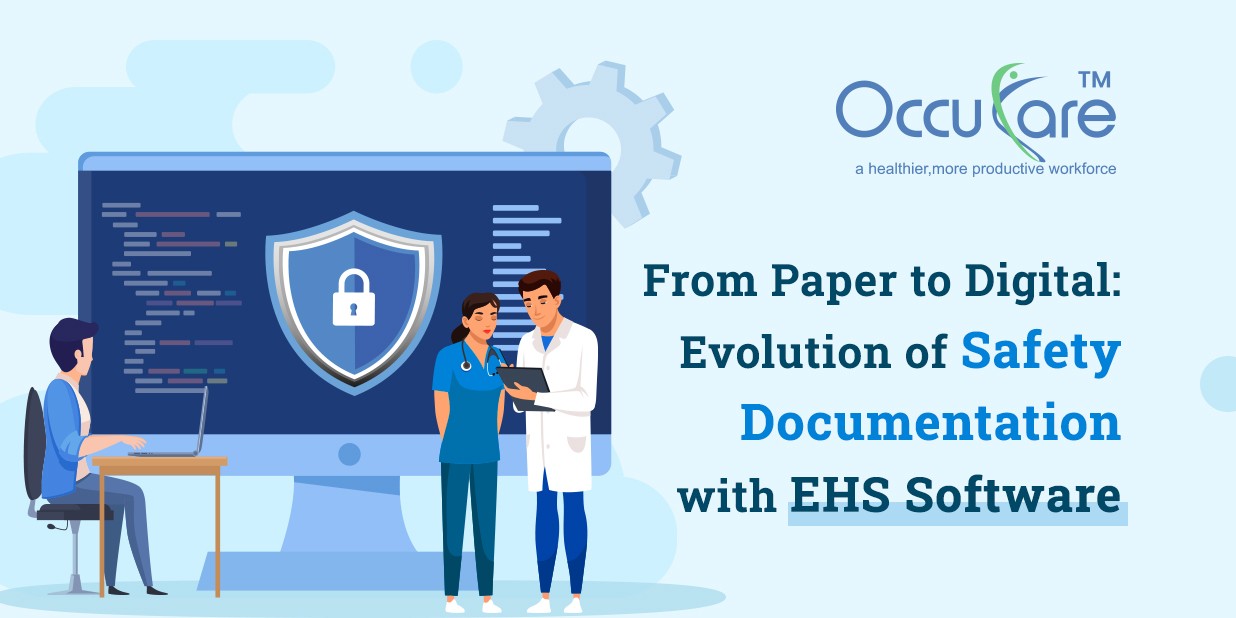
The evolution of safety documentation from paper-based systems to digital solutions through Environmental Health and Safety (EHS) software has been a significant advancement in workplace safety and compliance management. This transformation has improved efficiency, accuracy, accessibility, and effectiveness in managing safety-related information.
Here is an overview of this evolution:
1. Paper-Based Systems:
- Traditional safety documentation was typically managed using physical paperwork, such as logbooks, inspection forms, incident reports, and safety manuals.
- These systems were often cumbersome, time-consuming, and prone to errors due to manual data entry.
- Retrieving historical data and sharing information across the organization was challenging.
2. Transition to Digital:
- As technology advanced, organizations began transitioning to digital documentation using spreadsheets and databases.
- This represented an improvement in data organization and retrieval but still had limitations in terms of collaboration and real-time access.
3. Introduction of EHS Software:
- EHS software solutions were developed to streamline safety management processes further.
- EHS software offers a centralized platform for managing all aspects of safety documentation, including incident reporting, safety inspections, risk assessments, compliance tracking, and safety training records.
- These systems provide real-time access to data, ensuring that critical safety information is readily available to relevant stakeholders.
Key Advantages of EHS Software:-
1. Improved Data Accuracy :
It minimizes human errors associated with manual data entry and calculations, leading to more accurate records.
2. Real-time Access and Reporting :
Safety data is available in real-time, enabling quick response to incidents and allowing managers to make data-driven decisions.
3. Enhanced Collaboration :
Facilitates collaboration among different departments and teams within an organization, fostering a culture of safety.
4. Regulatory Compliance :
Helps organizations stay compliant with safety regulations by providing tools for tracking and reporting on regulatory requirements.
5. Streamlined Processes :
Automated workflows and notifications streamline safety processes, ensuring tasks are completed on time and reducing administrative overhead.
6. Mobile Accessibility :
Allowing field workers to input data directly into the system from their mobile devices.
7. Data Analytics and Trends :
EHS software often includes analytics tools that help organizations identify trends, assess risks, and make data-driven decisions for continuous improvement.
8. Environmental Sustainability :
Going digital reduces the need for physical paper, contributing to environmental sustainability efforts.
9. Challenges:
While EHS software offers numerous benefits, there are challenges associated with its adoption, including initial implementation costs, the need for staff training, and ensuring data security.
Key aspects to look in an effortless Employee Safety Management Software:-
Selecting the right Employee Safety Management Software ensures workplace safety and compliance. An effortless software solution should address key aspects to make safety management easier and more effective.
Here are the key aspects to consider when evaluating such software:
1. User-Friendly Interface:
The software should have an intuitive, user-friendly interface that requires minimal training for employees to use effectively.
2. Accessibility and Mobility:
Ensure that the software is accessible via web browsers and mobile apps to accommodate both office-based and field employees.
3. Safety Compliance:
Look for software that helps your organization stay compliant with safety regulations and standards relevant to your industry.
4. Safety Inspections and Audits:
The software should facilitate the scheduling, conduct, and tracking of safety inspections and audits, ensuring that all necessary checks are completed.
5. Training and Certification Tracking:
Ensure the software can track employee safety training, certifications, and qualifications, sending reminders for re-certifications when necessary.
6. Risk Assessment and Hazard Identification:
The software should support the identification and assessment of workplace hazards and provide tools for risk mitigation.
7. Real-time Reporting and Analytics:
Comprehensive reporting and analytics tools should allow you to monitor safety performance, identify trends, and make data-driven decisions.
The software should be customizable to adapt to your organization’s specific safety needs. It should also be scalable to accommodate growth.
8. Data Security and Privacy:
Ensure that the software follows best practices for data security and complies with relevant data privacy regulations.
9. Vendor Support and Updates:
Evaluate the level of customer support provided by the vendor, as well as their track record for releasing updates and addressing issues.
10. User Feedback and Reviews:
Seek feedback from current users and read reviews to gauge the software’s performance and reliability in real-world scenarios.
Conclusion:-
In conclusion, the transition from paper-based to digital EHS software for safety documentation has fundamentally changed how businesses manage compliance and safety. In addition to enhancing the reliability and use of safety data, it has also given enterprises the ability to proactively address safety concerns, ultimately leading to safer workplaces.
By carefully taking into account these factors, you can choose an employee safety management system that reduces the administrative burden on your company while streamlining safety procedures, enhancing compliance, and enhancing workplace safety.