When making a diagnostic test, doctors do not take a patient’s job or environment into account. Doctors frequently overlook the subtle effects of work on health due to their lack of interest in how people spend half of their waking hours, which contributes to the assumption that job-related illness is uncommon. The main method for correctly diagnosing an occupational sickness is a high level of well-informed suspicions.
The phrase “surveillance” comes from the French verb “surveiller,” which means “to watch over.” Although surveillance in public health was initially established to help combat infectious diseases, its principles may also be used to address other issues including chronic diseases (such diabetes, cancer, or high blood pressure), occupational ailments, or social problems (drug addiction). In order to find the root of the problem, health surveillance is a public health methodology that looks for unfavourable health impacts in a specific population.
EHS system is used by many sizable international enterprises to save time, lower risk, and stop unintended situations.
However, if you work for a small to mid-sized business, you could question if you actually need EHS technology or whether it’s unnecessary.
The good news is that EHS software enables enterprises of any size, from 10 to 100+ users. So how can you tell if it’s a wise investment overall or just for your company?
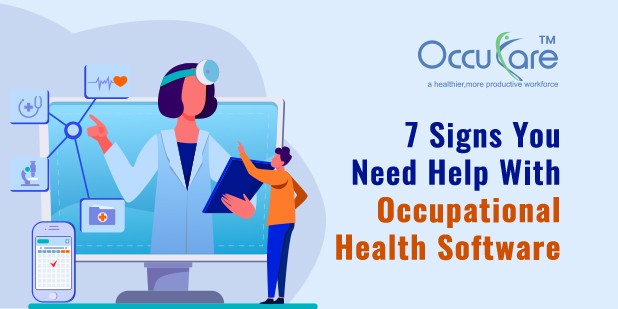
Here are 7 typical signs that businesses in need of EHS software exhibit:
– You’ve experienced incidents, fees, or sanctions: Too frequently, businesses fail to acknowledge the shortcomings of their current EHS management system until after a catastrophic accident or non-compliance incident. By that time, their revenues, prestige, and corporate morale have all deteriorated. You require EHS solutions if there are worker injuries or OSHA infractions. However, even if you’ve had success in the past, it’s crucial that you realise that your spreadsheets or custom software are a liability before it’s too late. The cost of EHS software is actually much lower than the expense of a single incident or fine.
– Finding your data is difficult: Finding what you need can be challenging when data is dispersed over paper documents, spreadsheets, and numerous databases. All of your compliance, risk and sustainability data is organised by EHS software to provide a single source of truth for the whole firm. When preparing reports manually, your team is putting off more important tasks like implementing ISO 14001 or enhancing your staff training programme. With software, fully prepared reports may be produced quickly using pre-made or customized templates. It’s challenging to make judgments based on current facts when you don’t have access to your data when you’re on the go. Additionally, it takes time to leave the office to visit your facilities, record data on paper forms, and then return to enter that data. You may access reports, view alarms, and enter data from your tablet or smartphone using mobile Employee Health software. When you don’t have a Wi-Fi connection, for example, you can gather data offline and sync it with the main database when you do. To save expensive travel to far-flung sites, checks and examinations can even be delegated at the project level.
– EHS employee’s turnover: Businesses are concerned about the expense of losing employees in any position, but it may be particularly expensive to lose an EHS group member. Even though skills and understanding cannot be valued, there are some absolute figures connected to losing a qualified EHS expert. In almost all EHS departments, there is a problem with high staff turnover. The advantages of software come in two forms: When you have a formal, centralised structure in place, you can more easily train new hires and avoid losing information when staff members leave.
– You lack a comprehensive understanding of your accomplishment: EHS teams are confronted with the difficulty of attempting to monitor vast amounts of data as big data continues to grow. You can immediately see and drill down on trends with the use of software that has dynamic dashboards, which may offer you a complete picture of compliance across all of your facilities and help you make decisions more quickly. Setting expectations for your staff is a crucial duty that many company owner’s neglect. Unambiguous worker standards are advantageous for both your staff and your company as a whole. Belinda Wee, an associate professor at Husson University’s School of Business and Management, claimed that in order to get the outcomes they want, managers must express in both spoken and written form the levels of quality they expect from each worker.
– You don’t know what hazards you face: The dangers that businesses currently face have evolved, and the technology used to identify and manage those risks have too, even if you have a history of consistent compliance. The best method to anticipate problems is no more to maintain a database of hazards. By spotting holes in your sustainability and safety programmes, assessing organisational trends, and averting problems before they happen, software can help you improve your risk management efforts.
– Occasionally things slip between the gaps: There’s a good chance that some jobs will be overlooked or left unfinished as your compliance and sustainability duties increase. With the aid of software, you can keep track of all your chores until they are finished and organize all of your events in one centralized schedule with automated expiration as well as other activity reminders.
– Focusing on reactive rather than proactive: Everybody can certainly live without a stressful work environment if they had their choice. Timelines that are drawing near, spontaneous encounters, unopened emails—there often seems to be an interminable number of issues that need to be resolved. Learning new strategies for approaching that apparently endless chore list is one way to get ahead of it. Reacting to a problem in the present can make you feel like you’re keeping a bunch of plates spinning and hoping none of them fall. To foster a more proactive mindset at work, take your time and adhere to our five steps.
Do any of the above-mentioned signs apply to your firm? If so, it may be time to think about buying Employee Health management software.