Regardless of the kind of the working environment, safety should always be the primary concern. It is a must that any safe and, on top of that, productive environment be based on two main principles are first, being aware of the risks and second, having those risks under control effectively. The thing is that, apart from being the safety of your employees, it is also the protection of your business assets and operations that a safety management system should oversee. A risk assessment is part of a safety management system which is necessary, explaining why risk assessment is important for maintaining a safe and productive workplace.
Nonetheless, a risk assessment is just a single term which is still open for definition and the reasons for which it plays such an important part in your safety management process are still not so obvious.
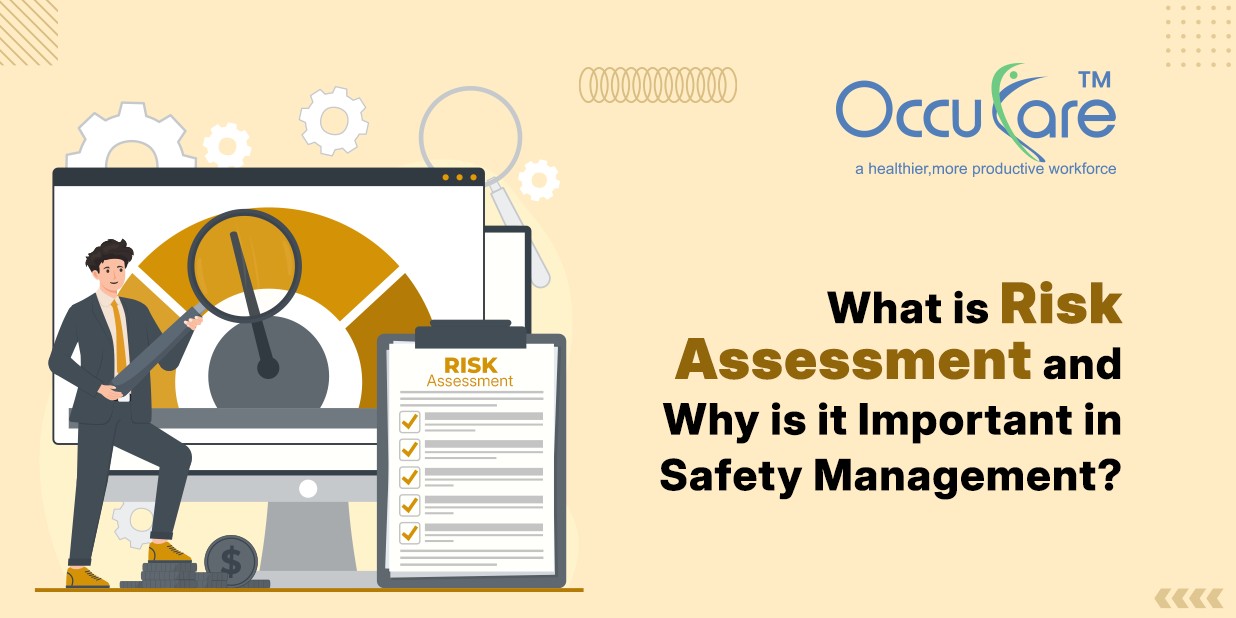
What is Risk Assessment?
Risk assessment is a practice that finds, evaluates, and quantifies those risks which may result in the injury of the people, the destruction of the property, or pollution of the environment. The main goal of such undertaking is that every risk should be either completely removed or controlled by lowering both the likelihood and the impact of the incident through safety measures.
An employee risk assessment is usually an operation that involves the following stages:
Hazard Identification:
Identify any source of potential harm. Among these are physical hazards (e.g., machines or chemicals), biological hazards (viruses or bacteria), ergonomic risks (repetitive movements), and psychosocial risks (e.g., stress or bullying). Hazard identification is the very basis and the most important part of any efficient hazard risk assessment.
Risk Analysis:
Determine the probability and the extent of the impact of the chosen risk upon a person. Besides, that, it is also at this point where the risk hierarchy is created, i.e., the ranking of the risks in the order of the highest to the lowest priority for action.
Risk Assessment:
Analyze each risk according to the risk criteria based on your company’s standards. Immediate response to the situations that require doing so should also be a part of the monitoring activities that have been planned for some time.
Control Strategies:
The introduction of control measures can be facilitated through employee training and awareness programs that provide the necessary information and instruction for the correct implementation of the control measures. Additionally, apart from this, administrative controls such as work procedures and shift rotation that serve to reduce the exposure can be included under the control strategies, together with engineering solutions (e.g., machine guards) and personal protective equipment (PPE).
Monitoring and Review:
Risk assessment should be considered not as an isolated event but as a continuous cycle. The main point of this undertaking is to ascertain that the already existing control measures are efficient, and it likewise provides the opportunity of spotting additional risks.
>
A certain organization will be capable of carrying out this task in a far better and quicker manner if it utilizes a specialized risk assessment software solution. Apart from that, it can simplify the process of record-keeping, make compliance easier, and quickly provide actionable insights.
Importance of Risk Assessment in Safety Management:
1. Accident and Injury Prevention:
One of the main elements in safety management is the prevention of accidents that stem from injuries. One way this is achieved is through an exhaustive health & safety risk assessment that, consequently, allows corporate management to deploy the tactics that guarantee low incidence of injury or illness.
2. Compliance with Legal and Regulatory Requirements:
Most governments vary in requirements placed on employers in the need they have for workplace risk assessments to be carried out periodically and be in line with occupational health and safety laws. Neglecting this may lead to penalties, suing, or even business shutting down.
Writing and keeping up to date with health & safety risk assessments is the primary requirement for legality and the ticket for safeguarding one’s organization from reputational risks.
3. Financial Cost Reduction:
Workplace incidents lead to a bundle of expenses, among which are medical bills, legal fees, damaged equipment, and productivity losses. By embracing Risk Management Software, businesses can prompt and complete risk identification and intervention processes, which will, in turn, lower the direct and indirect costs associated with workplace accidents.
4. Improved Employee Morale and Productivity:
When workers see that a thorough hazard risk assessment is conducted to their benefit, they realize that the employer keeps his promise to prioritize safety, and this in turn, raises their trust and morale. Yash
5. Better Decision-Making and Resource Allocation:
Thorough operational risk assessment reveals the most vulnerable parts of the organization structurally. Therefore, the top management could use such information to place safety human and financial resources in the right hands of those who are eager to achieve the highest safety goals and maintain operational efficiency.
6. Supports Continuous Improvement:
Risk assessment is what makes safety practices always evolve. As changes are made to methods, tools, and surroundings, there is always room for adjustments through periodic evaluations. Which are usually done with the aid of risk assessment software, and which ultimately ensure that safety remains addressed in a proper manner and is continuously up to date.
Risk Assessment Process: Step-by-Step:
The main steps of a risk assessment in a work environment that will effectively manage risks are:
Identify Hazards:
Investigate the workplace environment to find the things that can injure, harming, or damaging. The sources of such things could be nature, humans, or technology.
Figure Out Who Might Be Harmed and How – Don’t forget to add people such as employees, contractors, visitors, and the public to your list.
Evaluate the Risks and Find Measures to Lessen Them:
Calculate both the probabilities and the severities of an injury situation leading to, and therefore, design control plans accordingly.
Write Down the Results and Put Controls in Place:
Let your record be a proof of your diligence and at the same time, as a medium to inform people about the safety plans.
Keep an Eye on and Inspect the Situation:
Always come back to your assessment, for instance, after a major change in the process or equipment.
Qualitative Risk Assessment: Such risk assessment involves evaluation of various risk factors through descriptive words of the scale (e.g., low, medium, high) instead of numbers.
Operational Risk Assessment: It is about risks that may have a negative effect on the business operations such as supply chain, logistics, or the core processes.
Final Thoughts:
Implementing a thorough workplace risk assessment process is essential not only for ensuring employee safety. But also for protecting your business operations, assets, and reputation. In today’s fast-paced and complex work environments, relying on manual processes can be inefficient and prone to errors. This is where leveraging advanced Health and Safety Software can transform your safety management system. Such software streamlines risk identification, control implementation, and continuous monitoring, making compliance easier and enabling proactive decision-making.
At OccuCare, we specialize in providing comprehensive occupational health and safety solutions tailored to help businesses mitigate risks effectively. By integrating our Safety Software into your safety protocols, you can enhance workplace safety, reduce financial losses from accidents, ensure regulatory compliance, and foster a culture of continuous improvement. Understanding why risk assessment is important can help organizations make informed safety decisions and strengthen their overall risk management approach. Investing in the right technology not only safeguards your workforce. But also drives operational excellence—setting your business on a path to sustainable success.