Workplace health risks are becoming increasingly complex as organizations manage evolving regulatory requirements, diverse workforce needs, and the growing demand for safer working environments. Businesses today cannot rely only on reactive measures after incidents occur; they need proactive occupational health strategies that help identify potential risks, monitor employee well-being, and prevent workplace-related health issues through effective health monitoring in the workplace.
By integrating advanced digital solutions into occupational health management, companies can streamline medical surveillance, enhance workplace risk assessment, and establish preventive safety practices. This approach not only reduces the likelihood of workplace accidents but also supports workplace safety monitoring, contributes to higher employee productivity, improved compliance with occupational safety standards, and long-term business sustainability. In this blog, we explore how workplace health monitoring systems help organizations proactively manage health risks and build safer, healthier workplaces.
What is a Workplace Health Monitoring System?
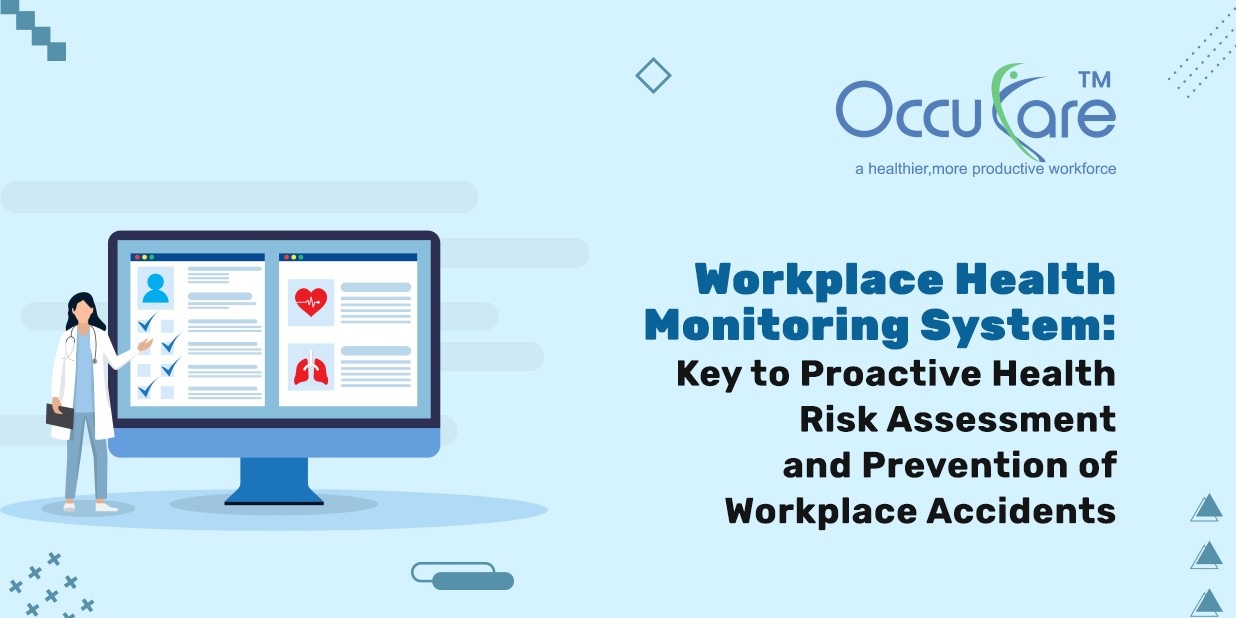
It is a special program aimed at the continuous tracking and analysis of employee health data. It includes many health management activities such as:
- Medical examinations
- Health risk assessment
- Exposure monitoring
- Incident reporting
- Wellness programs
The difference between WHMS and a traditional health management system lies in its proactive approach.
Workplace Health Monitoring: The Need of the Hour
In today’s times, there are various risks that workplaces pose, especially in the manufacturing, construction, chemicals, and other sectors. This includes:
- Exposure to toxic substances
- Ergonomics
- Noise and air pollution
- Mental well-being
Ignoring these factors could result in:
- Absenteeism
- Decreased productivity
- Fines
- Increased healthcare costs
Moving from Reacting to Proactive Approach for Workplace Safety:
Most conventional approaches to workplace safety are usually reactive in nature. However, this method of approach is highly inefficient and expensive.
Implementation of this System will enable the organization to do the following:
- Early Risk Detection: Early detection of any risk factors can be made by constantly monitoring the health of employees by detecting abnormalities like test results and symptom recurrence.
- Predictive Analytics: You can make predictions about any probable problems through predictive analytics.
- Taking Preventive Measures: Based on these predictions, preventive measures can be implemented, including medical checks, ergonomic modifications, wellness programs, etc.
Features of an Efficient WHMS:
To have maximum effect, an efficient WHMS should incorporate the following features:
- Digital Health Records: Storing employee medical information in one place simplifies its access and improves decisions.
- Automatic Health Checks: Automatic scheduling and conducting health check-ups.
- Continuous Monitoring: Continuous monitoring of vital parameters via integration with wearables or sensors.
- Compliance: Helps in maintaining compliance with occupational health and safety regulations.
- Reporting and Analytical Functions: Dashboards and reports provide management with important information to act upon.
- Integration with HRMS: Efficient integration of WHMS with HR management systems.
Advantages of Workplace Health Monitoring Systems:
- Better Health of Employees: Monitoring health shows that an employer cares about the well-being of their staff.
- Reduction in Absenteeism: Timely treatment of health problems decreases the number of sick days.
- Higher Efficiency of Employees: Healthy people work better than unhealthy ones.
- Regulations Compliance: Penalties are avoided due to compliance with occupational health regulations.
- Cost-Savings: Prevention helps to save on medical expenses and compensation.
Role of Occupational Health Software in Industrial Health Management:
Occupational health software is an integral component of modern industrial health management as it digitalizes and streamlines all complicated processes.
Why it’s useful:
- Monitors employees’ exposure to workplace hazards
- Facilitates regular medical check-ups
- Ensures compliance with all regulations
- Provides insights via analytics
Use Cases for Workplace Health Monitoring:
- Manufacturing Industry: Employees who work in a chemical or machinery-filled environment can be monitored for any respiratory or musculoskeletal problems.
- IT & Corporate Offices: Stress level, body position, and psychological health of office employees can be monitored.
- Construction Industry: Fatigue level and physical condition of construction workers can be monitored to minimize risks of accidents.
Best Practices for Successful Implementation:
For successful implementation of a Workplace Health Monitoring System, follow these:
- Clearly Defined Objectives: Decide on what you wish to accomplish through the process-compliance, wellness, or risk reduction.
- Proper Choice of Technology: Choose a software platform that meets the demands of your industry.
- Protection of Confidential Information: Ensure that sensitive health information is secure.
- Employee Education: Provide employees with necessary information regarding its advantages and usage.
- Analysis and Improvement: Keep analyzing the collected data and improving your strategies.
Future of Workplace Health Monitoring:
The future of Workplace Health Monitoring depends on new technologies, such as:
- AI to analyze health in advance
- IoT devices for monitoring
- Cloud technology for expansion
- Data Analytics for individualized health
Such technologies will enhance the preventive safety of the workplace even further.
Conclusion:
A Workplace Health Monitoring System is no longer just a safety initiative; it is a strategic investment that helps organizations create healthier workplaces, reduce operational risks, and improve long-term business performance. By adopting a proactive approach to occupational health management, companies can identify potential health hazards early, strengthen workplace safety practices, ensure regulatory compliance, and build a culture where employee well-being becomes a core business priority.
With the right technology partner, organizations can simplify health surveillance, improve decision-making through data-driven insights, and achieve a more efficient approach to workplace health and safety management. Health and safety monitoring systems help organizations strengthen these efforts by providing a structured approach to monitoring workplace health and safety. OccuCare helps businesses implement advanced occupational health solutions designed to enhance employee safety and streamline compliance processes. Contact us today for a free demo and discover how OccuCare can help your organization build a safer, healthier, and more productive workplace.