For companies across all sectors, workplace security has long been a top concern. Ensuring employee safety across manufacturing facilities, building sites, corporate offices, and health care institutions requires proactive planning, ongoing monitoring, and effective risk management. An organization’s capacity to stop problems before they happen may be hindered by traditional safety procedures, which frequently rely on periodic inspections, paperwork, and delayed reporting.
Today, technology is transforming how organizations manage safety. An AI Safety Management Software combines advanced analytics, automation, and real-time monitoring to help businesses identify hazards, reduce risks, and create safer workplaces. By integrating intelligent tools with a Safety Software, organizations can move from reactive incident response to proactive risk prevention.
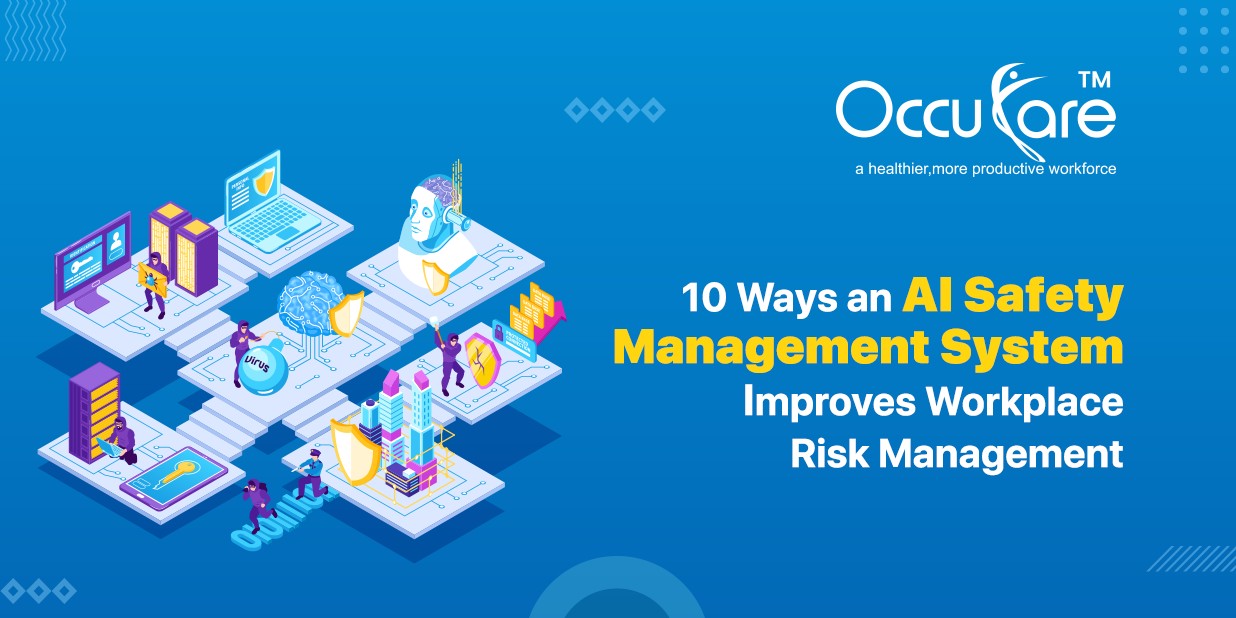
This article explores ten ways an AI Safety Management System strengthens workplace risk management and helps organizations build a stronger safety culture.
1. Predictive Risk Identification:
One of the most powerful advantages is its ability to predict potential hazards before incidents occur. Traditional safety approaches usually identify risks only after inspections or incident reports.
AI-driven safety management system software analyzes historical incident data, workplace conditions, employee behavior patterns, and equipment performance to detect trends. These insights allow organizations to anticipate potential risks and implement preventive measures early.
For example, if the system identifies recurring near-miss incidents around a particular machine or shift timing, safety teams can investigate the root cause and introduce corrective actions before an accident happens.
2. Real-Time Hazard Monitoring:
Particularly in sectors like manufacturing, construction, oil & gas, and logistics, working conditions can shift quickly. IoT sensors, linked devices, and automated reporting systems can be used by an AI-enabled safety management system to monitor work environments in real time.
When conditions become dangerous, this feature enables safety managers to receive immediate alerts. The system can promptly alert responsible teams about temperature changes, machine failures, or violations of restricted-area access.
Organizations can lessen the chance of major incidents and react swiftly to threats by combining safety software with real-time monitoring capabilities.
3. Smarter Incident Reporting and Analysis:
Understanding workplace hazards requires incident reporting, but conventional paper-based reporting systems can impede investigations and lower data accuracy.
Using digital forms and mobile applications, contemporary safety management system software streamlines the reporting process. Workers can promptly report events, near misses, and risks from the workplace.
4. Improved Compliance Management:
One of the main issues facing safety teams is regulatory compliance. It can take a lot of time to manually maintain training records, audit trails, inspection reports, and paperwork.
By digitally preserving information and producing reports for audits, a well-designed Safety Management Software automates compliance tracking. By doing this, companies can increase their overall safety management system and stay in compliance with industry laws.
5. Smarter Safety Inspections and Audits:
Checklists and manual observations play a major role in traditional inspections. By prioritizing inspection schedules, identifying high-risk areas, and reviewing past inspection outcomes, AI-enabled safety software improves inspections.
This implies that instead of performing regular inspections that might not address real dangers, safety teams can devote more time to concentrating on major hazards.
6. Strengthening Behaviour-Based Safety Programs:
Workplace safety is significantly influenced by human behavior. Incidents are frequently caused by unsafe behavior, shortcuts, and ignorance.
Organizations can monitor employee safety observations, examine behavioral patterns, and pinpoint areas that need more supervision or training by incorporating behavior-based safety software.
7. Enhanced Safety Training and Awareness:
Employee training is essential for reducing workplace risks. Modern Safety Management System Software allows organizations to manage training schedules, track employee certifications, and deliver digital learning modules.
AI can even recommend personalized training programs based on an employee’s role, previous incidents, or exposure to specific hazards. This ensures that workers always have access to relevant Safety Instructions For Employees, improving their ability to respond to risks effectively.
8. Better Data-Driven Decision Making:
Because safety data is dispersed over spreadsheets, reports, and emails, many safety initiatives face difficulties. Safety data is centralized in one location using an integrated safety software platform.
Safety managers may monitor safety performance metrics, spot trends, and make well-informed decisions that enhance workplace risk management tactics with the aid of AI analytics.
9. Reduced Administrative Work for Safety Teams:
Documentation and reporting duties frequently take up a significant amount of time for safety experts. AI-powered Safety Management System Numerous standard procedures, including incident reporting, inspection scheduling, compliance documentation, and corrective action tracking, are automated by software.
This enables safety teams to concentrate more on employee engagement, prevention, and ongoing safety management system improvement.
10. Building a Proactive Safety Culture:
Creating a culture where safety is integrated into daily operations is the goal of every safety project. This is supported by an AI Safety Management System, which increases the accessibility, transparency, and data-drivenness of safety procedures.
Employees become active contributors to workplace safety rather than passive observers when they can readily report dangers, access Safety Instructions for Employees, and take part in behavioral safety initiatives.
Best Practices for Implementing an AI Safety Management System:
To maximize the benefits of it, organizations should:
- Integrate AI with existing safety management system frameworks
- Provide continuous training and Safety Instructions for Employees
- Use Behavior-Based Safety Software to monitor and improve workplace behavior
- Implement Machinery Safety Software for equipment safety
- Regularly analyze data to refine safety strategies
A well-implemented system ensures continuous improvement and long-term success.
Conclusion:
Investing in an AI-driven Safety Management System is a strategic move for any organization looking to minimize workplace risks and enhance operational efficiency. By adopting advanced AI tools, companies can predict hazards, monitor real-time conditions, streamline compliance, and strengthen employee safety behavior. This proactive approach not only reduces incidents but also builds a culture of safety, improves productivity, and boosts overall employee confidence.
At OccuCare, we specialize in implementing tailored Occupational Health and Safety solutions that integrate AI-powered safety management systems seamlessly into your operations. Our expert team provides training, behavior-based safety programs, and continuous support to help you transform your workplace into a safer, smarter environment. Contact us today for a free demo and see how our solutions can protect your employees, reduce risks, and give your business a competitive edge.