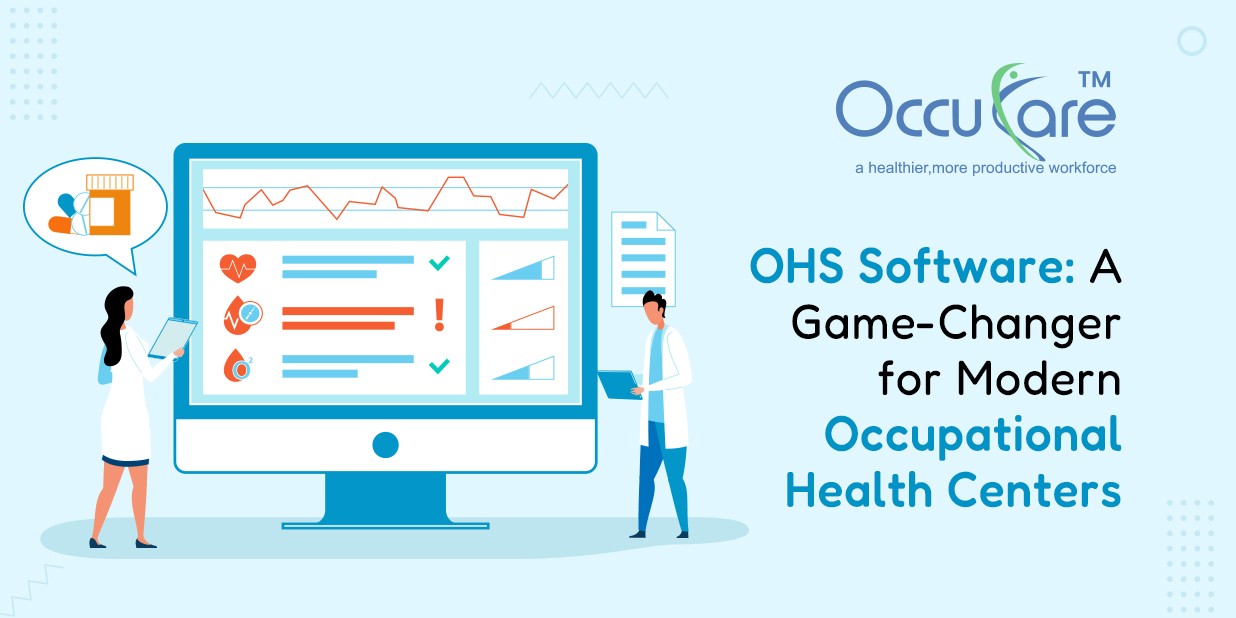
Occupational Health Centers (OHCs) are using specialist OHS (Occupational Health and Safety) software more often to change the way they handle health and safety in today’s quickly changing workplace. This technological revolution aims to improve patient care, increase overall efficiency, and enable proactive health management—not merely to meet regulatory requirements. OHS management software helps Occupational Health Centers streamline their health and safety processes while supporting efficient and proactive workplace health management.
This is a detailed look at how occupational health and safety software is transforming contemporary Occupational Health Management Services.
1. Occupational Health Centers’ Changing Role:-
In the past, management of safety and health at work, medical examinations, claims for workers’ compensation, and regulatory compliance have been the main priorities. But now that they are involved in more comprehensive health management programs like wellness centers, wellness programs, and mental health, their duties have grown.
2. OHS Software’s Principal Elements:-
With various features that improve service delivery and modern OHS software is made to meet those needs. Important characteristics consist of:
Integrated Health Records:
a centralized system for managing patient health data, which includes Occupational Health Services System, medical histories, and immunization status. By ensuring that all pertinent health data is available in one location, this integration enhances the effectiveness and continuity of care.
Compliance Management:
Instruments for monitoring and controlling adherence to workplace health and safety regulations. OHCs may stay informed about evolving legislation and steer clear of any fines with the aid of automated notifications and reporting features.
Appointments Scheduling and Management:
Effective scheduling programs that manage resource allocation, follow-ups with patients, and appointments. To improve patient flow and lower no-show rates, features including online booking and automatic reminders are frequently used.
Risk Evaluation and Management:
Modern tools for identifying and controlling health hazards at work. This helps companies actively reduce health risks through recognizing dangers, analyzing risks, and placing preventive measures in place.
Employee Wellness Programs:
Connectivity of tools for managing wellness initiatives that monitor involvement, results, and effects. This feature facilitates the execution of initiatives meant to raise worker productivity and well-being.
Mobile Accessibility:
Healthcare workers can manage patient information, make appointments, and keep track of events while on the road by using mobile devices to access OHS software.
3. Advantages of Using OHS Software:-
Increased Productivity:
OHS software reduces manual labor and operational bottlenecks by streamlining administrative duties including scheduling, record-keeping, and reporting. Healthcare workers may now concentrate more on caring for patients and less on paperwork thanks to this increased efficiency.
Improved Patient Care:
Accurate and current information is made available to healthcare providers through the use of advanced management tools and centralized health records, which promotes improved decision-making and individualized treatment.
Regulatory Compliance:
By keeping occupational health centers up to date with changing rules, automated compliance management capabilities reduce the likelihood of non-compliance and the fines that come with it. Consistent compliance with all regulatory standards is ensured via real-time tracking and reporting.
Proactive Health Management:
OHCs can detect and manage any health issues before they worsen by using incident monitoring and risk assessment tools. This proactive strategy improves worker safety and benefits the general health of the workforce.
Staff Engagement and Wellness:
Tools for managing wellness programs make it easier to put employee health initiatives into action and keep track of them.
4. Difficulties and Things to Take into Account:-
OHS software has many benefits but there are also certain disadvantages that should be taken into mind.
Complexity of Use:
It can be difficult and time-consuming to put new software into current workflows and systems. A smooth move involves careful preparation, help, and training.
Data security:
It’s critical to safeguard private health information. Verify if the software vendor delivers strong security features to secure patient data and conforms with data protection standards.
Cost:
Consider license, implementation, training, and continuing maintenance when evaluating the total cost of ownership. Think about the potential cost savings and return on investment.
5. OHS Software’s Future:
The following trends are likely to influence OHS software going forward as technology develops:
Artificial intelligence (AI):
AI can enhance risk assessment and management, automate administrative activities, and strengthen predictive analytics.
Integration with Wearing Technology:
OHS software may be related to wearable devices to provide additional information for risk assessment and health management.
Enhanced Mobile Capabilities:
As mobile technology advances further, it will be possible to access OHS software with greater ease and flexibility, allowing for remote and mobile oversight of Occupational Health Services responsibilities.
Emphasis on Mental Health:
OHS software will progressively incorporate tools for monitoring and promoting mental health and wellbeing as the significance of psychological illness in the workplace increases.
Conclusion:
By using cutting-edge technologies to boost operational effectiveness, enhance patient care, and promote proactive health management, occupational health and safety technology is radically changing the face of contemporary Occupational Health Centers. Adopting OHS software has several advantages, such as centralized health records, expedited administrative procedures, and sophisticated analytics that support data-driven decision-making. Occupational health software helps streamline these processes, while occupational health management software enables Occupational Health Centers to manage health services more efficiently and support better employee well-being. Future technological advancements including artificial intelligence (AI), wearable technology integration, and improved mental health assistance are anticipated to significantly transform occupational health management. Occupational Health Centers may enhance overall organizational success, protect employee well-being, and improve service delivery substantially by utilizing these developments. This represents a paradigm shift in the way occupational health is handled and optimized in the contemporary workplace.