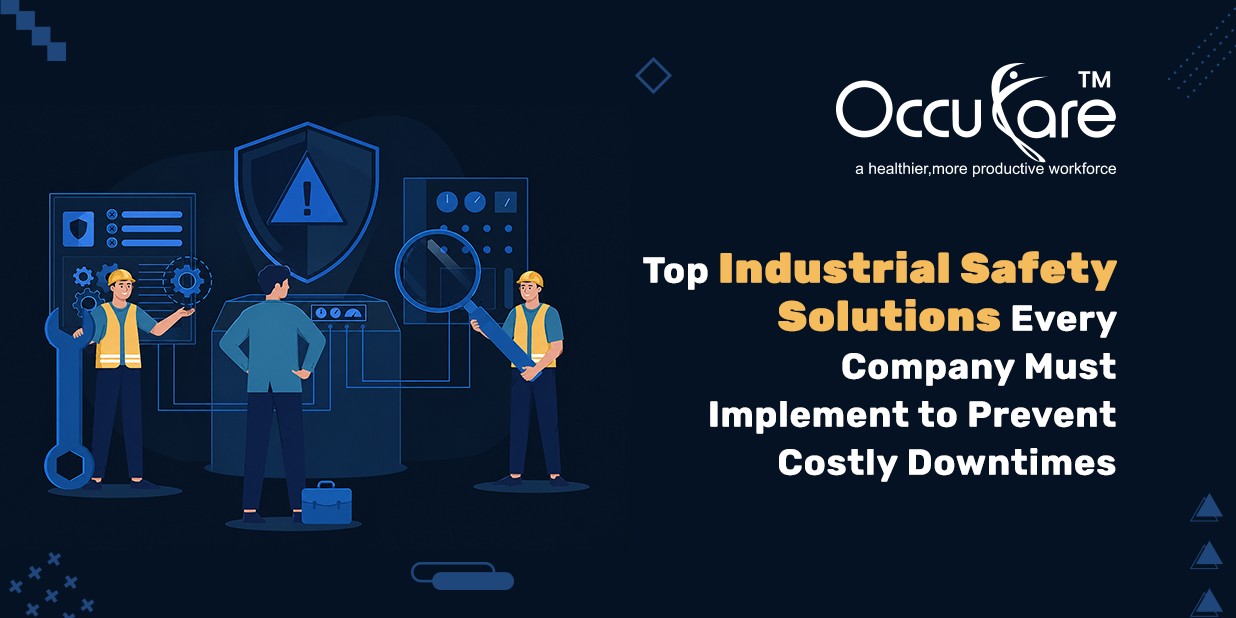
In modern industrial operations, business continuity depends heavily on how effectively organizations manage risk and ensure employee safety. A minor safety lapse can quickly escalate into operational disruptions, regulatory challenges, financial losses, and reputational damage. This makes workplace safety not just a compliance requirement, but a core driver of operational efficiency and long-term business stability.
To address these challenges, organizations are increasingly adopting advanced Occupational Health and Safety (OHS) systems that combine digital monitoring, predictive analytics, and AI-powered safety tools. These solutions help businesses proactively identify hazards, strengthen preventive measures, and minimize the chances of downtime. In this blog, we explore the most effective industrial safety solutions every company should implement to build a safer, more productive, and resilient workplace.
Why Workplace Safety Is Crucial for Modern Businesses?
The impact of downtime on businesses due to incidents, technical failures, or improper safety is evident. As industry research shows, unplanned downtime may lead to losses ranging from several thousand dollars to millions per hour.
Benefits of robust Workplace Safety include:
- Reducing accident frequency
- Ensuring compliance with regulations
- Improving employees’ motivation and productivity
- Avoiding unnecessary expenses
- Maintaining uninterrupted work processes
1. Employee AI for Workplace Safety Monitoring:
One of the most impressive innovations developed lately is AI for Workplace Safety. AI technologies are capable of analyzing real-time information from cameras, sensors, and Internet of Things devices to detect workplace hazards and risks.
Main Advantages:
- Detection of hazardous behavior (lack of PPE)
- Monitoring of risky zones
- Accident prediction based on historical data
- Immediate notification of the incident to the supervisor
Example:
For example, AI-based solutions may help detect that an employee enters a prohibited zone without the necessary protection and notify management.
Such an innovative system will minimize the risk of accidents and prevent unplanned shutdowns.
2. Employ Advanced Workplace Safety Software:
Modern software consolidates all activities related to workplace safety in one place. This solution will help companies automate safety management processes.
Features to Consider:
- Incident tracking and management
- Management of compliance with regulations
- Planning and tracking of audits
- Risk assessments
- Reporting and analysis
Why It Is Critical:
Manual monitoring is highly likely to be error-prone and untimely. Digital solutions will help avoid such issues and ensure consistent operations.
3. Incorporate AI Workplace Safety Tools for Predictive Analysis:
While most AI safety tools focus on monitoring, others make predictions of future problems.
How It Works:
- Data analysis from historical occurrences
- Trends identification
- High-risk situation predictions
Advantages:
- Prevent the repeated occurrence of such instances
- Proactive scheduling of preventive maintenance tasks
- Better decision-making
With predictive analytics, businesses are transformed into proactive safety management practices.
4. Real-Time Incident Reporting Systems:
Lagging incident reporting may result in more severe occurrences and extended downtimes. Real-time systems ensure immediate documentation of incidents.
Main Features:
- Mobile platform for reporting incidents
- Immediate notifications
- Photographic and video documentation
- Automatic escalation of reports
Significance:
Immediate intervention saves time and limits damage.
5. Safety Monitoring Solutions Through IoT:
IoT technologies play an integral part in improving workplace safety.
Examples of IoT solutions:
- Wearables for worker health monitoring
- Sensors to alert about leaks and temperature variations
- Equipment monitoring system
Advantages:
- Constant monitoring of the working environment
- Early detection of potential dangers
- Lower likelihood of equipment breakdown
6. Consistent Safety Training & Awareness:
Technologies will not be helpful alone; therefore, it is necessary to train employees to apply proper procedures.
Proper Training Should Include:
- Training in emergency response measures
- Training in equipment operation
- PPE awareness training
- Safety training
Importance of Proper Training:
Employees who have received appropriate training are less likely to make mistakes that can cause incidents.
7. Compliance Monitoring Automation:
Monitoring employee compliance with safety regulations is important in order not to get into trouble.
Benefits of Monitoring Automation:
- Continuous compliance monitoring
- Creating compliant reports
- Avoiding mistakes
- Making sure the regulations are followed
Automated compliance monitoring helps companies stay audit-ready.
8. Data-Based Safety Decisions:
Today, data is the most useful resource that a company can have.
Using Data Wisely:
- Incident analysis
- Identifying dangerous zones
- Improving safety procedures
Consequences:
Proper use of data leads to better decisions.
9. Emergency Response Management Systems:
During an emergency, time is of the essence. The existence of a systematic approach facilitates timely intervention.
Main Components:
- Emergency notification systems
- Planning for evacuation
- Coordination of events
- Communication technologies
Result:
Effective response lowers losses, protects people, and prevents downtime.
10. Continual Safety Improvement Program:
A safe work environment cannot be achieved once and for all, but rather through continuous improvement.
Process Steps:
- Regularly perform audits
- Revise safety protocols
- Take feedback into account
- Periodic updates of technology
Conclusion:
Modern industries can no longer treat workplace safety as a separate function—it is now a core driver of business continuity, operational efficiency, and long-term profitability. Organizations that invest in advanced safety systems are better positioned to reduce incidents, maintain compliance, and minimize costly downtime that directly impacts productivity and reputation. A proactive approach to safety not only protects employees but also strengthens overall business resilience.
To achieve this effectively, businesses need a unified and technology-driven approach powered by Workplace Safety Software. By centralizing safety processes, enabling real-time monitoring, and supporting data-driven decision-making, such solutions help organizations move from reactive responses to proactive risk prevention. At OccuCare, we are committed to helping companies build safer, smarter, and more compliant workplaces. Contact us today for a free demo and discover how our Workplace Safety System can transform your safety management system.