Managing employee health across an organization involves more than conducting medical examinations; it requires accurate documentation, timely health monitoring, and efficient coordination of occupational healthcare activities. From pre-employment medical assessments and periodic health checkups to medical fitness certificates, vaccination tracking, and workplace injury records, businesses need a reliable way to manage employee health information while supporting workplace safety and regulatory compliance. Traditional paper-based processes and disconnected spreadsheets can increase administrative workloads and the risk of errors.
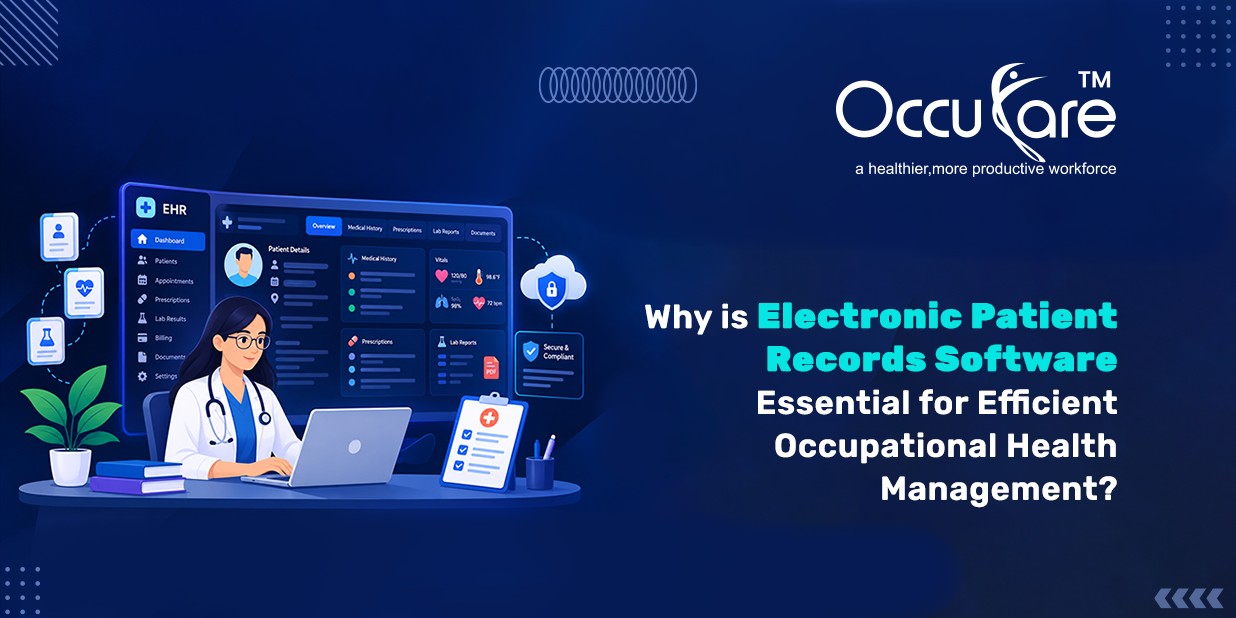
Electronic Patient Records Software helps organizations simplify occupational health management by centralizing employee medical information through a secure digital Patient Records system. It enables authorized healthcare professionals to access relevant records efficiently, streamline medical documentation, monitor employee health trends, and generate reports that support informed business decisions. With OccuCare’s digital occupational health solutions, businesses can improve healthcare workflows, strengthen medical record management, and enhance operational efficiency while supporting a healthier, safer, and more productive workforce.
What is Electronic Patient Records Software?
Electronic Patient Records Software is computer software aimed at creating, storing, updating, and retrieving patients’ health information in electronic form. Depending on its functions, the software may contain medical history, consultations, diagnoses, lab results, prescriptions, treatment, allergies, immunizations, and follow-up suggestions.
This electronic medical record software is especially beneficial for occupational healthcare since employee health management requires monitoring rather than occasional medical care.
Some of the other workplace healthcare modules that could be integrated into the electronic patient record include:
- Management of Occupational Health Centre (OHC)
- Management of Outpatient Department (OPD)
- Tracking of medical examinations for employees
- Pharmacy and medication dispensing
- Laboratory reporting and diagnostics
- Fitness to work and assessment
- Incident and injury reporting in the workplace
- Health surveillance and management reporting
This list is not exhaustive, depending on the software that you are using and how it is configured. The main aim here is to make healthcare information more accessible, structured, and useful.
Centralized Medical Records Improve Accessibility
A primary problem that occurs within occupational health management is storing information about the health of employees in different places.
Such large enterprises as General Motors can operate several plants or offices, or other locations that have their occupational health center and their medical staff. If all the information about employees’ health is kept in separate files or spreadsheets, it might be quite problematic to get complete information.
To solve this problem, the Electronic Patient Records Software is used to create a centralized and secure connection among authorized users.
In case of well-configured systems, it becomes possible to get the needed information regarding employees’ health without relying on physical documents or manual requests. The centralized medical record can facilitate the process of working with moving employees or consulting with different authorized healthcare professionals.
Decreases Administrative Workload
Healthcare specialists often have to deal with paperwork quite a lot. This includes medical forms, examination reports, consultation registers, fitness certificates, and follow-ups. When it is done manually, even a small mistake can lead to an increase in paperwork. Missing forms, wrong employee ID, and outdated spreadsheets are just a few examples.
With the help of Electronic Patient Records Software, one can decrease these administrative efforts since all information is stored in digital format.
Depending on the software’s functionality, the healthcare team can:
- Create and update the digital records of patients
- Look for employee records using appropriate identifiers
- Create reports without constant compilation of data
- Organize and schedule medical appointments and follow-ups
The goal here is not to take people out of healthcare. It is just to make them do fewer administrative tasks and spend their time on medical work.
Enhances Employee Healthcare Experience
Employees anticipate workplace healthcare services to be easily available, structured, and efficient. An unorganized medical documentation process can cause repetition, booking delays, missing documents, and unnecessary waiting periods. Such issues can negatively impact employee perceptions regarding workplace healthcare services.
The Electronic Patient Records Software can assist in creating a more seamless experience through the provision of available relevant medical history to the appropriate health professionals and the minimization of repetitive administrative activities.
For example, an employee advised to have a follow-up consultation may be included in a digital follow-up schedule. Based on the design of the system, healthcare professionals may receive reminders regarding pending appointments and missing medical documentation.
Understand Current Healthcare Workflows
Conduct an analysis of how the current process works regarding employee registration, consultations, examinations, prescriptions, follow-ups, and reporting before implementing new software. Identify frequent issues, redundant manual actions, and situations where there is duplicate information.
Set Up the Process of Migration and Data Validation
In case of migration from paper-based records or other systems, determine how the data will be migrated, validated, and approved.
Attention paid to duplicate employee codes, incomplete medical history, wrong dates, and attachments of absence.
Conclusion:
Efficient occupational healthcare management is essential for organizations seeking to improve employee well-being, streamline medical administration, and maintain accurate health records. Implementing Electronic Patient Records Software helps businesses centralize employee medical information, reduce manual documentation, simplify health monitoring, and improve reporting and decision-making. Integrating solutions such as electronic health records and billing software can further support organized healthcare operations, improve administrative efficiency, and contribute to a proactive approach to workplace health and safety.
OccuCare offers digital occupational health management solutions designed to simplify medical record management and optimize healthcare workflows. Whether your organization operates a single Occupational Health Centre (OHC) or manages multiple workplace healthcare facilities, the right software can help enhance operational visibility, streamline processes, and support a healthier, more productive workforce. Contact us today for a free demo to see how our occupational health management solution can improve healthcare efficiency and strengthen workplace safety.